· deepdives · 6 min read
Push vs. Pull: The Ethics of Notification Techniques in 2024
A deep, practical look at the ethical trade-offs of push and pull notification techniques in 2024 - technical context, regulatory signals, persuasive-design risks, and a checklist to design respectful, effective alerts.
Outcome first: by the end of this article you’ll be able to tell when a notification helps someone - and when it crosses an ethical line. You’ll also get a concrete checklist to design, test and deliver notifications using the Notifications & Push APIs without becoming part of the attention problem.
Why this matters now
Notifications are small. But their effects are big. They interrupt work, shape habits, influence mood, and in aggregate they determine whether people trust your product. In 2024, browsers and regulators are more aggressive about privacy and consent. That means good notification design is now both a moral and a business imperative.
Push vs. pull: a quick technical distinction
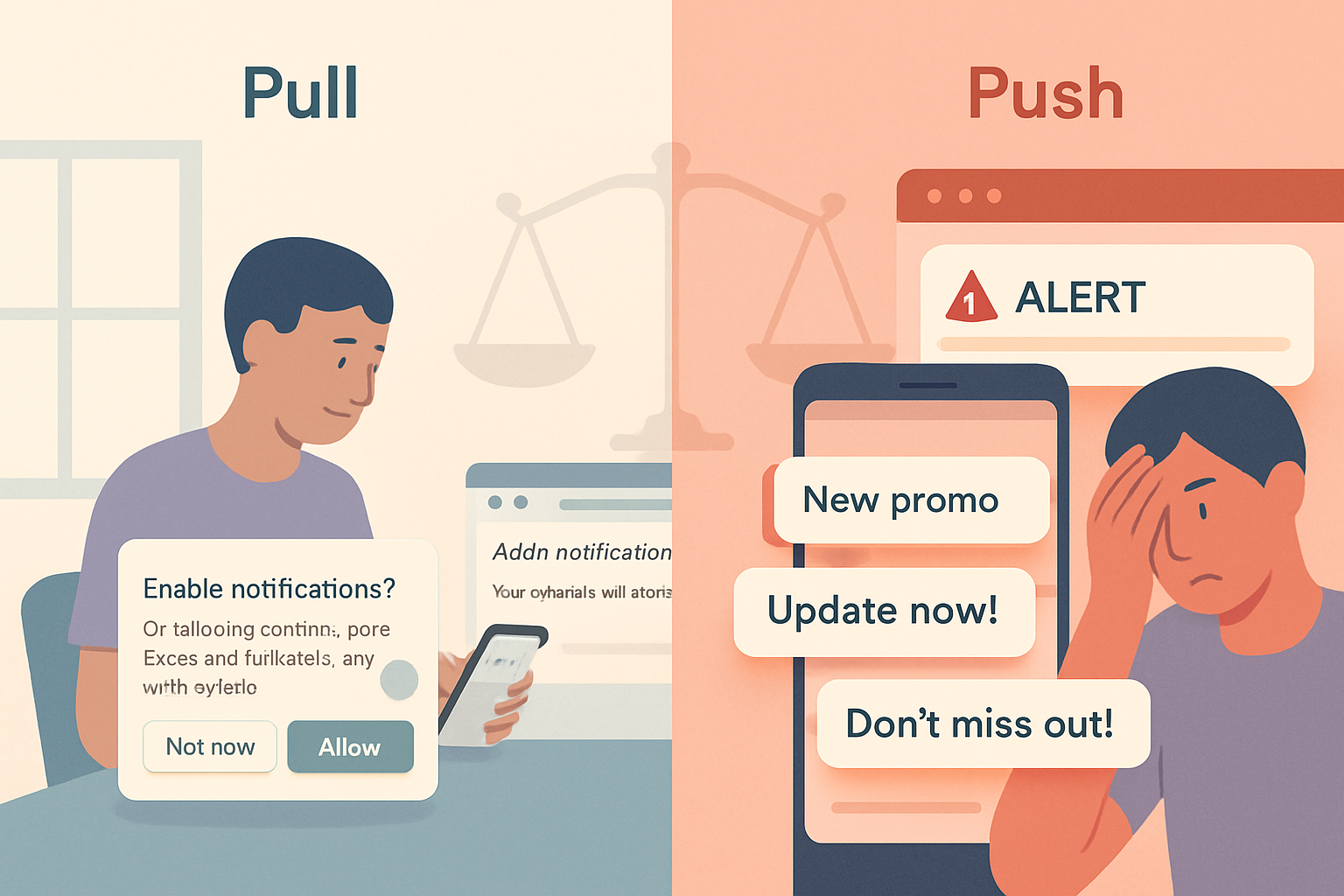
- Pull: The client (browser or app) periodically checks the server and fetches updates when the user initiates or expects it. It’s user-driven. Pull scales with user attention and is easier to align with explicit intent.
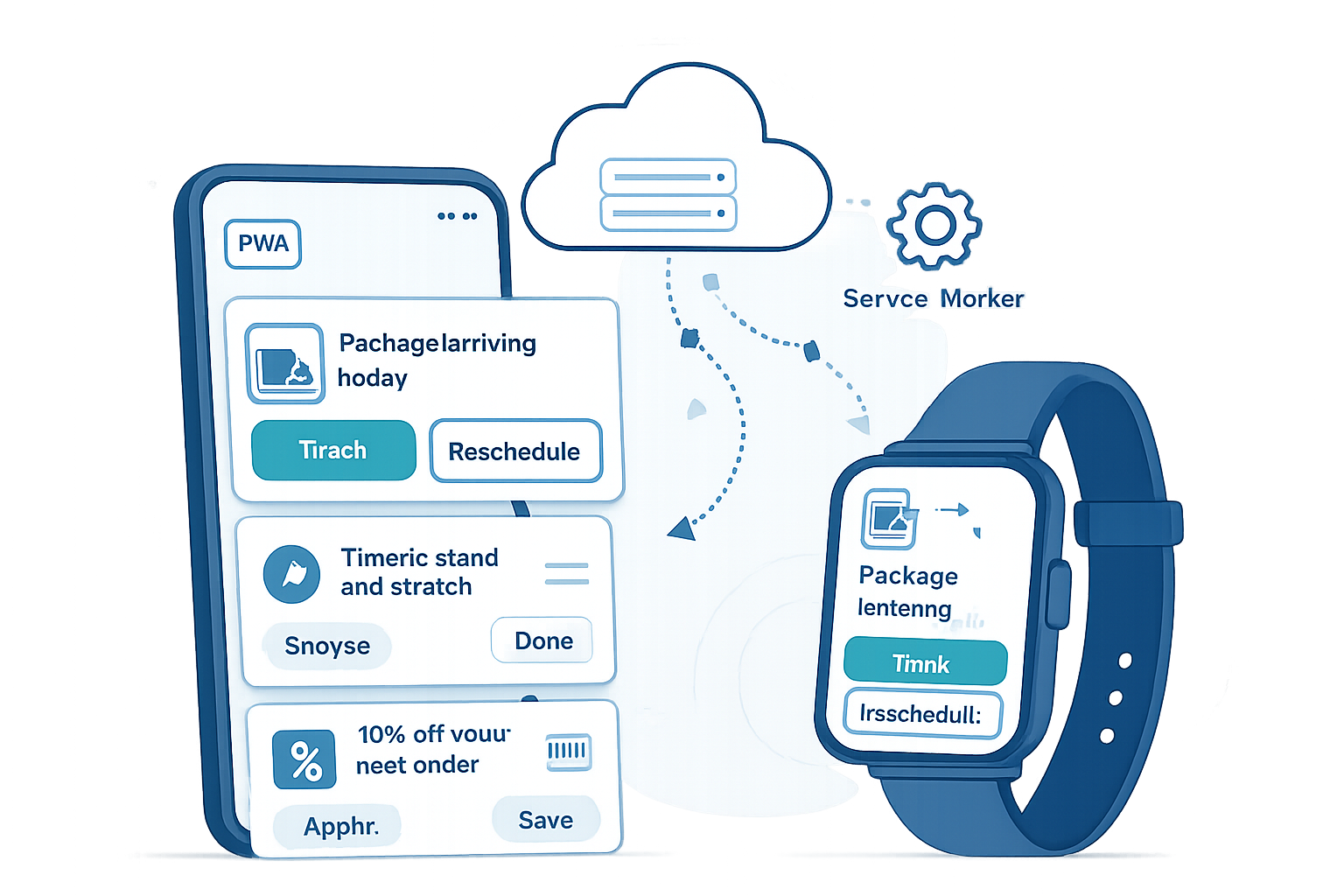
- Push: The server sends events to the client (via the Push API and a Service Worker for web apps) to surface notifications proactively, even when the page is closed. It’s server-driven and can reach the user at any time.
Both have valid uses. The ethical questions emerge when push is used like spam or when pull is used to obscure real-time needs.
For technical references, see the MDN pages for the Notifications API and the Push API, and the W3C Push API spec.
The ethical landscape: benefits and harms
Benefits
- Timely critical alerts: security warnings, two-factor prompts, flight changes, emergency notifications. These are life- or task-critical. Push excels here.
- Personal relevance: reminders and messages that the user expects (e.g., a direct message from a friend) - these restore value.
Harms
- Attention theft: unbounded push creates noise and fragments attention. Over time it reduces trust and wellbeing (the so-called attention economy problem).
- Behavioral manipulation: notifications can be engineered to trigger impulsive action, exploiting habit loops.
- Privacy leakage: notification payloads, metadata and identifiers can expose user behavior and preferences if mishandled.
If you doubt the behavioral risks, read the models behind habit-forming products: Nir Eyal’s Hook model and BJ Fogg’s Behavior Model are widely cited frameworks for how triggers shape behavior (Hooked - Nir Eyal, Behavior Model - BJ Fogg). The broader societal critique falls under the attention-economy discussion (Attention economy - Wikipedia).
Regulatory and platform signals (2024)
- Privacy law: GDPR and other data-protection regimes require lawful processing and meaningful consent for personal data. Notification systems often store tokens and metadata; treat them as personal data if they can be tied back to an individual. See the EU’s GDPR overview: European Commission - data protection.
- Platform rules: app stores and browsers increasingly penalize abusive notification practices (excessive frequency, misleading content, dark patterns in permission prompts).
In practice, this means you should design for explicit, granular consent and keep minimal metadata retention.
Dark patterns and permission prompt abuse
Common problematic patterns:
- Forced permission: Showing a blocking permission request at first launch without explaining value.
- Deceptive framing: Misleading language that exaggerates benefits to get an opt-in.
- Frequency hiding: Hiding or restricting unsubscribe settings so users can’t escape the noise.
These are not only unethical - they erode retention and may violate platform policies.
Practical, ethical principles for notification design
- Value-first opt-in
- Explain clearly why notifications matter and what type the user will receive. Use an in-app permission UI before the browser prompt.
- Granular choices
- Let users opt into categories (transactional, personal, promotions, marketing) rather than an all-or-nothing toggle.
- Contextual triggers
- Fire notifications when they match user context and intent. Don’t ping someone about low-value content at 3 am.
- Frequency caps and quiet hours
- Implement per-user and per-channel rate limits; provide Do Not Disturb options and respect system-level DND.
- Minimal payloads and privacy safeguards
- Send only necessary data in notification payloads; avoid including sensitive details in the push message itself. Encrypt server-side stores of tokens and use standards like VAPID for web push (Using VAPID keys - MDN).
- Clear affordances to unsubscribe
- Allow easy, immediate opt-out from the notification itself and from account settings.
- Transparent analytics
- If you measure open/click rates, inform users and keep analytics aggregated and privacy-preserving.
- Accessibility and inclusion
- Ensure notifications are readable by screen readers, avoid flashing imagery that may trigger seizures, and localize language and timing preferences. See W3C WAI guidance for accessibility: W3C WAI.
Implementation notes for engineers
- Use Service Workers for reliable delivery on web platforms, but treat them as powerful tools that must be used judiciously.
- Minimize client-side identifiers. Treat push subscription tokens as sensitive: store them securely and rotate if needed.
- Avoid embedding actionable sensitive content in the notification body; instead deliver a neutral notification that directs the user to authenticated content.
- Use VAPID and push encryption for authenticated, verifiable server-originated messages (see MDN on Push API and VAPID).
- Handle failed deliveries gracefully and respect unsubscribe requests immediately.
Ethical A/B testing and measurement
Testing is crucial - but do it ethically:
- Pre-register high-impact experiments and apply extra scrutiny if tests could increase compulsive behavior.
- Prefer short-lived experiments that measure utility (task completion, user satisfaction) rather than purely engagement metrics.
- Monitor for negative downstream effects (increased support requests, churn, user complaints) and stop harmful tests quickly.
Good and bad examples (concrete)
Good: A bank sends a push alert the moment a large transaction occurs, with clear language, no sensitive detail in the banner, and a single tap to view details in the authenticated app.
Bad: A news site requests notification permission on first load with a browser dialog that says “Get breaking news now!” and then sends ten attention-grabbing headlines a day that are mostly promotional.
Checklist for a mindful notifications rollout
- Does each notification type have a clear user value statement?
- Is opt-in explained in-app before the system permission prompt?
- Are categories granular and opt-out easy?
- Are frequency caps and quiet hours implemented?
- Are payloads minimal and non-sensitive?
- Are tokens and metadata stored securely with retention policies?
- Are experiments limited, ethical, and monitored for harm?
- Is accessibility considered (screen readers, localization, visual safety)?
- Is there a policy for emergency vs. non-emergency messages?
If you can check every box, you’re designing responsibly.
Final thoughts - where to draw the line
Notifications are tools. Used well they save time, reduce anxiety and deliver real value. Used poorly they erode trust, fragment attention and manipulate behavior. The line between helpful and harmful isn’t about technology - it’s about intent, transparency and respect for users’ time and privacy.
Design for consent. Design for choice. And always ask: would I want this notification if it came to me at 2 a.m.? If the honest answer is no - redesign.
References
- MDN Web Docs - Notifications API: https://developer.mozilla.org/en-US/docs/Web/API/Notifications_API
- MDN Web Docs - Push API: https://developer.mozilla.org/en-US/docs/Web/API/Push_API
- W3C - Push API spec: https://www.w3.org/TR/push-api/
- MDN - Using VAPID keys: https://developer.mozilla.org/en-US/docs/Web/API/Push_API/Using_VAPID_key
- European Commission - data protection (GDPR overview): https://ec.europa.eu/info/law/law-topic/data-protection_en
- Hooked - Nir Eyal (habit-forming products): https://www.nirandfar.com/hooked/
- Behavior Model - BJ Fogg: https://behaviormodel.org/
- Attention economy overview: https://en.wikipedia.org/wiki/Attention_economy