· deepdives · 7 min read
Portal API vs. Traditional APIs: Why You Should Make the Switch
Compare the Portal API approach with traditional RESTful APIs. Learn how Portal-style, connection-oriented APIs improve efficiency, flexibility, and real-time capability, the controversies they raise, and practical migration strategies so you can decide whether - and how - to make the switch.
What you’ll get from this article
If you read nothing else: you will understand when a Portal-style API (a persistent, event-driven, state-aware API layer) outperforms traditional request/response HTTP APIs, what trade-offs to expect, and a practical roadmap to migrate without breaking production systems. Read on to decide whether a switch will save engineering time, cut bandwidth and latency, and unlock real-time user experiences.
Quick primer: what is a “Portal API”?
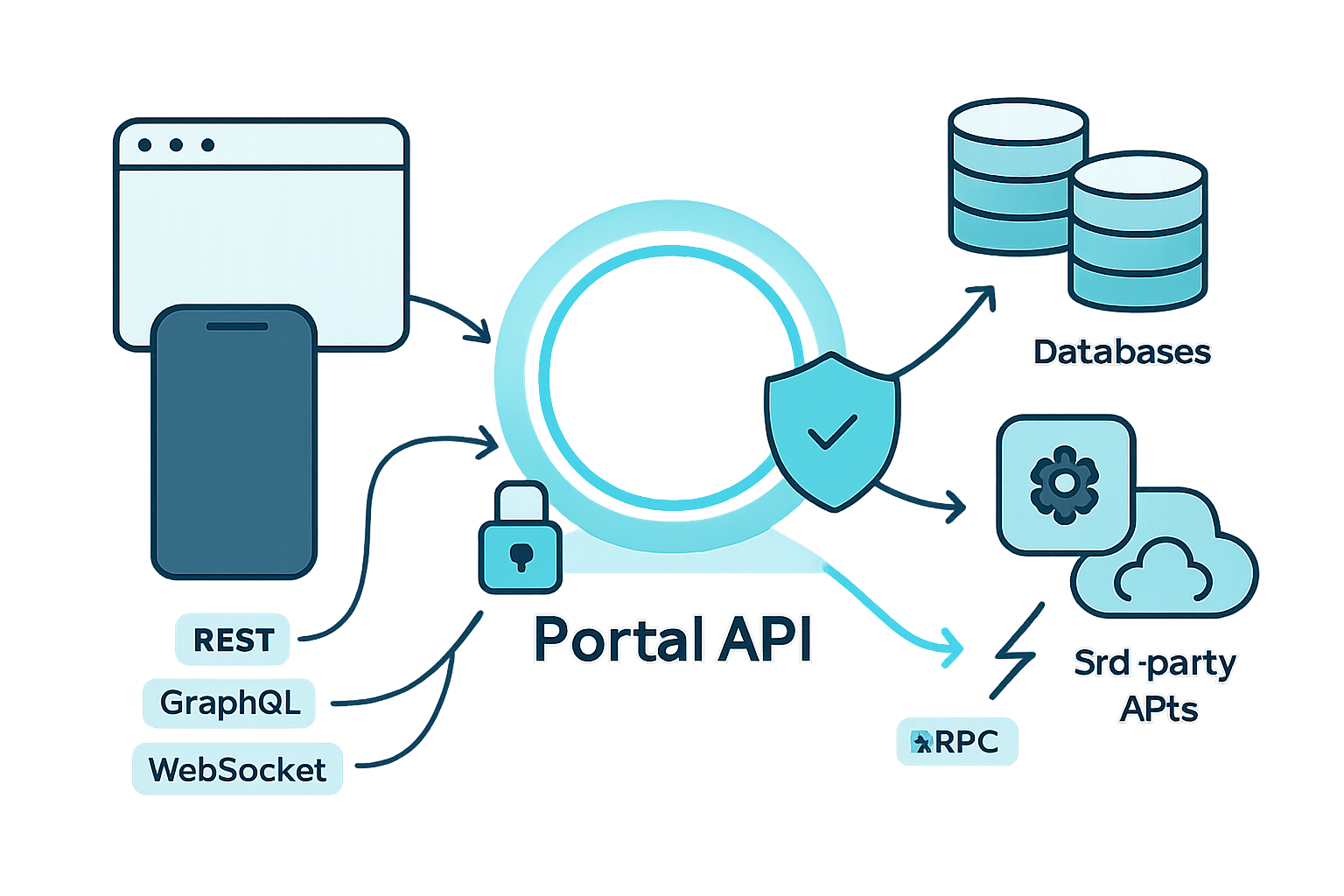
“Portal API” is a concise name for an architectural approach: an API layer built on persistent, bidirectional connections that stream state and events, support client-driven subscriptions and delta updates, and treat the client-server relationship as a continuously synchronized channel rather than a series of isolated requests.
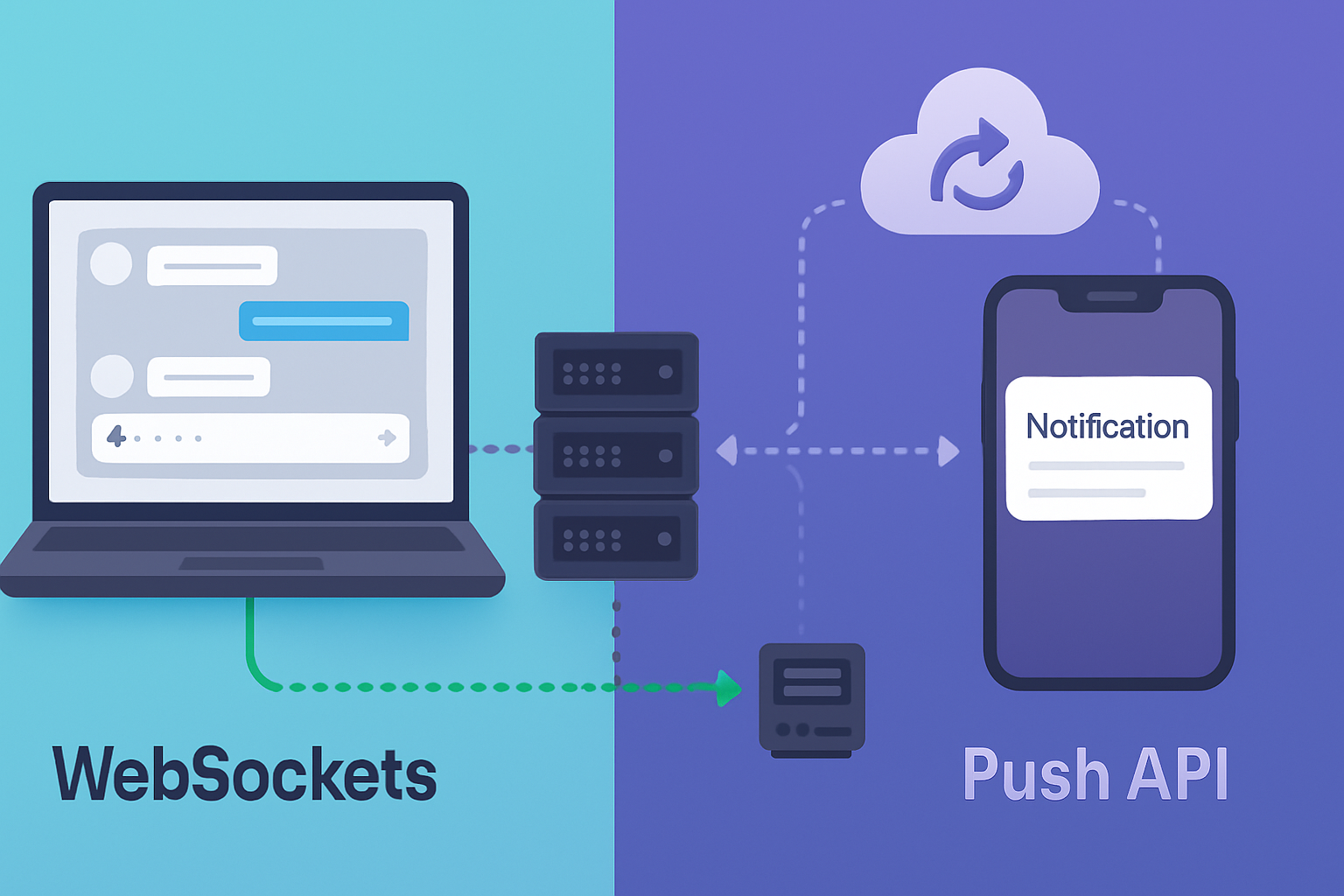
It is not a single vendor standard. Instead, think of Portal APIs as a pattern implemented by systems like WebSocket-based platforms, Firebase Realtime Database / Firestore listeners, Pusher/Ably, or GraphQL subscriptions layered over a persistent connection. The core idea: keep the channel open, push changes instantly, and allow smarter, smaller messages.
Key building blocks you will see in a Portal-style API:
- Persistent transport (WebSocket, WebTransport, HTTP/2/3 streams)
- Subscription and delta protocols (subscribe to a resource, receive only changes)
- Multiplexing of requests and responses over one connection
- Server-side ability to push events without client polling
For background on the classic alternatives mentioned here, see the original REST dissertation by Roy Fielding and the WebSocket RFC:
- REST overview: https://www.ics.uci.edu/~fielding/pubs/dissertation/rest_arch_style.htm
- WebSocket RFC: https://datatracker.ietf.org/doc/html/rfc6455
Why traditional (RESTful) APIs still work - and where they don’t
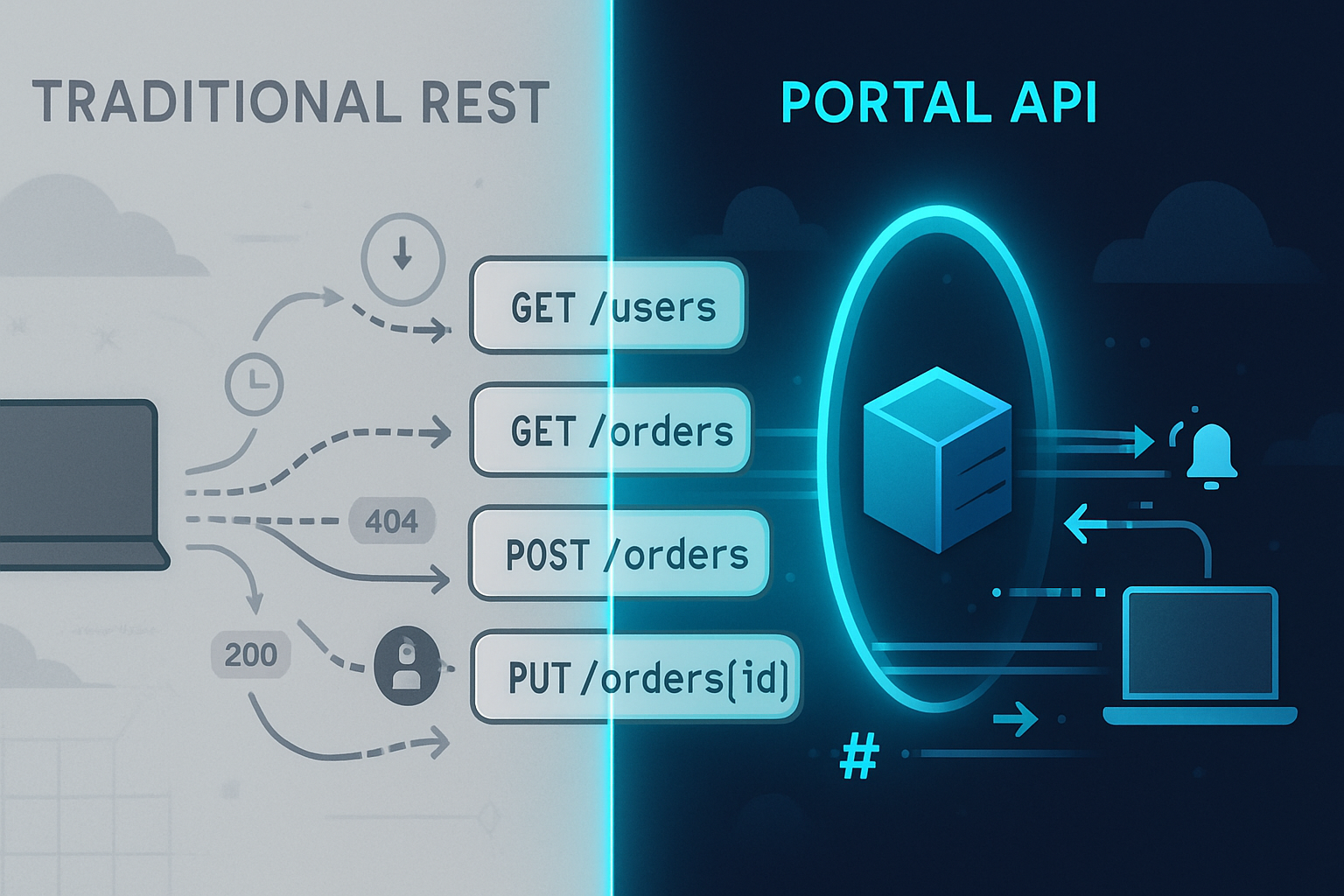
REST and plain HTTP shine when operations are simple, cacheable, and independent. They are easy to reason about. They play well with CDNs, HTTP caching, and existing observability tooling. Their request/response nature is a feature: the web was built this way for scalability and loose coupling.
But there are problems when you need low latency, high update frequency, or coordination across many clients:
- Polling is wasteful. Clients repeatedly ask for state, increasing bandwidth and latency.
- Large payloads. Full-resource responses transfer redundant data when only a small change occurred.
- Coordination gaps. Collaborative or streaming experiences need immediate, ordered updates.
- Multiplexing limits. Modern apps often need many concurrent updates; opening many connections or HTTP requests is inefficient.
These pain points are why engineers build gateways, long polling, websockets, or GraphQL subscriptions - stopgap solutions to real-time needs.
Efficiency: less bandwidth, less latency, less compute
Portal APIs win on efficiency in predictable ways:
- Delta updates: send only what changed. Instead of re-sending entire resources, send compact diffs. That lowers bytes on the wire and speeds up client rendering.
- Multiplexing: a single connection can carry many subscriptions and RPCs. No repeated TCP/TLS handshakes. Less connection churn. Faster responses.
- Server push: the server delivers changes as soon as they happen. No polling means lower CPU usage overall and a more responsive UX.
Concrete example: a collaborative text editor. With REST you’d poll or continuously POST changes. With a Portal-style API you subscribe to a document and receive deltas as they occur. The network cost drops and latency becomes dominated by propagation, not poll intervals.
Flexibility: expressive, client-driven interactions
Portal APIs allow clients to express precisely what they need:
- Fine-grained subscriptions: follow only the fields you care about.
- Event semantics: receive lifecycle events (created/updated/deleted) with context.
- Adaptive payloads: use binary encodings, compression, or typed messages to reduce parsing overhead.
GraphQL pushed the idea of client-driven queries; Portal APIs extend it by making queries live (subscriptions) and by enabling richer messaging patterns beyond the request/response model. For more on GraphQL subscriptions as a concept, see https://graphql.org/learn/serving-over-http/#subscriptions.
Real-time capabilities: synchronous feeling, asynchronous scale
Portal APIs let you build experiences that feel synchronous to users while remaining asynchronous at scale. Examples:
- Live dashboards with sub-second updates
- Collaborative editing with consistent OT/CRDT synchronization
- Multiplayer game state replication
- Real-time notifications with back-pressure handling
These are not hypothetical. Platforms such as Firebase, Pusher, and Ably show how persistent, event-driven APIs power modern interactive apps:
- Firebase Realtime: https://firebase.google.com/docs/database
- Pusher: https://pusher.com
- Ably: https://ably.com
The controversies and trade-offs
No silver bullets. Portal APIs spark legitimate debate.
Performance vs. complexity
- Complexity: Managing long-lived connections, reconnection strategies, and back-pressure handling is more complex than stateless HTTP. You must design for connection churn, heartbeats, and partial failures.
- Resource management: Each connection consumes server resources (memory, file descriptors). Scaling to millions of WebSocket clients requires careful architecture, connection brokers, or edge proxies.
Observability and caching
- Caching: Traditional HTTP caches (CDNs, intermediary caches) don’t apply cleanly. You need alternative cache strategies or hybrid models.
- Debugging: Replayability and easy inspection of single request/response pairs are harder; you need good tracing, logging, and tooling for streams.
Security and control
- Attack surface: Persistent connections can amplify attack vectors (long-lived sessions, stale tokens). Authentication, rate-limiting, and token rotation are critical.
- Vendor lock-in: Some Portal implementations are proprietary. Relying on a specific platform can lock you into a vendor’s protocols and SDKs.
When these trade-offs matter: low-cost static sites or simple CRUD apps often don’t gain much from switching. The payoff grows with interactivity, update frequency, and coordination needs.
When you should, and shouldn’t, make the switch
You should consider a Portal-style API when:
- Your app needs low-latency updates or real-time collaboration.
- Polling is wasting bandwidth or adding unacceptable latency.
- You need to push personalized updates to many clients quickly.
- You want to reduce client-side complexity by centralizing state synchronization.
You should not switch when:
- Your workload is read-mostly and cacheable through CDNs.
- The team has little experience with persistent-connection operational concerns and the budget for proper tooling is missing.
- Compliance or architecture dictates strict HTTP intermediaries and caching.
Migration strategies: reduce risk, increase control
You can adopt Portal APIs gradually.
- Hybrid gateway: Run a Portal gateway alongside your REST API. Keep REST for public, cacheable routes and expose subscriptions for interactive features.
- Proxy layer: Use a load-balanced proxy (or edge workers) to terminate long-lived connections and shuttle events to backend workers.
- Feature-first migration: Convert one capability at a time - notifications, presence, or a single collaborative feature - then iterate.
- Client adapters: Provide JS SDKs that fallback to polling when a persistent connection is unavailable.
Pattern examples and tooling:
- Edge-aware proxies: Use scalable frontends to handle millions of sockets (examples: NGINX, Envoy with gRPC/HTTP/2, or dedicated services like Ably).
- Pub/Sub backends: Use Kafka, Redis Streams, or managed pub/sub to decouple producers and connection-handling layers.
Best practices for implementing a Portal API
- Design for reconnection: provide idempotent message IDs and resume tokens.
- Use delta encoding and compact binary formats when bandwidth matters (e.g., Protocol Buffers, MessagePack).
- Implement back-pressure: allow clients to signal inability to consume messages and throttle accordingly.
- Secure tokens and rotate them regularly; avoid long-lived static credentials.
- Instrument heavily: distributed tracing and stream-level metrics are essential.
Real-world patterns where Portal APIs shine
- Collaborative editing (OT/CRDT sync)
- Live financial trading dashboards
- Multiplayer game state synchronization
- Presence and chat systems with complex routing and filtering
- IoT telemetry ingestion with command-and-control channels
Final decision checklist
Ask these before you change your API model:
- Do you have real-time or near-real-time UX requirements?
- Is polling causing measurable inefficiency or latency problems?
- Can your infrastructure support long-lived connections at scale?
- Will the change reduce complexity for clients and product teams?
If most answers are “yes,” the Portal approach is worth adopting. Start small. Measure. Iterate.
Conclusion
Traditional RESTful APIs remain excellent for stateless, cacheable, and loosely coupled operations. But when your app demands immediacy, efficient data deltas, and coordinated client state, Portal-style APIs deliver superior performance and developer experience. The trade-offs - operational complexity, caching differences, and security considerations - are real. Yet they are solvable with modern tooling and incremental migration.
Switch when the user experience and operating costs justify the extra engineering. Do it carefully, with hybrid approaches and robust instrumentation. If you need a platform that reduces polling, trims payloads, and makes your product feel alive, a Portal API is the direction of travel.
The future of interactive web applications is real-time and stateful. Portal-style APIs are how you get there.