· deepdives · 6 min read
The Future of Portal APIs: Trends and Predictions for 2024
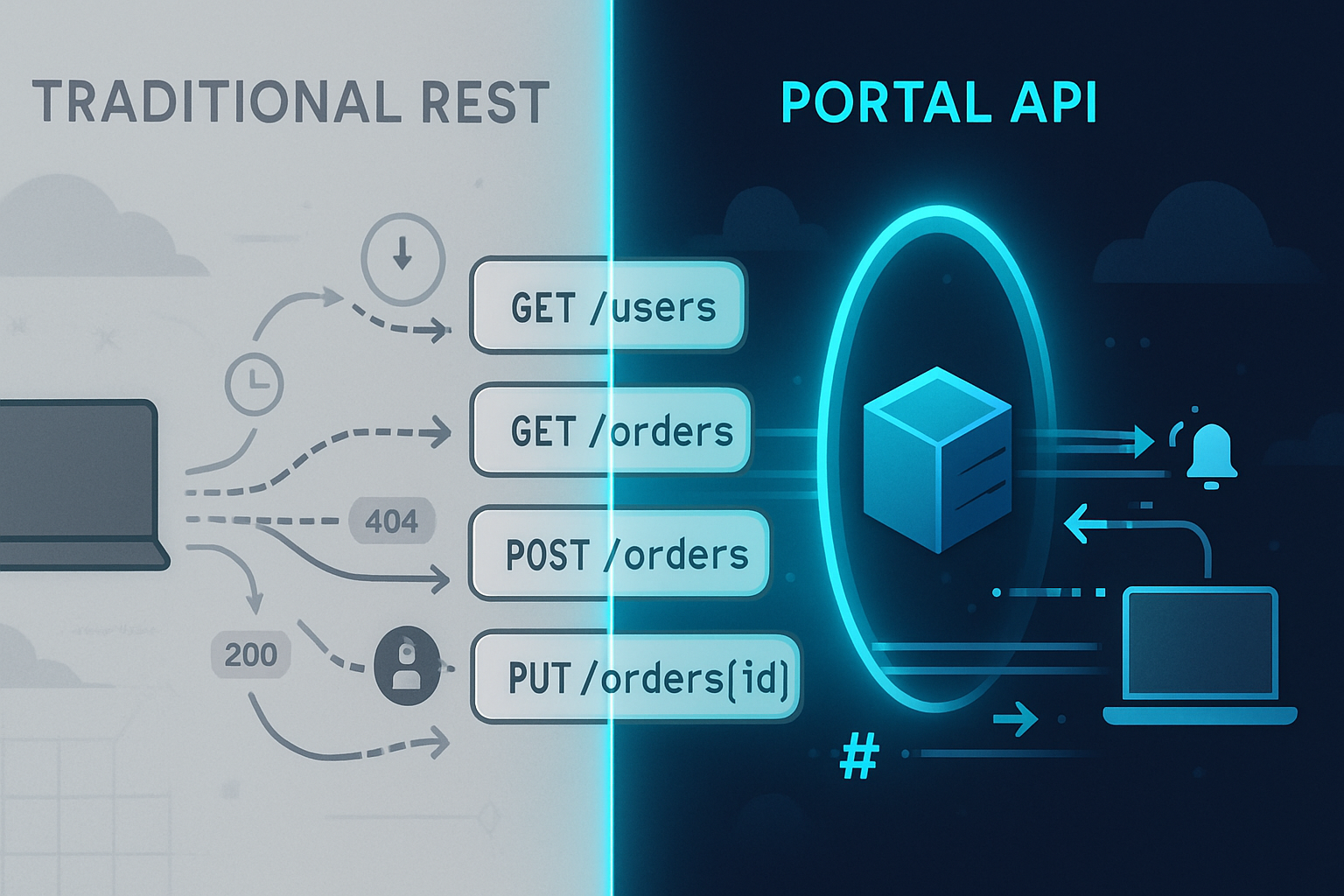
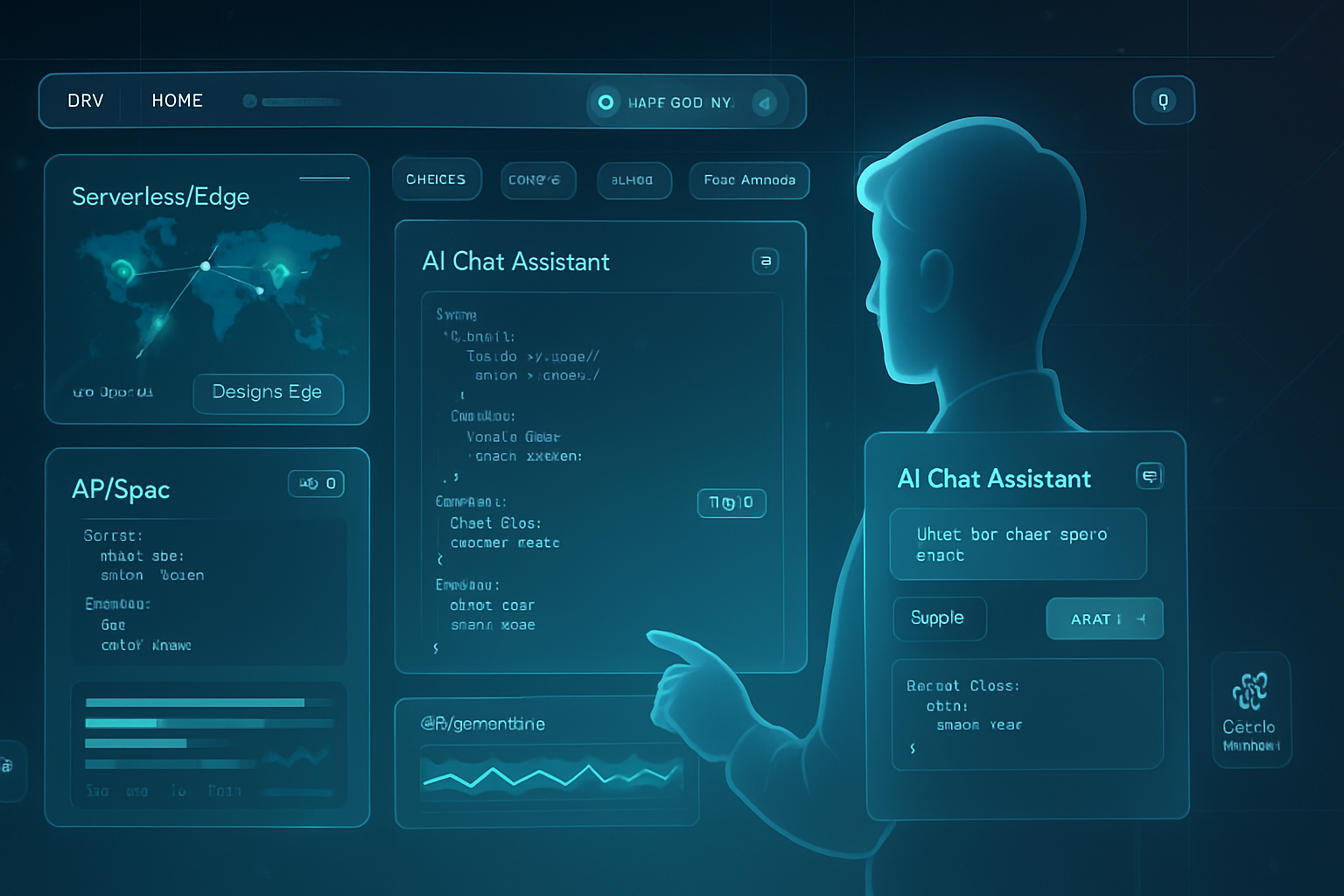
A forward-looking guide to what developers, architects, and platform teams should prepare for in 2024: AI-driven documentation and SDK generation, event-driven composition across microservices, serverless + edge-first APIs, stronger governance and automated compliance, and the new expectations for developer experience.
Outcome-first introduction
By the end of this article you’ll know which shifts in Portal APIs will matter most in 2024 and how to prepare your team and platform to win: what to adopt, what to automate, and what to avoid. Read on for concrete patterns, tooling directions, and an actionable checklist you can apply immediately.
Why this matters - quick TL;DR
- AI will accelerate how portals generate docs, SDKs, and integration code. Expect chatbots that write working client code in minutes.
- Microservices plus API composition will make portals the home of curated integration surfaces, not just docs.
- Serverless and edge computing will push portals to expose operational and cost metadata alongside API contracts.
- Security, governance and compliance will be more automated and embedded in the portal experience.
- Developer Experience (DX) will be the differentiator: discoverability, sample apps, and one-click onboarding will win adoption.
Read the rest for why these trends will happen, how they interact, and what to do about them.
AI will move from helper to co-author
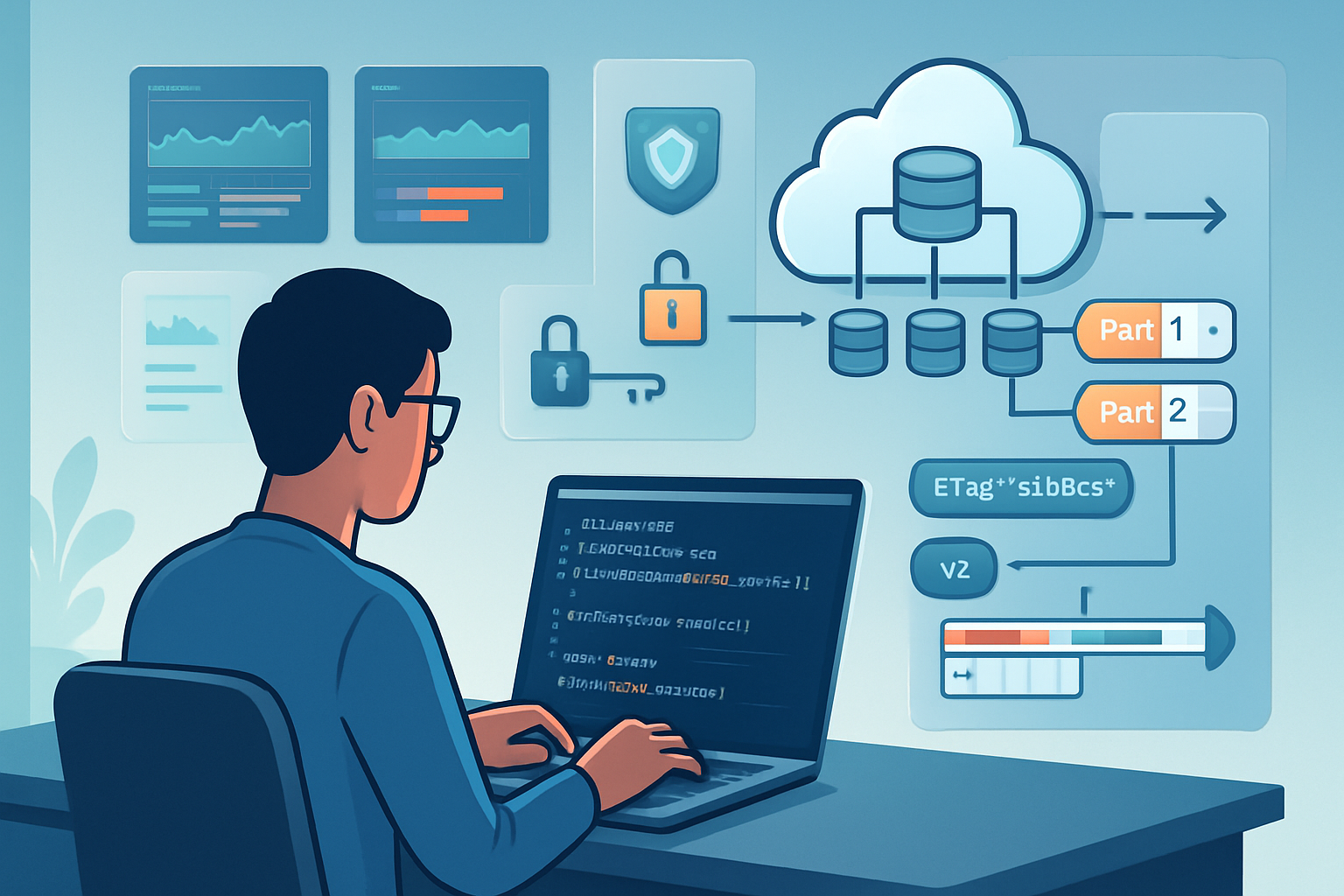
AI isn’t a novelty anymore. In the API portal space it flips the funnel. Instead of developers browsing static docs, portals will proactively generate client SDKs, integration snippets, migration guides, and even small cobbled-together end-to-end demos based on intent.
- Auto-generated SDKs and bindings from a single canonical spec (OpenAPI/AsyncAPI). Tools will iterate from machine-readable schemas to idiomatic client libraries. See OpenAPI for the schema-first approach: https://www.openapis.org/
- Natural-language query and code assistants embedded in portals. Expect chat interfaces that produce working curl commands, TypeScript clients, or server stubs. Think of documentation that runs code for you.
- AI-assisted breaking-change analysis. Portals will summarize the user impact of API changes, flag risky diffs, and propose migration snippets.
Why this matters: AI shortens the ramp-up time for adopters and reduces the support burden for provider teams. But it also raises quality questions - generated SDKs must be validated with real contract tests and CI.
Microservices, API composition, and the portal as a product catalog
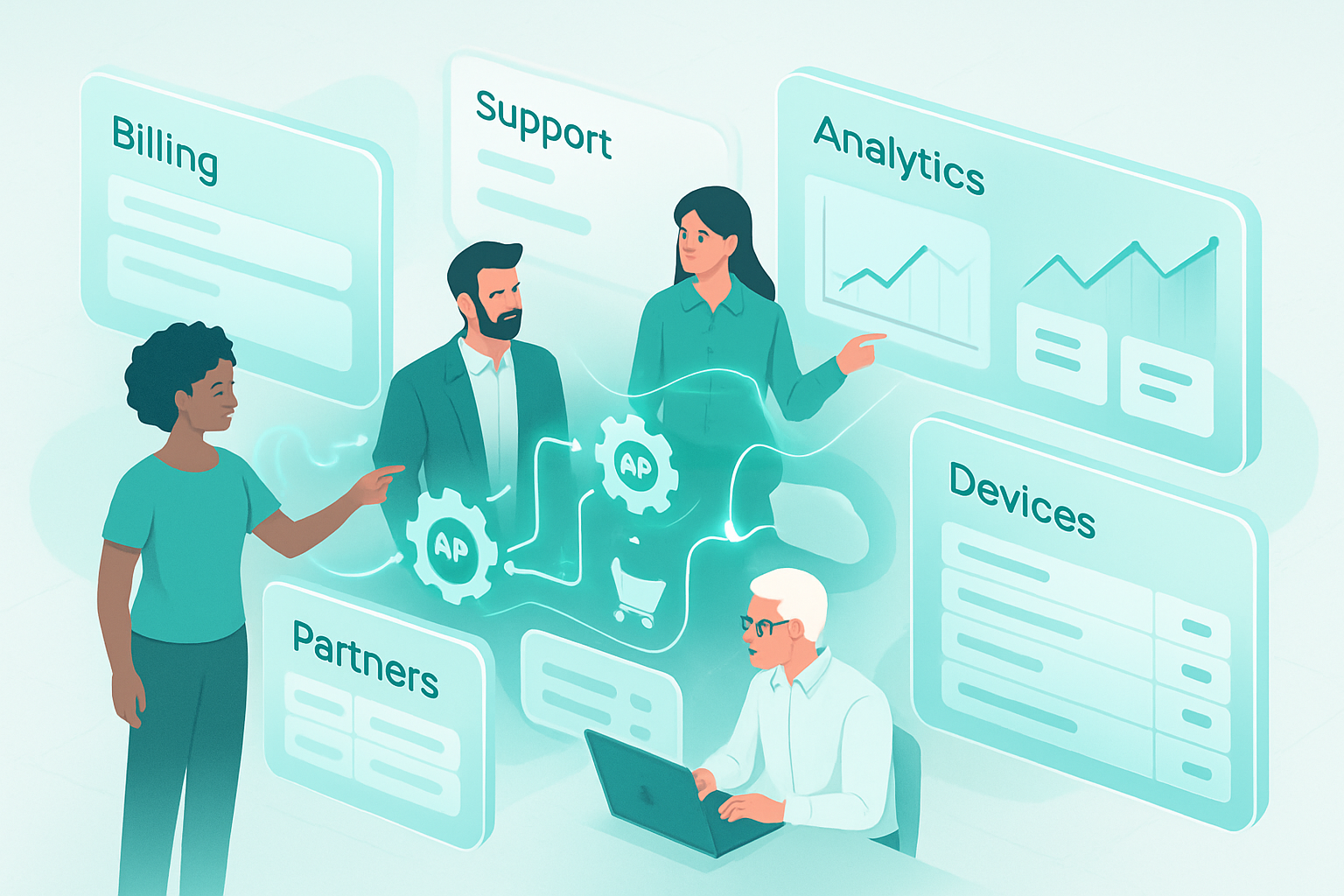
Portals are no longer just documentation sites. They become curated product catalogs for composed APIs - aggregated surfaces that stitch together many microservices.
- API composition layers and BFFs (backend-for-frontends) will be surfaced in portals as first-class products.
- Event-driven and asynchronous APIs (AsyncAPI) gain parity with sync REST; portals must support event schemas, examples, and consumer patterns. Learn more at https://www.asyncapi.com/
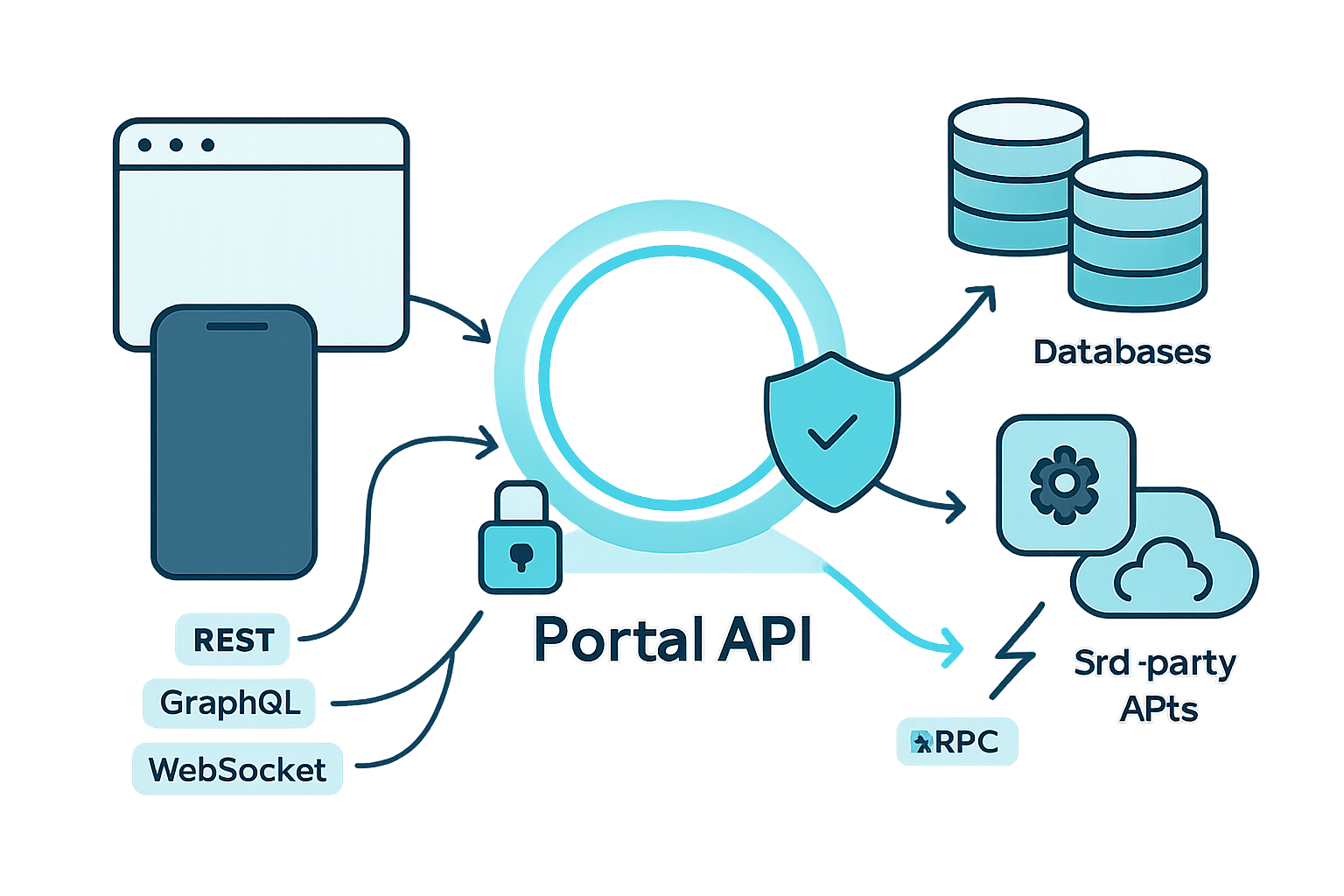
- GraphQL and gRPC will coexist with REST; portals must document multiple contract types, generate cross-protocol docs, and support introspection. See https://graphql.org/ and https://grpc.io/
Why this matters: Discoverability and contractual clarity across many small services reduces integration friction and prevents the creation of shadow APIs.
Serverless, edge, and operational metadata in portals
Serverless and edge-first deployments change what a portal needs to display. It’s no longer only about endpoints and request/response shapes.
- Portals will show runtime characteristics: cold-start expectations, concurrency limits, cost-per-invocation estimates, and regional availability (edge footprints like Cloudflare Workers and other edge runtimes).
- Deployment metadata (revision, commit, environment) and real-time health/status indicators will be surfaced alongside API specs.
- Portals will integrate with CI/CD to present release notes and safe-deploy flags (canary rollout status, feature-flagging hooks).
Why this matters: Consumers will choose APIs not just by surface but by operational fit - latency, cost, and geographic coverage.
Security, policy, and automated governance
2024 will push policy enforcement left - into design and discovery. Portals become enforcement points as well as documentation tools.
- Contract-first with built-in policy checks. Gate PRs and registry publishing with automated policy engines like Open Policy Agent: https://www.openpolicyagent.org/
- Fine-grained access controls, OAuth 2.1 and mTLS for service-to-service communication. Keep an eye on evolving best practices: https://oauth.net/2/
- Automated DLP and privacy annotations on API schemas, to help with compliance (GDPR/CCPA) and data residency.
Why this matters: When governance is visible and automated, adoption accelerates because consumers can evaluate compliance earlier.
Observability and platform ops baked into the portal
Portals will become dashboards for operational insight, not just developer onboarding.
- Distributed tracing and per-operation SLA metrics will be discoverable from the portal (linking to traces, flame graphs, and error budgets).
- Contract-level SLAs and SLOs will be first-class metadata, so consumers can programmatically filter APIs by reliability and latency.
- Alerting and runbook links will be attached to each API resource, speeding incident response.
Why this matters: Reliability is a buying decision. Making operational data visible reduces the friction of production adoption.
Standards, tooling, and the rise of schema-first engineering
Schema-first engineering keeps gaining momentum. The portal is the canonical truth for the runtime contract.
- OpenAPI for REST, AsyncAPI for events, GraphQL introspection for queries - portals will natively translate and synthesize across these formats.
- Contract testing as a pipeline gate. Tools generate mock servers and consumer-driven contract tests from portal-hosted specs.
- Stronger linkages between API registries and codegen, so changes propagate through SDKs, mocks, and test harnesses automatically.
Why this matters: The fewer manual artifacts (handwritten docs, stale examples), the fewer errors during integration.
Developer Experience (DX) will be the decisive moat
DX isn’t polish - it’s a product requirement. Portals that reduce the time-to-first-call and time-to-value will win.
Elements to invest in:
- One-click authentication - API keys, OAuth flows, or ephemeral tokens that let developers make their first call in seconds.
- Interactive documentation with live consoles and runnable examples.
- Curated sample apps and recipes for common integration patterns.
- Marketplace-style discoverability: tagging, ratings, usage patterns, and recommended bundles.
Why this matters: Companies don’t buy APIs. Developers do. Delight the developer and adoption follows.
Practical checklist - what to do now
- Adopt schema-first and centralize specs in a registry. Use OpenAPI/AsyncAPI as your source-of-truth.
- Integrate contract tests into CI. Fail early on breaking changes.
- Add AI-assisted features incrementally: start with auto-generated SDKs and an AI-powered search of docs.
- Surface operational metadata in the portal: latency, cost, and regional availability.
- Automate policy checks on publish with Open Policy Agent or equivalent.
- Provide sample apps, one-click credentials, and runnable sandboxes.
- Invest in observability links from portal pages (traces, metrics, logs).
- Plan for multi-protocol support: REST, GraphQL, gRPC, and event schemas.
Tooling and vendors to watch
- OpenAPI / AsyncAPI: canonical spec formats (https://www.openapis.org/, https://www.asyncapi.com/)
- API Management & Gateways: Kong, Apigee, Azure API Management, Kong (for API gateways and developer portals)
- Policy & Authorization: Open Policy Agent (https://www.openpolicyagent.org/)
- Observability: Distributed tracing tools that integrate with portal links (Jaeger, Zipkin, commercial APMs)
- Edge & Serverless: Cloudflare Workers, AWS Lambda@Edge and other edge runtimes
- AI: LLMs and assistant tools for docs and code generation (OpenAI/GitHub Copilot-style integrations)
Risks and cautions
- Over-reliance on generated SDKs without proper validation creates fragile integrations.
- Poorly curated AI snippets can leak secrets or suggest insecure patterns; guard with policy checks and human review.
- Excessive gatekeeping in governance slows innovation; prefer automated, transparent checks.
Conclusion - the one real bet to make in 2024
Portals will evolve from static documentation hubs into intelligent product platforms: discovery, governance, operations, and AI-driven integration all in one place. Invest in schema-first workflows, embed observability and governance into the portal, and treat developer experience as a product - not an afterthought. Do that, and your APIs will be found, trusted, and used.
References and further reading
- OpenAPI: https://www.openapis.org/
- AsyncAPI: https://www.asyncapi.com/
- GraphQL: https://graphql.org/
- gRPC: https://grpc.io/
- Open Policy Agent: https://www.openpolicyagent.org/
- OAuth 2.0 resources: https://oauth.net/2/