· deepdives · 7 min read
The Future of IoT: How a Generic Sensor API Can Transform Your Next Project
A Generic Sensor API can be the common language that unlocks faster development, better interoperability, and greater innovation across IoT projects. This article explains why standardizing sensor data matters, shows a practical API blueprint, outlines implementation patterns, and maps a realistic adoption path for product and platform teams.
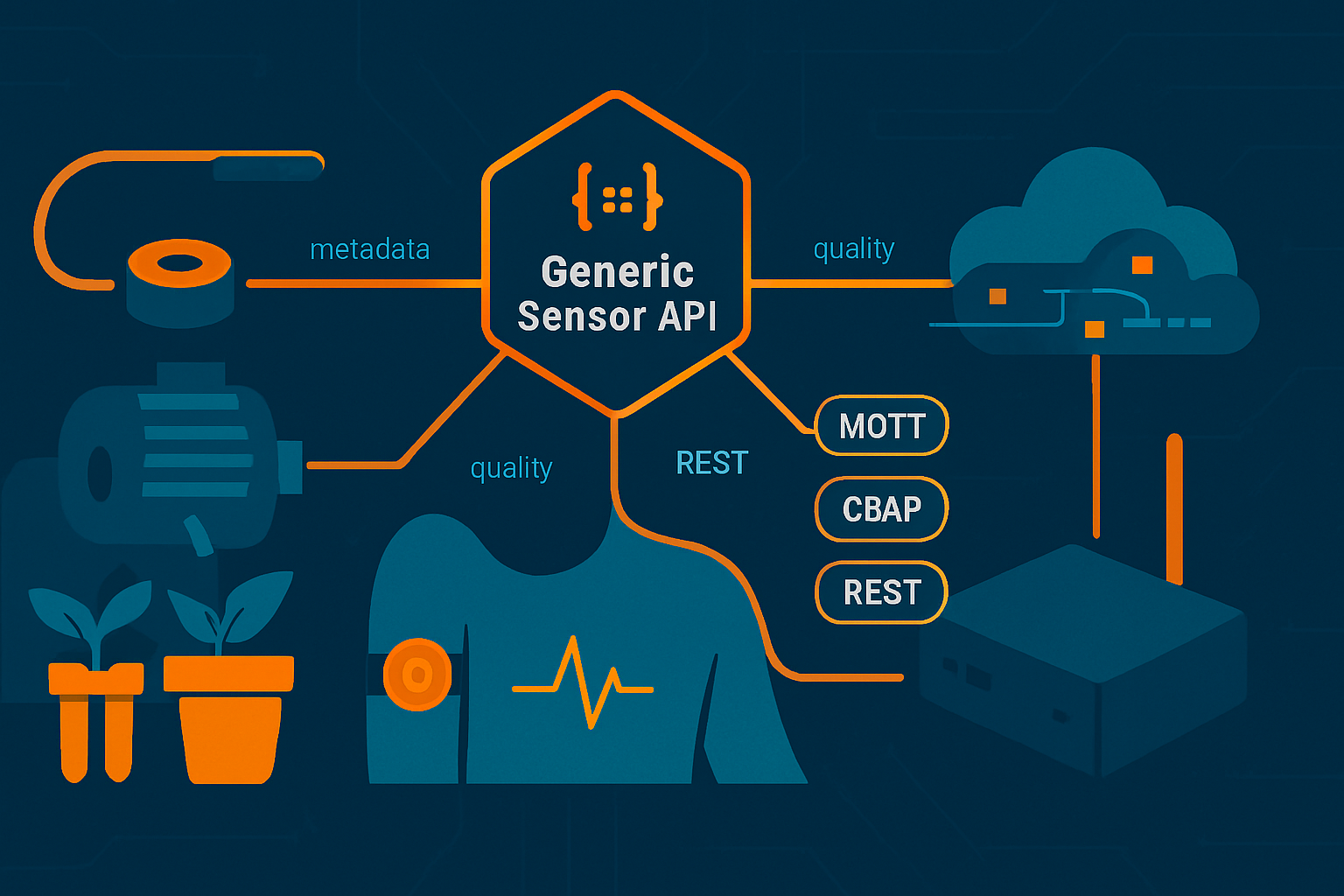
Introduction - what you’ll be able to do after reading
By the end of this article you’ll know how a Generic Sensor API can reduce integration work, make devices plug-and-play across platforms, and let your team focus on features instead of wrangling diverse sensor drivers. Quick wins include faster prototypes, clearer data contracts, and simpler testing. Big wins include ecosystem growth, composable apps, and faster enterprise adoption. When sensors speak the same language, innovation accelerates.
Why a Generic Sensor API matters now
IoT is maturing. Devices proliferate across homes, factories, farms, and cities. Each new vendor brings a different protocol, payload format, and metadata convention. That fragmentation causes three practical problems:
- Wasted engineering time building adapters and mapping fields.
- Fragile integrations that break when a vendor updates firmware or schema.
- Poor security and governance because data and access controls differ across silos.
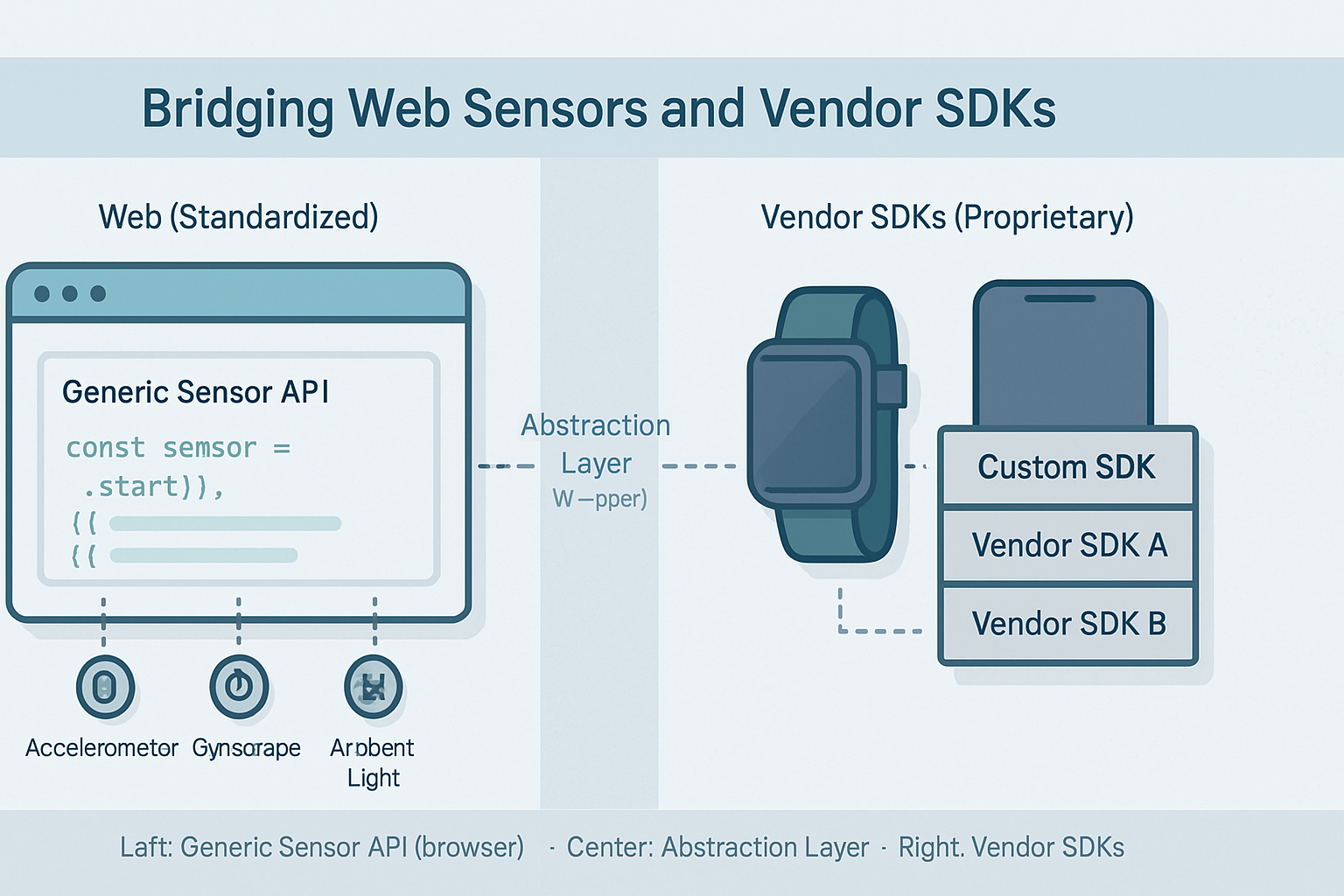
A Generic Sensor API addresses these problems by defining a common, minimal contract for how sensors report data, publish events, describe capabilities, and expose metadata. Standardization doesn’t stop vendor innovation - it amplifies it by making devices composable and platforms predictable. The result: faster time-to-market for new services and reduced total cost of ownership for IoT deployments.
Relevant standards and building blocks
There are existing standards and protocols you can (and should) reuse rather than reinvent:
- W3C Generic Sensor API - a web-oriented sensor abstraction that influenced many designs: https://www.w3.org/TR/generic-sensor/
- OGC SensorThings API - a REST/JSON model for sensor metadata and observations: https://www.ogc.org/standards/sensorthings
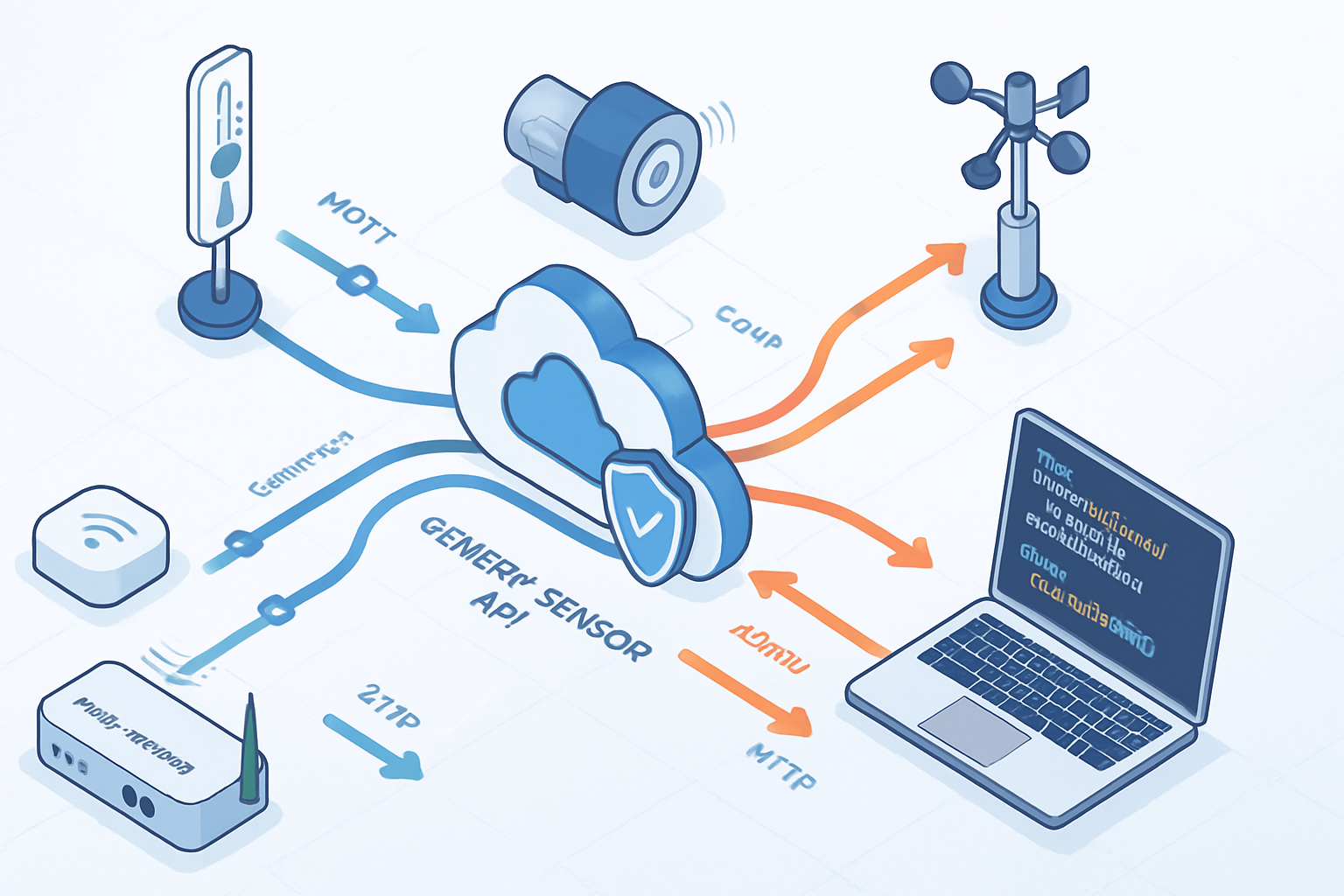
- MQTT - a lightweight pub/sub messaging pattern widely used in IoT: https://mqtt.org/
- CoAP - a constrained RESTful transfer for resource-limited devices: https://datatracker.ietf.org/wg/core/about/
- LwM2M - device management and telemetry for constrained devices: https://omaspecworks.org/what-we-do/iot-standard/lightweight-m2m/
- OPC UA - industrial interoperability for rich information models: https://opcfoundation.org/about/opc-technologies/opc-ua/
A pragmatic Generic Sensor API will borrow concepts from these proven specs: resource models, observation streams, rich metadata, and multiple transport bindings (HTTP/REST, MQTT/CoAP, gRPC).
Core design principles for your Generic Sensor API
- Minimal, opinionated contract
Keep the core small. Define a minimal resource model that every sensor must provide: identity, capability description, units and data types, timestamping, and a canonical data value or event. Larger features (like device management) can be optional extensions.
- Metadata-first
Sensors are useless without context. Include: units (with URIs or ULs), sampling rate (or event triggers), precision and resolution, calibration history, and provenance. Use a consistent unit registry (e.g., UCUM) to avoid ambiguity.
- Dual-mode access: pull and push
Support both on-demand reads (REST/CoAP GET) and streaming events (MQTT/CoAP Observe/WebSocket). Different application scenarios require different access patterns - one API should cover both.
- Efficient encodings and bindings
For constrained devices, support compact binary formats such as CBOR or Protocol Buffers alongside JSON. Provide transport bindings for HTTP/REST, CoAP (for constrained devices), and MQTT (for pub/sub across lossy networks).
- Strong security and identity
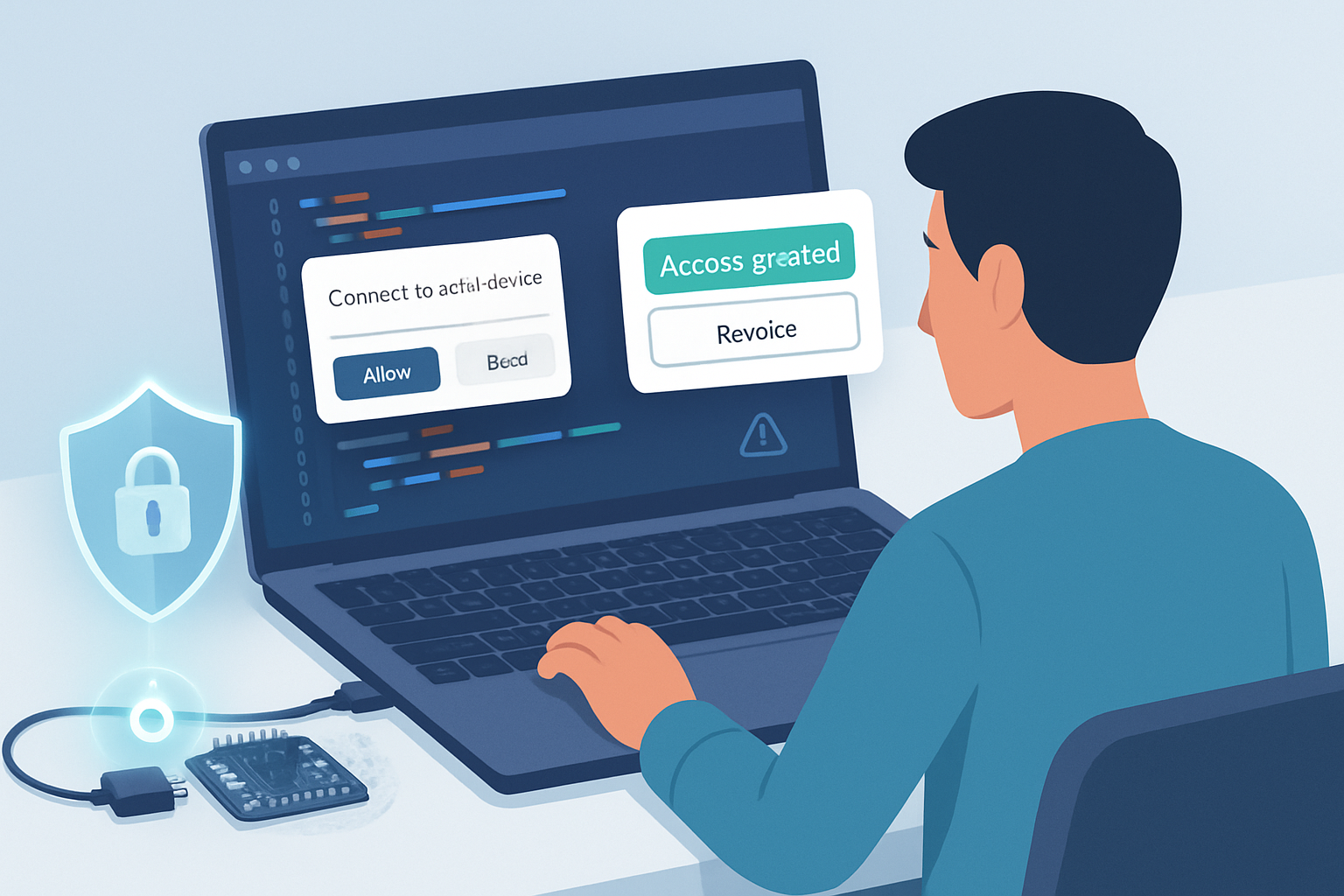
Mandate mutual authentication, message integrity, and authorization scopes. For constrained devices, pair DTLS/OSCORE with per-device credentials. Include attestation metadata so consumers can verify sensor firmware and provenance.
- Extensibility and versioning
Design versioned schemas and a capability discovery mechanism so devices can advertise optional features (e.g., multi-axis accelerometer, temperature sensor). Avoid breaking changes.
- Observability and quality signals
Include quality-of-service flags: signal-to-noise estimates, sample dropout rates, battery status, and self-test results. Consumers can use these to decide whether to accept or re-request data.
Technical blueprint - the API resource model and example
At the core you need a compact resource model. Here’s a recommended minimal model expressed informally:
SensorDevice
- id (URI)
- model
- manufacturer
- firmware_version
- security_profile
- capabilities: [SensorCapability]
SensorCapability
- id
- type (e.g., temperature, accelerometer)
- dataType (e.g., float32, int32, vector
) - unit (UCUM string or URI)
- sampling (period or “event”)
- metadata (calibration, provenance)
- endpoints: {rest: /devices/{id}/capabilities/{id}/observations, mqttTopic}
Observation
- timestamp (ISO 8601 or epoch, with timezone)
- value (number/string/object)
- quality (optional)
- sequence (optional monotonic counter)
Example: JSON REST observation (human readable)
GET /devices/urn:dev:ops:32473/capabilities/temp01/observations/latest
{
  "timestamp": "2025-10-12T09:23:45.123Z",
  "value": 21.7,
  "unit": "Cel",
  "quality": {"snr": 45.7, "dropout": 0},
  "source": "urn:dev:ops:32473"
}
Example: Compact CBOR-like payload for constrained devices (pseudocode)
{ "t": 1734564456, "v": 217, "u": "C", "q": 457 }Where integer scaling and short keys minimize bytes on the wire.
Transport bindings: when to use what
- REST/HTTP (JSON): Management consoles, dashboards, and server-to-server integrations.
- MQTT: Event streams, decoupled pub/sub, and mobile/cloud ingestion where latency tolerance is moderate.
- CoAP/OSCORE: Constrained devices where payload and handshake overhead must be minimal.
- gRPC/Protobuf: High-throughput internal pipelines between services in the cloud or on powerful gateways.
Security model recommendations
- Device identity: Use X.509, raw public keys, or enrollment tokens depending on device capability.
- Transport: TLS for TCP/HTTP, DTLS or OSCORE for constrained transports.
- Authentication/Authorization: OAuth 2.0 for human and service clients; token-based or capability-based auth for devices.
- Attestation: Include firmware hashes and hardware root-of-trust claims in device metadata so consumers can validate provenance.
Operational patterns and platform integration
Edge gateway responsibilities
- Protocol translation (CoAP/MQTT ↔ HTTP)
- Local aggregation and filtering to reduce upstream bandwidth
- Caching and local analytics to preserve function when cloud is unreachable
- Security boundary: hold private keys and perform device attestation on behalf of networked sensors
Cloud ingestion patterns
- Ingest raw observations into time-series stores with standardized columns (device_id, capability_id, timestamp, value, quality)
- Enrich observations with metadata at ingest time (unit conversion, location resolution)
- Expose standard REST/WebSocket endpoints for downstream apps to subscribe to normalized data
Schema evolution and versioning
- Each SensorCapability should include a schema_version.
- New fields must be optional and consumers should ignore unknown fields.
- Provide an endpoint to fetch capability schema and validation rules.
Real-world use cases made simpler
- Smart buildings
Plug a new CO2 sensor into the network and the building management system automatically discovers its capability, unit, accuracy, and sampling mode - no custom mapping required. HVAC control logic can immediately use quality signals to trust or discard measurements.
- Industrial predictive maintenance
Standardized vibration data (same frequency domain encoding, same quality flags) lets you apply a single ML model across machines from different vendors. Time-to-insight shrinks dramatically.
- Precision agriculture
Soil sensors from three vendors stream observations to one analytics service. Because units and calibration metadata are consistent, irrigation models can combine data without per-vendor transforms.
- Healthcare wearables (privacy-aware)
A consistent API enables third-party apps to request well-scoped readings (heart rate over last 24 hours) while the platform enforces consent, scope, and auditing.
Implementation checklist and best practices
- Start small: standardize one or two capability types (e.g., temperature and humidity) and expand.
- Create SDKs for common platforms (C for microcontrollers, Python for gateways, JS for web/edge) to reduce adoption friction.
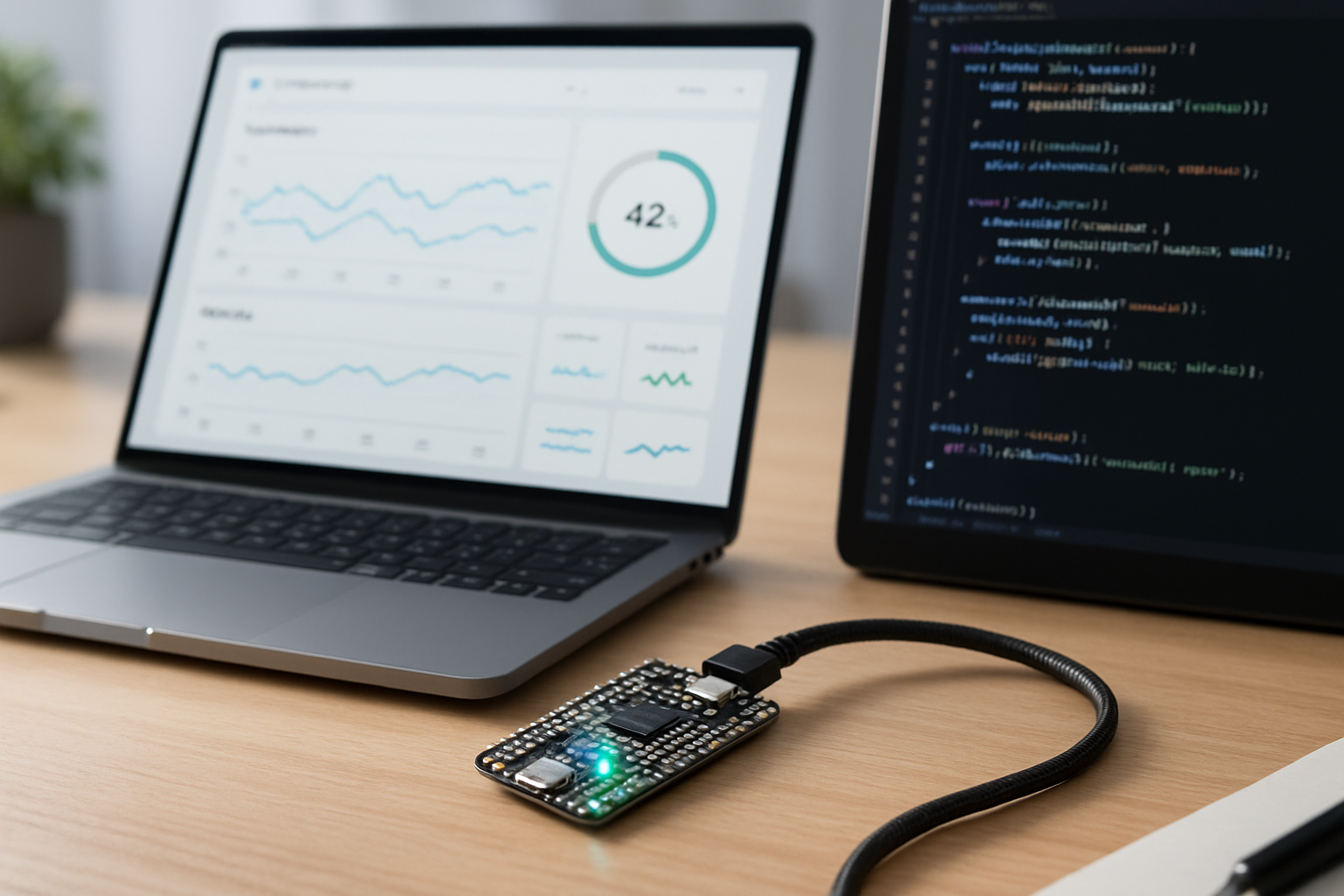
- Provide reference implementations: a constrained-device client, an edge gateway, and a cloud ingestion service.
- Build conformance tests and a badge program so vendors can validate implementations.
- Offer migration adapters that map popular legacy payloads (e.g., vendor-specific MQTT topics) to the generic model.
- Add sample ML/analytics pipelines that consume the generic output so adopters can see immediate value.
Challenges and how to mitigate them
- Vendor buy-in: Offer incentives such as co-marketing, conformance badges, and clear SDKs. Make the API opt-in with migration adapters.
- Performance on constrained devices: Use binary encodings and CoAP, and support gateway-side translation.
- Semantic mismatches (units, derived metrics): Include rich metadata (unit URIs, calibration) and provide canonical conversion libraries.
- Security complexity: Provide tested reference code and managed services for key provisioning and certificate lifecycle.
Path to adoption - a realistic roadmap
- Internal standardization (0–3 months)
- Pick top 3 sensor types. Build internal SDKs and a reference gateway.
- Pilot with partner vendors (3–9 months)
- Ship SDKs and conformance tests. Run pilots in live environments.
- Open beta and ecosystem growth (9–18 months)
- Publish spec, host workshops, and onboard integrators.
- Long-term stabilization (18+ months)
- Add richer device management features, official certification, and cross-industry working groups.
The role of governance and open standards
To scale, a Generic Sensor API benefits from an open governance model. You don’t need a heavyweight standards body to start; a small, pragmatic working group with published specs, clear versioning, and a conformance test harness is enough to reach critical mass. As adoption grows, formalize through recognized bodies (OGC, IETF, W3C, oneM2M) so enterprise buyers gain additional trust.
Future trends and where this leads
- Sensor virtualization and digital twins: standardized sensors make virtual replicas trivial to assemble.
- Edge AI: models can be trained once and deployed across devices if inputs are predictable and standardized.
- Federated analytics: consistent schemas enable privacy-preserving federated learning across devices from different vendors.
- Marketplace economies: when sensors present predictable capabilities, marketplaces for sensor data and algorithms become viable.
Conclusion - the real payoff
A Generic Sensor API isn’t about forcing uniformity for its own sake. It’s about creating predictable contracts that free engineers to build features, data scientists to build models that generalize, and businesses to compose services across vendor boundaries. Standardization reduces friction. It amplifies innovation. And when your sensors all speak the same language, your project moves from brittle integrations to a platform that scales.
References
- W3C Generic Sensor API: https://www.w3.org/TR/generic-sensor/
- OGC SensorThings API: https://www.ogc.org/standards/sensorthings
- MQTT: https://mqtt.org/
- CoAP: https://datatracker.ietf.org/wg/core/about/
- LwM2M: https://omaspecworks.org/what-we-do/iot-standard/lightweight-m2m/
- OPC UA: https://opcfoundation.org/about/opc-technologies/opc-ua/