· deepdives · 7 min read
The Dark Side of Badges: Ethical Considerations of Gamification with the Badging API
A critical look at the ethical risks of using badges and the Web Badging API for gamification-covering addiction, manipulation, privacy, fairness, and practical steps developers can take to design more humane badge systems.

Outcome-first: build badge systems that boost engagement without sacrificing user autonomy, privacy, or dignity. Read this to spot the ethical landmines of badging, understand how the Web Badging API fits into the picture, and implement badges the right way.
Why this matters - and fast
Badges are small. They look harmless. But their behavioral power is outsized. A tiny red number on an icon. A shiny ribbon next to a username. These simple signals can shape attention, form habits, and, at scale, manipulate millions of people into chasing rewards.
You can design badges that delight and motivate. Or you can build systems that exploit impulsive behavior, invade privacy, and institutionalize inequality. The difference comes down to intentional design and ethics.
Two “badging” contexts you should know about
First, a clarification so we don’t talk past each other:
- “Badging API” (Web Badging API) - a browser API that lets web apps set a badge (usually a small number or indicator) on an app icon or UI element. See the spec and implementation notes on MDN and WICG: https://developer.mozilla.org/en-US/docs/Web/API/Badging_API and https://wicg.github.io/badging/.
- Digital badges and certificates (e.g., Open Badges) - metadata-rich credentials representing achievements or competencies. See https://openbadges.org/.
Both are used for gamification and share ethical concerns. This article treats them together where relevant, and calls out Web Badging API specifics when appropriate.
Ethical pitfalls to watch for
Below are the most common harms I’ve seen in badge-driven designs. Short descriptions. Real consequences.
- Addiction and compulsive use
- Badges rely on reward mechanics that trigger dopamine-driven loops. Variable rewards (randomized, intermittent recognition) are particularly addictive because they mirror gambling schedules.
- Manipulation and loss of autonomy
- Badges can be used as nudges to push behaviors users might not otherwise choose-especially when combined with scarcity, social pressure, or personalized triggers.
- Dark patterns and coercion
- Badges that gate functionality (e.g., you must earn X badge to access feature Y) or that misrepresent progress are manipulative design patterns.
- Privacy and profiling
- Awarding badges often requires collecting behavioral data. That creates profiling risks, data-broking opportunities, and regulatory exposure (e.g., GDPR).
- Inequality and biased outcomes
- Poorly designed badge systems favor advantaged users (those with more time, better resources, or existing social capital), reinforcing existing gaps.
- Social harm and shaming
- Leaderboards and visible badges can foster unhealthy competition, shame, or exclusion-especially for vulnerable groups and children.
- Mission misalignment
- When badges become the goal rather than the means, product decisions optimize for engagement metrics not user well-being or learning outcomes.
How the Web Badging API can amplify these risks
The Web Badging API makes it easy to surface persistent, attention-grabbing signals (for example, a badge count on an installed Progressive Web App). That low friction is powerful. It also means:
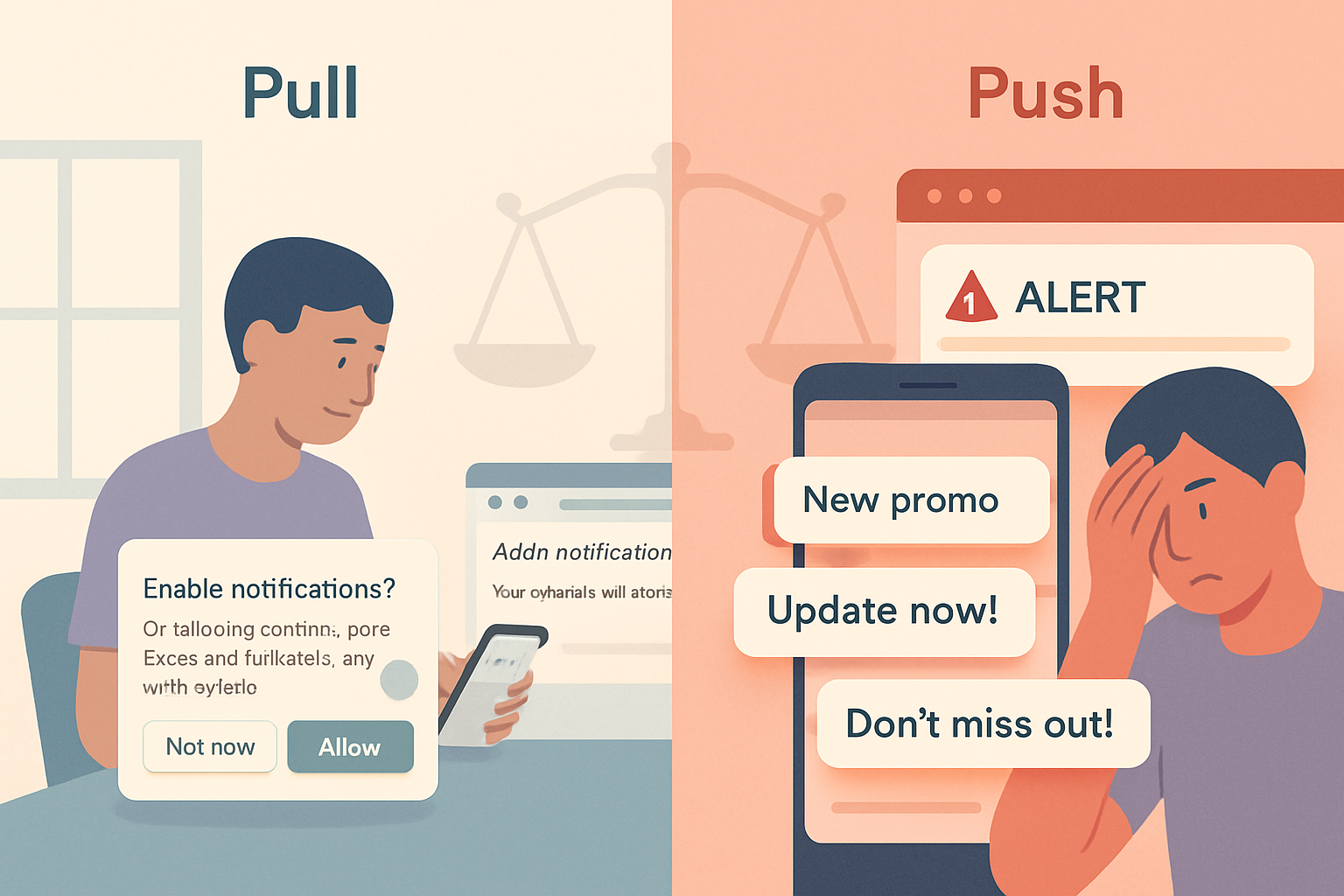
- You can push notifications-like cues without going through traditional permission dialogs. That increases the chance of surprise or unwanted attention.
- Badges are persistent and global (they sit on user surfaces like launchers). Poorly thought-out badges create constant, ambient pressure.
Technical example (simple):
// Show badge count when available
if ('setAppBadge' in navigator) {
  navigator.setAppBadge(3).catch(e => console.error(e));
}

// Clear the badge
if ('clearAppBadge' in navigator) {
  navigator.clearAppBadge().catch(e => console.error(e));
}
Use this power carefully. The API itself won’t tell you whether a badge is ethical. That’s your job.
(For implementation notes and support, see MDN: https://developer.mozilla.org/en-US/docs/Web/API/Badging_API.)
Design principles for ethical badging
Adopt these before you write your first badge rule.
- Purpose-first: define the human outcome the badge serves
- Is the badge intended to teach, recognize skill, encourage healthy routine, or increase revenue? If you can’t justify it in terms of positive user outcomes, don’t ship it.
- Transparency and consent
- Tell users why badges exist, what data they collect, and how they affect their experience. For Web Badging, surface an opt-out and honor preferences.
- Respect autonomy
- Avoid coercive mechanics (e.g., locking core features behind badges). Make badges optional enhancements, not requirements.
- Minimize data collection
- Track only what’s necessary to award badges. Keep data local where possible and avoid building detailed behavioral profiles.
- Fairness and accessibility
- Ensure badge criteria are inclusive and accessible across abilities, cultures, and socioeconomic contexts. Provide alternate paths to earn recognition.
- Avoid addictive reinforcement schedules
- Be wary of variable-ratio rewards. Favor predictable, mastery-oriented progression over random or endless reward loops.
- Make rewards meaningful
- Badges should signal real achievement or utility (e.g., demonstrating mastery, unlocking helpful features), not simply inflate vanity metrics.
- Audit and red-team
- Periodically audit your badging system for unintended consequences. Use user research, ethics reviews, and external auditors if possible.
Practical implementation checklist
A short, actionable checklist you can use during design and code reviews.
- State purpose in plain language where badges are shown.
- Provide an opt-out toggle in settings and persist that preference.
- Log minimal data and retain it for a short, justified period.
- Ensure badge text/icons are accessible (screen-reader labels, color contrast).
- Avoid public leaderboards by default; allow anonymous participation.
- Avoid tying core features or critical flows to badge completion.
- Disclose algorithmic criteria for automated awards or ranking.
- Apply age-sensitive design when users may be children (see COPPA and local laws).
- Monitor wellbeing metrics (session length, complaint rates, support tickets, churn).
Monitoring for harm - metrics to watch
Measure both engagement and wellbeing. A few recommended signals:
- Changes in average session length and session frequency (sudden increases may indicate compulsive use).
- Support tickets mentioning pressure, addiction, or unwanted attention.
- Opt-out rates for badges and Do Not Disturb settings.
- Drop-off in non-gamified key outcomes (e.g., learning retention falling despite higher badge counts).
- Self-reported wellbeing via periodic short in-app surveys.
If your engagement metrics rise while wellbeing metrics fall, you’re optimizing the wrong thing.
Good and bad examples
Bad: a messaging app that increments a badge count for every tiny behavior (typing indicator, read receipts) and uses it to repeatedly pull users back, without an opt-out. This produces ambient pressure and interrupts daily life.
Better: the same app only shows a badge for actionable, time-sensitive items (unread urgent messages) and allows the user to disable casual badges in settings.
Bad: an educational platform issues badges based purely on time spent, not mastery, encouraging users to “grind” rather than learn.
Better: a learning platform awards badges for demonstrated skill (project-based assessments) and explains what that badge represents.
Regulatory and legal considerations
- GDPR and data minimization: collect and store only what’s necessary for awarding badges. Provide data access and deletion options to users. https://gdpr.eu/
- Children’s privacy: if minors might receive badges, follow COPPA and country-specific rules-minimize tracking and require verifiable parental consent when necessary. See FTC guidance: https://www.ftc.gov/business-guidance/privacy-security/childrens-privacy
- Accessibility law: ensure your badges and UI meet accessibility standards (WCAG).
I’m not a lawyer. Treat this as practical guidance and consult legal counsel for compliance decisions.
Governance and accountability
Create a badging policy document your team follows. Include:
- Purpose and scope of badges
- Criteria and evidence for each badge
- Data collection, retention, and deletion rules
- User-facing disclosures and opt-out mechanisms
- Review cadence and KPIs (both engagement and wellbeing)
Include an ethics reviewer in product sign-off for any new badge. Make audits part of release cycles.
Final implementation tips for developers
- Progressive enhancement: detect support for the Web Badging API and provide respectful fallbacks for other users.
- Respect platform conventions: badges that appear on a system launcher are more intrusive-use them only for meaningful, user-beneficial signals.
- Rate-limit changes: avoid flipping a badge state too frequently; debounce updates to reduce noise.
- Provide a one-click silence: a single, persistent setting to suppress all gamified signals (badges, flashy animations) for peace of mind.
Quick resources and further reading
- Web Badging API (WICG): https://wicg.github.io/badging/
- MDN Web Docs - Badging API: https://developer.mozilla.org/en-US/docs/Web/API/Badging_API
- Open Badges: https://openbadges.org/
- BJ Fogg - Behavior Model / Persuasive technology: https://behaviormodel.org/ and his body of work
- Dark Patterns site and taxonomy: https://www.darkpatterns.org/
- GDPR overview: https://gdpr.eu/
Closing - a humane finishing line
Badges are a design lever. Use them to uplift users: to teach, to certify, to celebrate real progress. Or use them to chase metrics at the cost of people’s time, privacy, and agency. The choice isn’t technical. It’s ethical. Choose deliberately. Choose human dignity over a higher click-through rate.