· career · 6 min read
The Secret Sauce: How to Combine Algorithmic Skills with Cultural Fit in Google Interviews
Learn how to present both top-tier algorithmic skills and authentic cultural fit in Google interviews. This article gives a step-by-step plan, sample answers, and practical tactics to show technical excellence and 'Googliness' together.

Outcome: pass your Google interview not just by coding fast, but by demonstrating the judgment and values that make your work matter at scale.
Why technical skill plus cultural fit wins at Google - and how the hiring process reflects that
Google evaluates candidates on technical ability and on whether they’ll thrive in Google’s culture (often called “Googliness”). They use structured interviews designed to measure role-related knowledge, general cognitive ability, leadership, and culture fit. See how Google describes its hiring process here: https://careers.google.com/how-we-hire/ and explore their recruiting philosophy at re:Work: https://rework.withgoogle.com/.
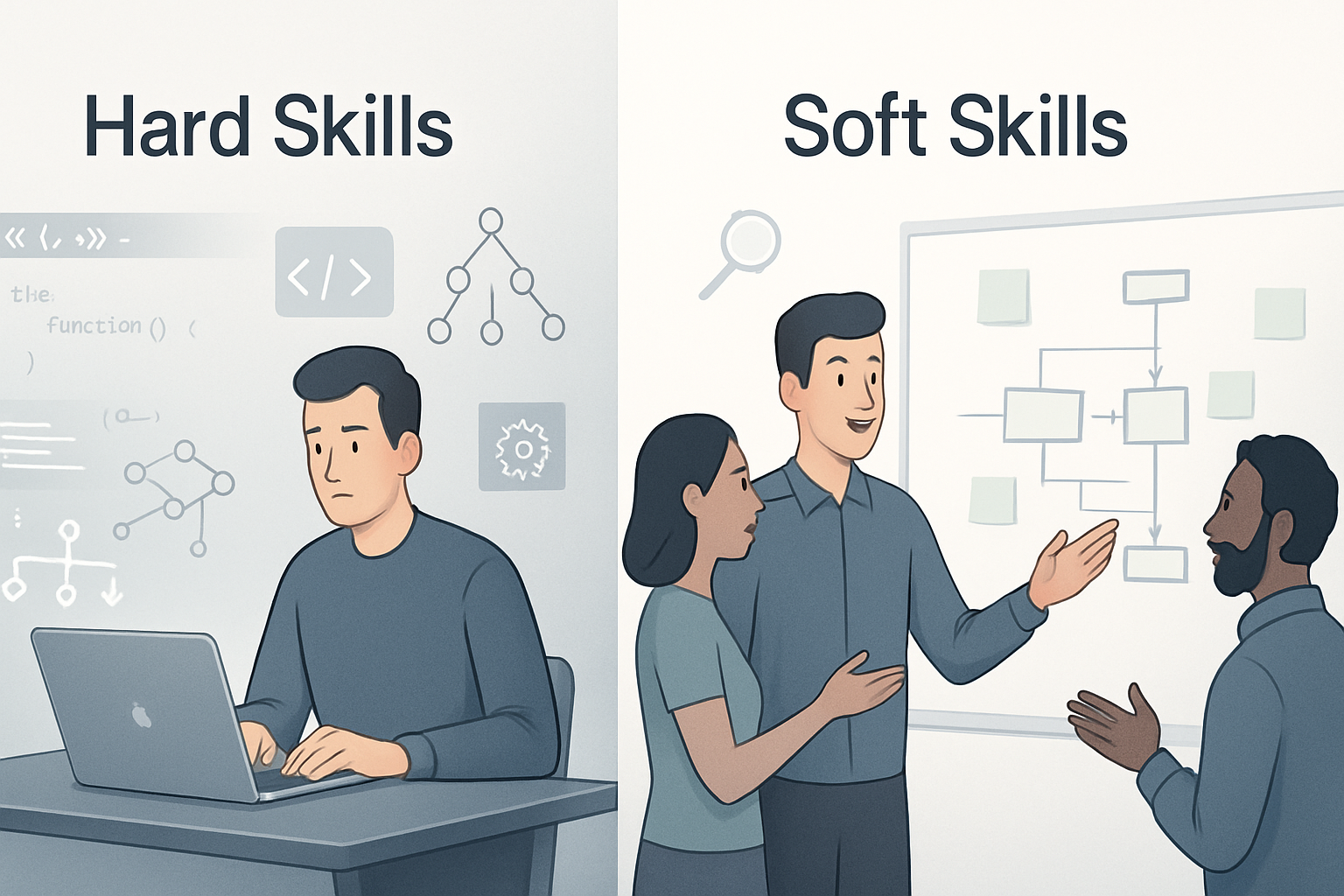
Technical chops open the door. Cultural fit keeps you in the room - and multiplies your impact once you’re hired. Simple idea. Huge implications.
Start with an outcome-oriented prep plan (8-week scalable template)
- Weeks 1–2: Fundamentals. Refresh arrays, strings, hash maps, trees, graphs, recursion, complexity analysis.
- Weeks 3–5: Problem types. Do focused sets: two pointers, sliding window, graphs, dynamic programming, heaps. Timeboxed practice: 45–60 minute sessions.
- Weeks 6–7: Mock interviews + system design. Pair up or use platforms for live feedback. Add behavioral stories and iterate.
- Week 8: Polish. Review your top 10 problems, rehearse core stories, run 3 full mock interviews.
Mix technical practice with cultural prep every single week. Don’t silo them.
Resources: LeetCode for practice (https://leetcode.com/), Cracking the Coding Interview for strategy (https://www.crackingthecodinginterview.com/), and live mocks via peers or platforms.
Build algorithmic skills that matter (focus, not noise)
- Master patterns, not only problems. Patterns generalize; memorized solutions don’t. Learn the intuition behind two-pointer, divide-and-conquer, dynamic programming, and graph traversals.
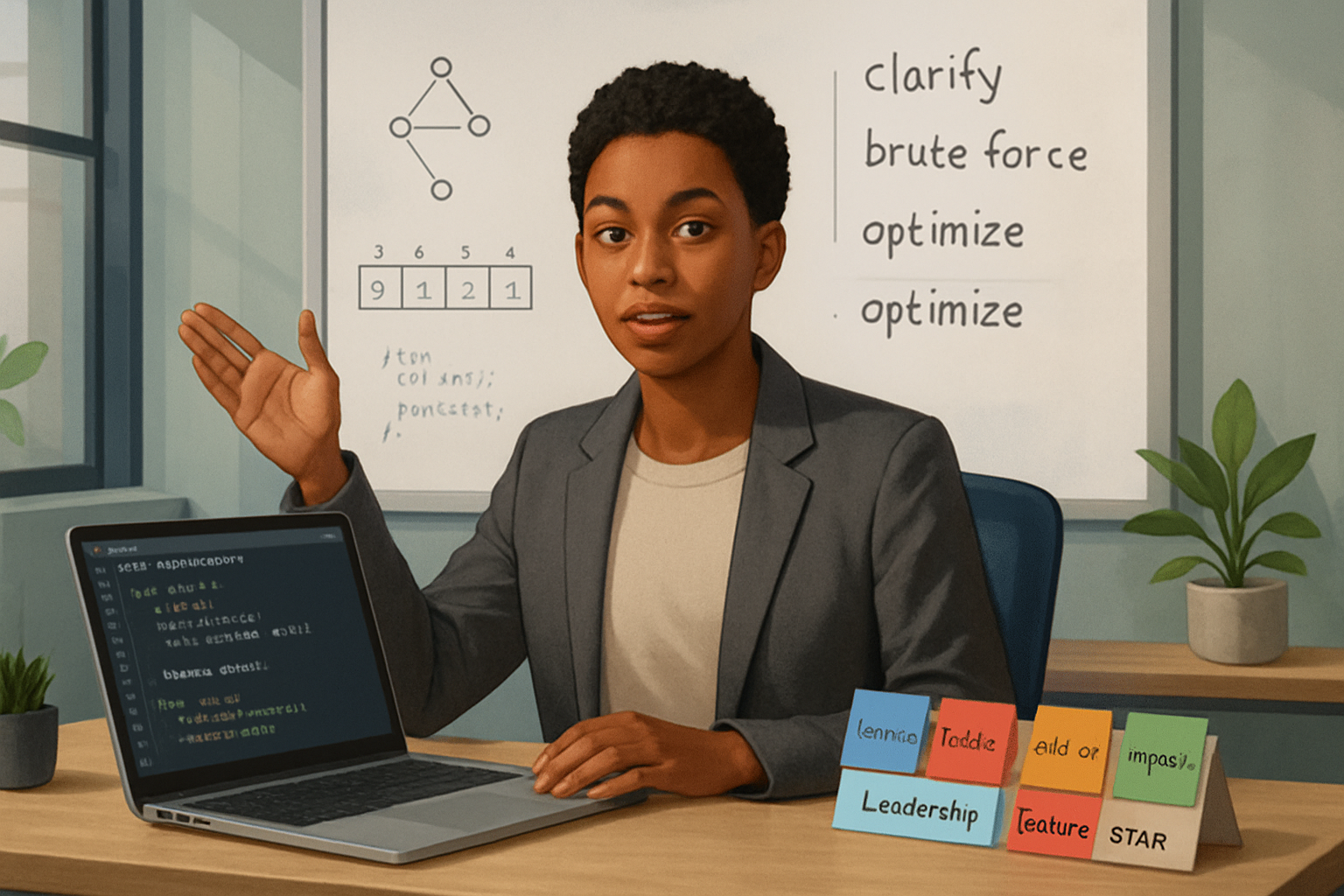
- Practice communicating while coding. Speak intent, trade-offs, and complexity as you write code. Interviewers evaluate thought process as much as final code.
- Optimize for clarity first, then performance. A clear, correct O(n^2) solution that you can explain and then optimize to O(n log n) often scores higher than an obfuscated O(n) hack.
Pro tip: Always state the complexity after you write code. It’s an easy checklist item that shows you’re systematic.
Define and prepare your “Googliness” stories
What do interviewers mean by culture fit at Google? Think: collaboration, humility, bias to action, user-centric thinking, comfort with ambiguity, and ethical judgment. These traits show up in hiring rubrics as behaviors, not buzzwords.
Framework: use STAR (Situation, Task, Action, Result). MindTools explains the method well: https://www.mindtools.com/pages/article/newLDR_66.htm.
How to prepare stories:
- Pick 6–8 stories total: teamwork, disagreement resolution, learning from failure, leadership without authority, inclusive decision-making, and times you prioritized user impact.
- Quantify results. Numbers make impact tangible.
- Show reflection: what you learned and how you changed behavior.
Example story goal: show you accepted feedback, iterated, and improved the product - that’s classic Googleyness.
Weave culture into your technical answers - concrete tactics
Open with context. When you start solving a problem, state who benefits and why it matters. Small alignment. Big impression.
Make trade-offs explicit. Say why you choose simplicity over micro-optimization for maintainability, or why latency trade-offs favor a CDN. That shows product judgment.
Surface collaboration. Mention constraints that require cross-team work (data schema, privacy, rate limits). Propose how you’d sync with stakeholders.
Include user impact in design. For system design questions, attach SLAs, expected QPS, and monitoring plans to show operational thinking and ownership.
Demonstrate learning posture. If you don’t know a detail, say how you’d learn it, who you’d consult, and how you’d mitigate risk in the meantime.
Short example snippet (technical + culture):
“I’ll optimize this search ranking because users notice latency above 200ms. I’ll start with an O(n log n) solution to be correct and measurable, instrument latency metrics, then profile hotspots with telemetry and discuss rollout with the SRE team to avoid a full-scale outage.”
That single statement ties correctness, metrics, and cross-team ownership.
Behavioral-technical hybrid answers - templates you can adapt
Template A - Technical problem with culture tie:
- Situation: “Our high-traffic recommendation API was timing out for 10% of requests.”
- Task: “I had to reduce p95 latency and maintain recommendation quality.”
- Action: “I implemented a tiered cache, added async fallbacks for non-critical signals, and coordinated a canary release with SREs. I wrote experiments to ensure recommendations didn’t regress.”
- Result: “p95 latency dropped by 60%, errors fell to 0.2%, and engagement increased 3% month-over-month.”
- Reflection (optional but powerful): “I learned to balance algorithmic purity with operational reliability and to involve SRE early.”
Template B - Pure behavioral showing Google traits:
- Situation: “We disagreed on architecture for a cross-team feature.”
- Task: “Needed a path forward that preserved velocity and long-term maintainability.”
- Action: “I created a technical spike, documented trade-offs, and facilitated a working session to reach consensus.”
- Result: “We shipped in 6 weeks with instrumentation in place; post-launch errors were under expectations.”
Always close with what you learned and what you’d do differently next time.
Resume and artifacts: prove both sides at a glance
- For each bullet, use the formula: Action + metric + impact + collaboration. Example: “Built a distributed feature-store that reduced model training time by 40%, enabling 2x faster feature experiments across two product teams.”
- Include links to open-source contributions, technical blogs, or thoughtful PRs. They’re proof points of curiosity and ownership.
Don’t hide collaborative work. If a project was team-built, name teammates and your role. Google values clear attribution.
During the interview: rhythm and micro-habits
- Clarify requirements before diving in. Ask about edge cases and constraints. It signals thoughtfulness.
- Think aloud. Use small checkpoints: outline, pseudocode, implement, test, optimize.
- When stuck, verbalize hypotheses and fallback plans. Interviewers are evaluating learning and resilience.
- Ask your own questions about team norms, product goals, and success metrics. That demonstrates product empathy and interest.
Never pretend to know something. Say, “I don’t know, but here’s how I’d find out,” and outline a plan.
Common pitfalls and fixes
- Pitfall: Treating behavioral stories as afterthoughts. Fix: Rehearse them with the same vigor as algorithms.
- Pitfall: Overfitting to whiteboard tricks. Fix: Show how a solution would work in production and list operational concerns.
- Pitfall: Hiding team context on resume. Fix: Explicitly call out cross-team dependencies and stakeholder coordination.
Sample 60–90 second answers (quick templates you can memorize)
- “Tell me about a time you handled ambiguity.”
- “When we lacked product specs for a data pipeline, I ran a two-week spike to define minimum viable data, prioritized signals with PMs, and delivered a pipeline that enabled the first A/B test - which increased retention by 2%. I learned to trade initial speed for clear telemetry to avoid rework.”
- “Explain your approach to a performance bug.”
- “I reproduce with a perf profile, identify hotspots, propose short-term mitigations (caching, batching) and long-term fixes (algorithmic refactor), then roll out one change at a time with metrics and rollback plans.”
Final checklist before your interview
- 10 algorithm problems fully grokked and explained aloud.
- 6–8 STAR stories, practiced and quantified.
- Resume bullets with metrics and team context.
- 3 thoughtful questions for interviewers about impact, team culture, and mentoring.
- 1 line that summarizes why you and Google are a match (mission alignment).
Closing: your differentiator isn’t code speed alone
You can get the syntax right and still lose the hire. You can be slower and still win. What separates average from exceptional in Google interviews is combining technical clarity with the judgment to apply tech toward user impact and team success. Master that, and you don’t just answer questions - you create a case for how you’ll contribute.
References
- Google Careers - How we hire: https://careers.google.com/how-we-hire/
- re:Work - Google’s people operations insights: https://rework.withgoogle.com/
- Cracking the Coding Interview: https://www.crackingthecodinginterview.com/
- LeetCode: https://leetcode.com/
- STAR interview technique: https://www.mindtools.com/pages/article/newLDR_66.htm