· career · 7 min read
From Hobby to Hustle: Turning Open Source JavaScript Contributions into a Profitable Career
A practical roadmap for converting your JavaScript open source contributions into income - through direct funding, productization, consulting and personal-brand-driven opportunities. Includes actionable templates, pricing tips, legal considerations, and a 30/90/365 day plan.
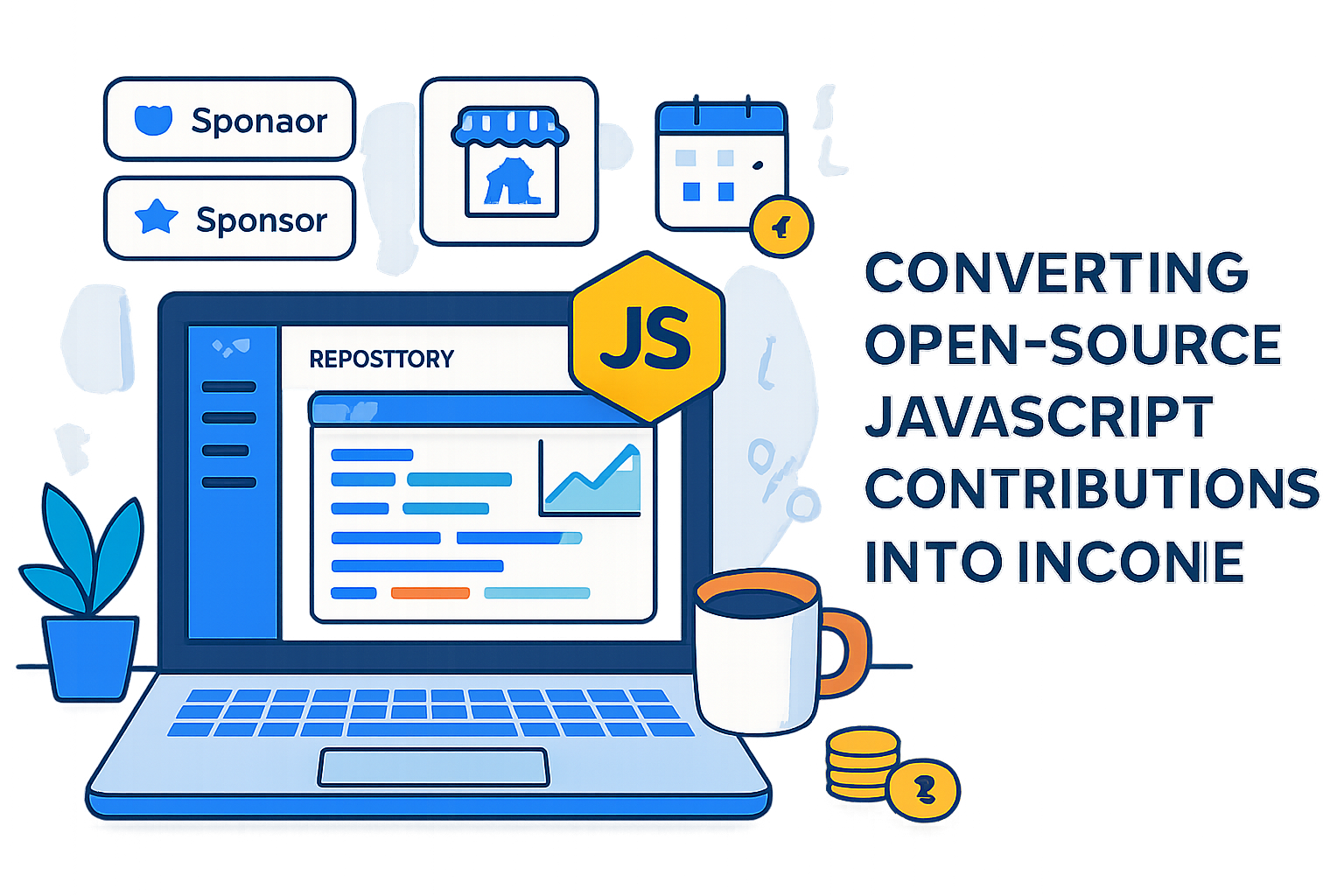
Outcome first: within a year you can turn your open-source JavaScript work from a passion project into a steady income stream - not by chasing every opportunity, but by choosing the right mix of direct funding, productization, and client work that fits your goals.
Open source is not just a portfolio. It’s a reputation engine. And with the right strategy, that reputation pays.
Why open source is one of the best career assets you already own
- Code is proof. A public repo is a live résumé that hiring managers, maintainers and potential clients can evaluate in minutes. Short sentence. Big leverage.
- Visibility leads to demand. Libraries and tools that developers use put you in front of companies that need help integrating, customizing, or operating that software. Longer sentence - build attention and you open doors.
- Network effects. Each issue you solve, each PR you review, each talk you give compounds your authority.
Paths to monetization - direct and indirect (overview)
Direct methods (revenue from the project itself):
- Sponsorships and donations (GitHub Sponsors, Open Collective, Patreon).
- Paid tiers or “sponsor-only” perks (early releases, private support channels).
- Open-core / dual licensing: free core, paid features or enterprise license.
- Commercial support, SLAs, paid addons, managed hosting (turn a library into a hosted product).
- Tidelift-style model: partnering with companies to provide maintenance and licensing guarantees.
Indirect methods (revenue enabled by open source reputation):
- Freelance projects and short-term contracts related to your OSS expertise.
- Consulting and retainers (integration, migration, architecture reviews).
- Courses, workshops, and paid talks.
- Books, paid newsletters, and paid video content.
- Productized services (audits, health checks, migration packages).
Each path has trade-offs. Direct income scales with user base, but often needs product thinking and sales. Indirect income leverages your personal brand and can pay faster.
Direct monetization: practical tactics and platforms
- Sponsorships & donations
- GitHub Sponsors: let individuals and companies fund you directly - simple to set up and discoverable on your profile. https://github.com/sponsors
- Open Collective: great for community funding, transparent budgets, and project-level support. https://opencollective.com
- Patreon: works for creators who produce regular educational or community content. https://www.patreon.com
Quick wins:
- Add a clear sponsorship section to your README with goals, impact statements, and sponsor tiers.
- Offer tangible benefits: monthly Q&A, private channels, early-release access, or small-business support hours.
- Open-core & paid add-ons
- Keep a valuable core OSS package free and put advanced features behind a paid plan or separate package.
- Examples: premium analytics, enterprise auth plugins, or official integrations.
- Commercial maintenance & Tidelift model
- Companies pay to guarantee updates, vulnerability fixes, and licensing assurances. Tidelift aggregates this: https://tidelift.com
- This model requires process, SLAs, and predictable release cadence.
- Managed hosting / SaaS
- Take a library or tool and offer it as hosted software. Higher barrier to build, but recurring revenue is attractive.
Indirect monetization: converting reputation into paying work
- Freelance & fixed-scope gigs
- Use your OSS as a showcase. Include links and explain impact (adoption numbers, companies using it, issue triage you handled).
- Marketplaces help, but targeted outreach to teams that use your library converts better.
Sample outreach email (short and copy-ready):
Subject: Help migrating off [legacy-lib] to [your-lib]

Hi [Name],

I noticed your project uses [legacy-lib]. I maintain [your-lib], and I can help migrate and optimize it to reduce bugs and improve performance. I offer a 2–3 day migration package for $X and a follow-up audit.

If you're interested, I can send a scope and timeline.

- [Your Name]- Consulting & retainers
- Position yourself as the person who knows the internals. Sell time (retainers) for ongoing support or architecture guidance.
- Offer clearly defined deliverables: weekly office hours, monthly security updates, quarterly architecture reviews.
- Workshops, courses, and paid talks
- Teach a practical topic - migration, debugging, performance tuning - that you use every day in your project.
- Host workshops at companies who rely on your code. They pay for staff time and your expertise.
- Products: books, courses, paid newsletters
- Leverage deep knowledge into a paid format. It’s passive after the initial work and builds long-term authority.
Building a personal brand that converts (practical checklist)
- Optimize your GitHub profile: highlight pinned repos, a clear bio, contact info, and sponsor links.
- Document outcomes, not just code. Add a short case study for your main projects: who used it, what problem it solved, and any measurable gains.
- Write focused blog posts and migration guides. They bring search traffic and position you as the expert.
- Speak at meetups and conferences. Start small. Then scale to paid talks.
- Teach and mentor. Contributions to others’ onboarding materials are socio-economic currency.
Useful resources: GitHub’s Open Source Guides for best practices: https://opensource.guide
How to pick the right strategy for you
Ask three questions:
- How fast do I need income? (Short: freelance/consulting. Medium-to-long: sponsors, productization.)
- How much do I enjoy sales and operations? (If not, prefer passive or agency-style models.)
- What is the adoption potential of my project? (Large user base → sponsorships/SaaS; niche → high-value consults.)
Mix approaches. Start with quicker wins (sponsorship + small consulting gigs). Reinvest income into productization or marketing.
Pricing, contracts, and legal basics
- Pricing: anchor on value. Charge by outcome, not only by hour, when possible. For migrations and audits, fixed-price packages convert better.
- Contracts: always have a simple written agreement: scope, timeline, deliverables, payment terms, IP/licensing clauses.
- Taxes and payments: platforms like GitHub Sponsors help but you’re still responsible for taxes. Use invoices and keep records.
- Licensing: be explicit. Choose an appropriate open source license and document what is allowed. See https://choosealicense.com for guidance.
Setting boundaries and sustainable rhythms
Open source attention can be endless. You must set limits.
- Define office hours for OSS work or support.
- Offer paid support for urgent issues and reserve unpaid time for community goodwill.
- Use contributorship techniques: issue templates, triage labels, and a CODE_OF_CONDUCT to reduce noise.
- When turning pieces of work into paid offerings, make the difference clear between the free and paid experiences.
A productized playbook: sample 30/90/365 day plan
Day 0–30: Visibility and quick wins
- Polish README, add sponsorship links and a concise impact statement.
- Publish 1–2 blog posts: a how-to and a migration guide.
- Set up a basic sponsor page (GitHub Sponsors/Open Collective).
Day 31–90: Launch small offerings
- Create a 1–3 day paid migration/audit package and a pricing page.
- Run outreach to 10 companies using your project - use the sample email above.
- Host a paid workshop or an in-depth webinar.
Day 91–365: Scale and productize
- Analyze revenue and feedback. Convert recurring demand into a retainer or SaaS roadmap.
- Build a premium add-on or managed offering, and test pricing with early customers.
- Invest profits into marketing: conference talks, sponsored content, or a small contractor to handle routine issues.
Longer term: keep the free core healthy. Use revenue to fund maintenance. Hire or partner for growth.
Sample sponsor tier blurb (copy-paste and adapt)
Support [project-name] - keep it healthy and supported.

Bronze $5/mo - Thanks on the README + monthly community newsletter
Silver $25/mo - Bronze + 1 monthly office hour for Q&A
Gold $100/mo - Silver + priority support & a quarterly integration review
Sponsor company - Custom SLA and on-call support package (contact for details)
Make tiers about value and outcomes. Keep them simple.
Realities and common pitfalls
- Expect irregular income at first. Planning matters. Save a runway.
- Don’t trade long-term project health for short-term consulting that drains you.
- Avoid feature-your-customers trap: customers may want product decisions. Choose whether you want to be a vendor or a community maintainer.
Resources & further reading
- GitHub Sponsors: https://github.com/sponsors
- Open Collective: https://opencollective.com
- Tidelift: https://tidelift.com
- Choose a License: https://choosealicense.com
- Open Source Guides (GitHub): https://opensource.guide
Final word - make the project work for you
You already write code that others depend on. That code can pay your bills. It can also let you choose the work you enjoy. Start small, be strategic, and prioritize impact over perfection. Build trust first; monetize second. Do that, and your hobby becomes a sustainable hustle.