· frameworks · 7 min read
Astro vs Traditional Frameworks: Which One Should You Choose?
A practical, no-nonsense comparison of Astro with React, Vue, and Angular - trade-offs, performance realities, and a clear decision guide for when Astro actually outperforms traditional frameworks.
Outcome first: read this and you’ll know which framework will get your project shipped fastest, perform best for users, and stay maintainable for your team.
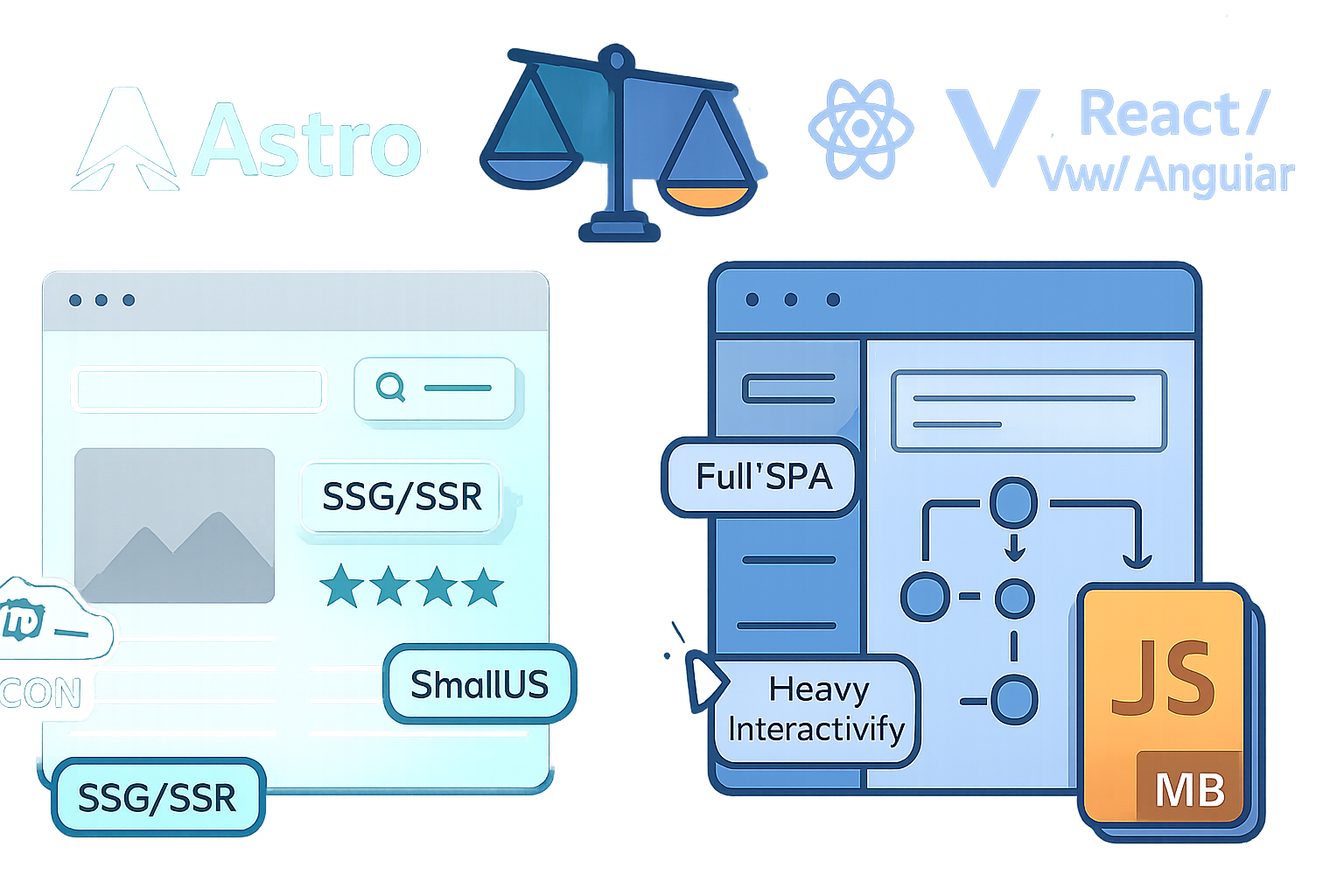
You won’t get a one-size-fits-all verdict. Instead you’ll get a clear decision path - the situations where Astro is a superior choice, when React/Vue/Angular remain the safer bet, and why.
What Astro actually is (and what it isn’t)
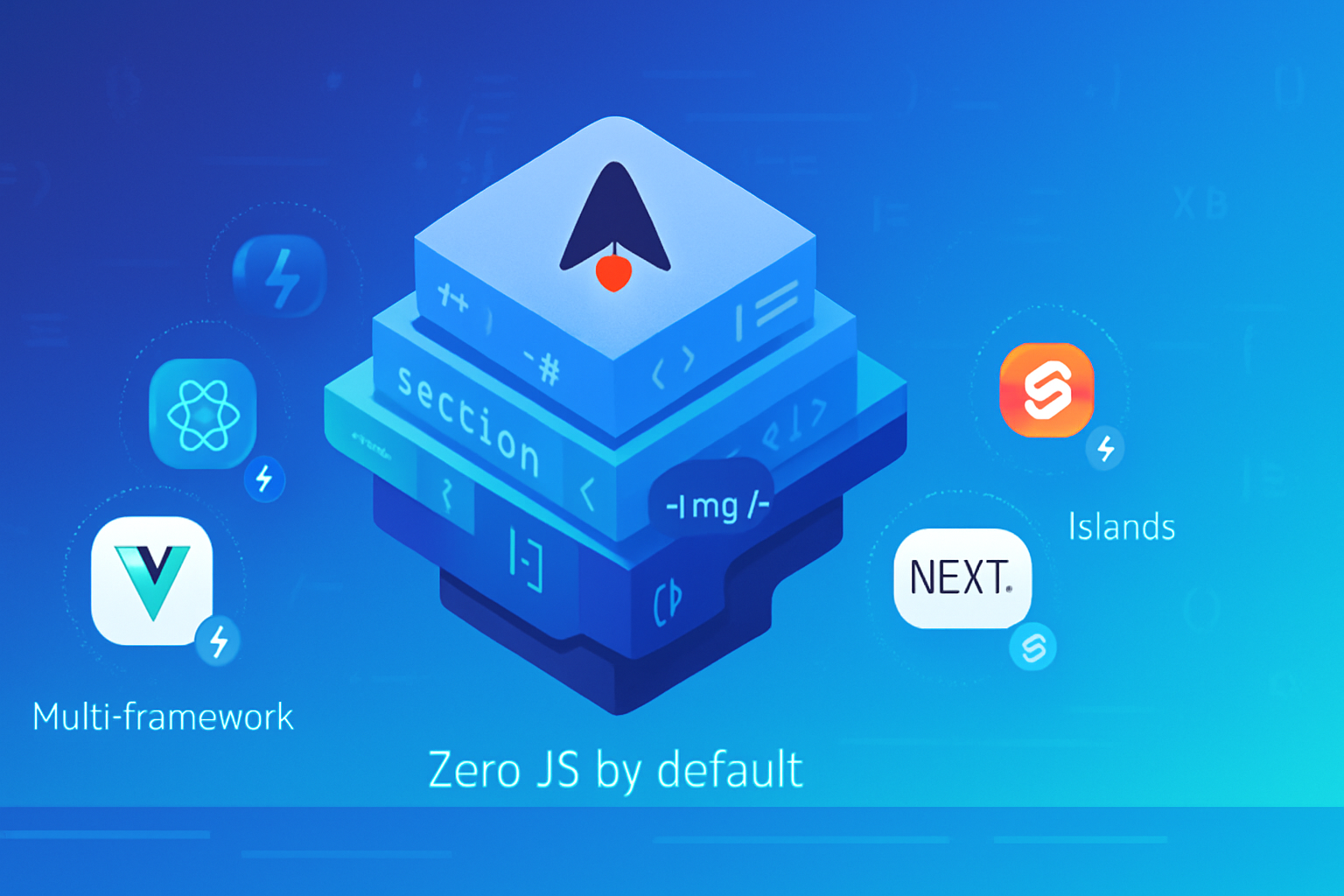
Astro is a web framework optimized for delivering minimal JavaScript to the browser. It champions server-first rendering, static-site generation, and an “islands architecture” that hydrates interactive components only where needed. That makes it radically different from the default single-page-app (SPA) workflows you get with React, Vue, or Angular.
- Read Astro’s docs: https://astro.build
- Islands architecture explainer: https://www.smashingmagazine.com/2022/12/islands-architecture/
In short: Astro treats HTML as the primary asset, and JavaScript as a narrowly scoped enhancement. The result? Much less client-side runtime in many common use cases.
Key technical differences (high level)
Rendering model
- Astro: Server-first - supports SSG and SSR out of the box. Pages are HTML-first and JS is added per-island.
- React/Vue/Angular: Historically client-heavy SPAs with strong SSR/SSG options (Next.js, Nuxt, Angular Universal) that still ship larger JS payloads by default.
Hydration model
- Astro: Partial/Islands hydration - only hydrate components that need interactivity.
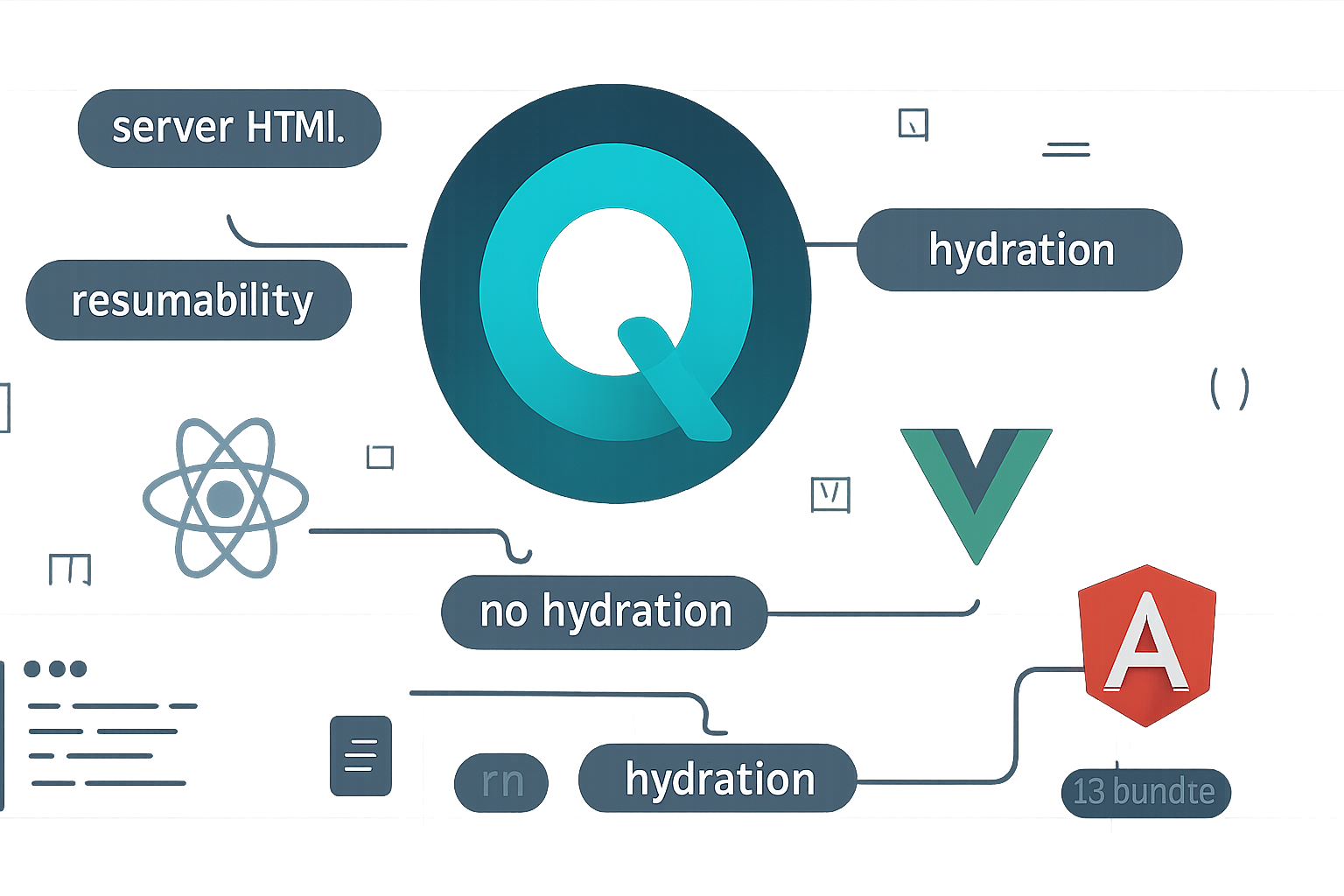
- React/Vue/Angular: Full or component hydration, but most solutions hydrate large subtrees; partial hydration exists but is more nascent.
Interactivity
- Astro: Focused. Use React/Vue/Svelte components inside Astro pages when you need interactivity.
- React/Vue/Angular: Designed for app-level interactivity and complex client state.
Ecosystem & patterns
- Astro: Embraces multi-framework usage - you can import React, Vue, Svelte components in one project.
- Traditional frameworks: Mature, deep ecosystems built around one paradigm.
Pros and cons - Astro
Pros
- Performance-first by default: smaller JS payloads and faster Time-to-Interactive on typical content sites.
- Great for marketing sites, docs, blogs, marketing pages, product landing pages, and headless CMS front-ends.
- Framework-agnostic: combine components from different UI libraries in one app.
- Simpler hosting: many pages can be fully static HTML, cheap to serve from CDNs.
- Modern DX: file-based routing, partial hydration, integrated image optimizers, and good TypeScript support.
Cons
- Not ideal for complex client-side apps (dashboards, collaborative tools, real-time apps) that require heavy client logic or global client state.
- Ecosystem maturity: smaller plugin ecosystem compared to React/Vue/Angular and fewer enterprise integrations (though it’s growing fast).
- Some patterns (complex routing, deep client-side caching, advanced state management) require more setup or moving parts.
Pros and cons - React / Vue / Angular
Pros
- Battle-tested for complex, stateful applications and SPAs.
- Enormous ecosystems: libraries for virtually every UI need, battle-proven patterns for testing, CI, and enterprise deployment.
- Mature solutions for SSR/SSG (Next.js, Nuxt, Angular Universal) that approximate static performance while preserving rich client interactions.
Cons
- Bigger default JS bundles, unless you carefully optimize and use partial hydration or micro-frontends.
- More developer responsibility to trim unused code, optimize hydration, and tune bundle splitting.
- Opinionated ecosystems can lock teams into patterns that are hard to unwind.
Where Astro decisively outperforms traditional frameworks
- Content-heavy marketing sites and documentation
- Why: Most pages are static or lightly interactive. Astro outputs tiny HTML-first pages and hydrates only the widgets that need JS (search box, comment widget, signup form). Faster loads and better SEO come as a byproduct.
- Headless CMS front-ends (blogs, catalogs, docs)
- Why: Frequent requests are read-heavy. Static generation + CDN caching yields excellent TTFB and durability under traffic spikes.
- Multi-framework projects where you want to reuse UI components from different ecosystems
- Why: Astro’s support for using React, Vue, Svelte components lets teams adopt new tech gradually without a full rewrite.
- Sites where cost of serving and caching matters
- Why: Static HTML pages served from a CDN are cheaper and more resilient than always-on app servers.
- Projects where frontend performance is a top priority for conversions (SEO, Core Web Vitals)
- Why: Small payloads and minimal hydration improve CLS, LCP, and TTI metrics out of the box.
When you should avoid Astro
- Full-featured SPAs and real-time apps: If you need persistent WebSocket connections, heavy client-side logic, or complex global state (e.g., collaborative editors), native SPA frameworks remain the better fit.
- Enterprise apps with deep dependence on mature libraries: If your organization demands specific integrations or tools that only exist in an ecosystem (large Angular-based UI libraries, for example), go with that ecosystem.
- Teams that need a single-vendor, enterprise-grade roadmap: Astro is fast-growing but younger than the piles of enterprise investment behind Angular, React, and Vue.
Performance: the pragmatic truth
Benchmarks often show Astro-powered sites shipping less JavaScript and achieving faster first meaningful paints on content sites. But benchmarks are context-sensitive. A React site optimized with server-side rendering, code-splitting, and careful lazy loading can match or beat Astro in many metrics.
The practical takeaway: if your app’s main job is delivering content where interactivity is a small fraction of the surface area, Astro will usually simplify your work and win on performance. If the application is interaction-heavy, the extra control offered by React/Vue/Angular may outweigh any Astro gains.
Developer experience and learning curve
Astro shines for developers who want to build content quickly with minimal DevOps complexity. File-based routing, straightforward data fetching (SSG/SSR), and its component model make onboarding fast.
However, when you mix multiple component frameworks inside one Astro project you also inherit cognitive load: different component lifecycles, different state paradigms, and potentially multiple build tool behaviors. Teams should weigh this trade-off.
Interop, migration, and architecture patterns
- Migration pattern: migrate content and pages first to Astro, then progressively migrate interactive widgets into framework components.
- Hybrid apps: use Astro for public-facing pages and mount a traditional SPA (React/Vue) only on paths that need it. This gives the best of both worlds: static performance and app-level interactivity.
- Headless commerce: Astro for catalog pages, dedicated SPA or microfrontend for checkout flow.
Decision guide (quick checklist)
- Is the site mostly content and SEO-critical? Choose Astro.
- Does the app require heavy client-side state, realtime features, or complex routing? Choose React/Vue/Angular.
- Do you need to reuse existing framework-specific components? Consider Astro to integrate gradually - or pick the framework where those components live if interactivity is dominant.
- Is team familiarity and ecosystem maturity the top priority? Lean on React/Vue/Angular.
- Are hosting costs and edge performance a hard requirement? Astro + static hosting often wins.
Real-world examples & case studies
- Marketing microsite with embedded interactive widgets: Astro reduced JS bundle size and improved LCP, while widgets were implemented as React islands.
- Documentation site: switching to Astro enabled fully static pages and reduced hosting complexity while preserving client-powered search.
(Concrete implementations vary. Look for case studies from organizations that migrated to Astro to see exact numbers.)
Final verdict - trade-offs, not absolutes
Astro is an important evolution in web frameworks because it forces a re-think: don’t ship JavaScript you don’t need. It reclaims HTML as a first-class output and makes small, targeted hydration a practical default. For content-heavy apps, marketing sites, docs, and many headless CMS use cases, Astro is often the fastest path to better user experience and lower hosting cost.
But Astro is not a silver bullet. When your product is a heavy client-driven application - a realtime dashboard, complex single-page-app, or tool with deeply interactive UX - the maturity and control of React, Vue, or Angular still matter. They give you battle-tested patterns for state, routing, and large-scale engineering teams.
Choose by trade-off. If your priority is fast pages, reduced JS, and predictable CDN-friendly architecture, pick Astro. If you need rich client behavior, extensive third-party libraries, or enterprise-grade integrations, stick with a traditional framework.
Remember the strongest point: for many projects, picking Astro isn’t a compromise - it’s choosing to not pay for client-side complexity you never use. That saves developer time, hosting cost, and gives users faster, happier experiences.
References
- Astro: https://astro.build
- React: https://reactjs.org/
- Vue: https://vuejs.org/
- Angular: https://angular.io/
- Islands architecture: https://www.smashingmagazine.com/2022/12/islands-architecture/