· frameworks · 7 min read
Astro vs. Other Static Site Generators: What Makes It Stand Out?
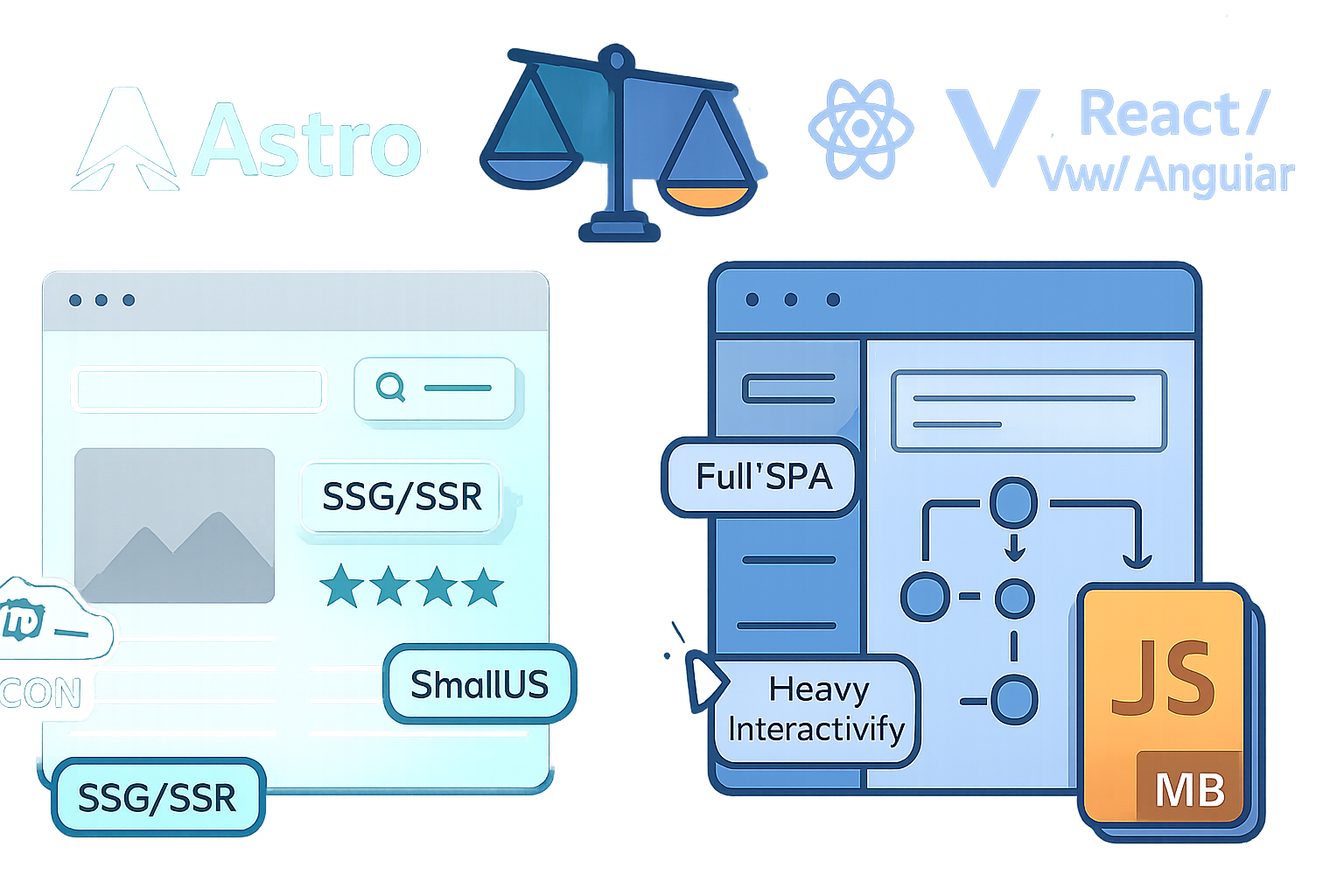
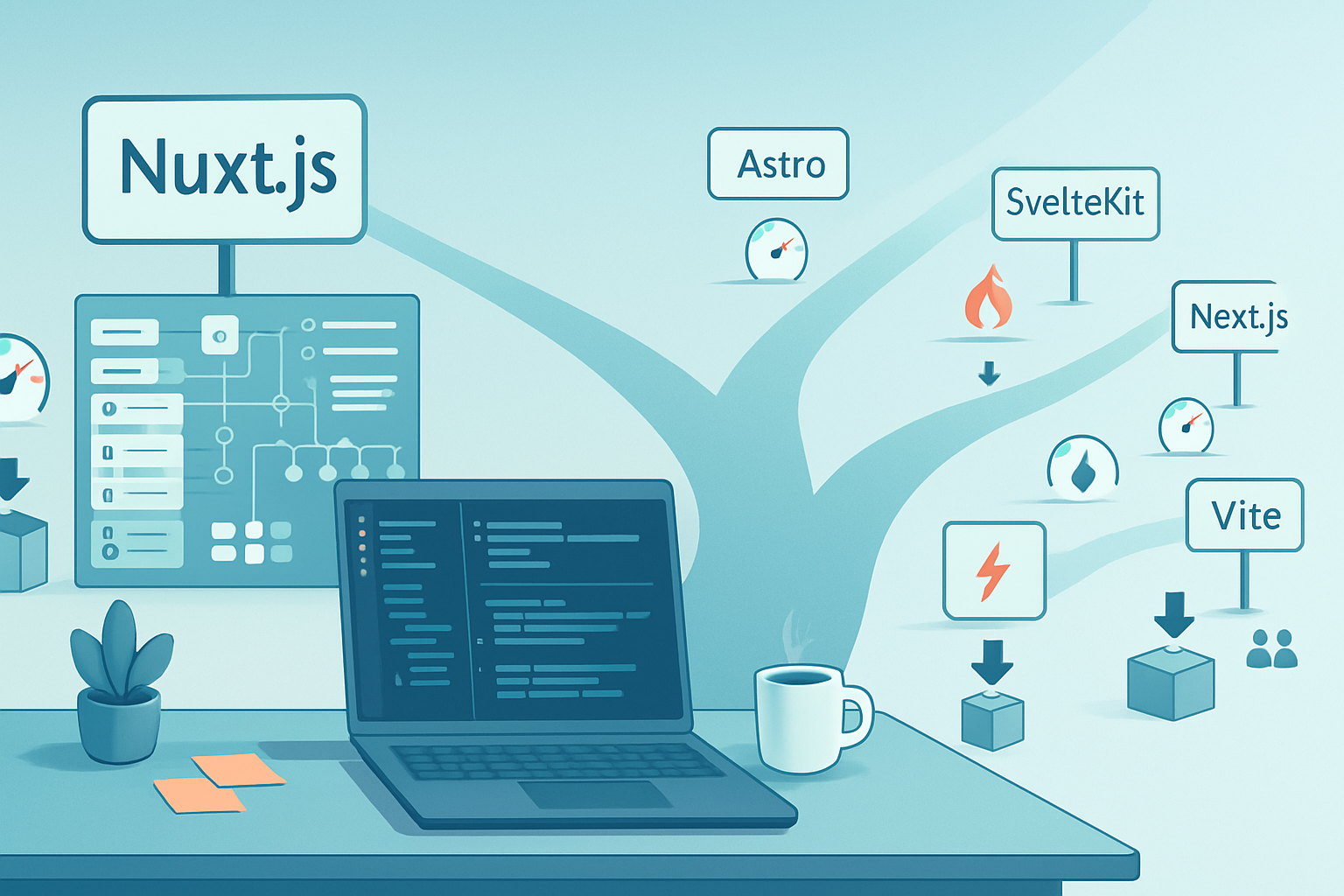
A deep comparative analysis of Astro’s architecture and features versus Gatsby and Next.js-why Astro’s islands, zero-JS-by-default stance, and framework-agnostic components make it a compelling choice for content-focused sites and lean frontends.
Outcome first: by the end of this article you’ll know when Astro will give you faster builds, smaller client bundles, and simpler multi-framework composition-and when a more traditional React-first framework like Next.js or Gatsby is the right choice.
Quick takeaways
- Use Astro when you want content-focused sites (blogs, docs, marketing pages) with minimal client JavaScript and excellent performance.
- Use Next.js when you need a full-featured React framework with SSR, API routes, edge functions, or highly dynamic UIs.
- Use Gatsby when you rely on its plugin ecosystem, GraphQL data layer, or established image and CMS integrations-but be mindful of build-time complexity.
Now let’s unpack why Astro often stands out and where it doesn’t.
What makes Astro different (the core ideas)
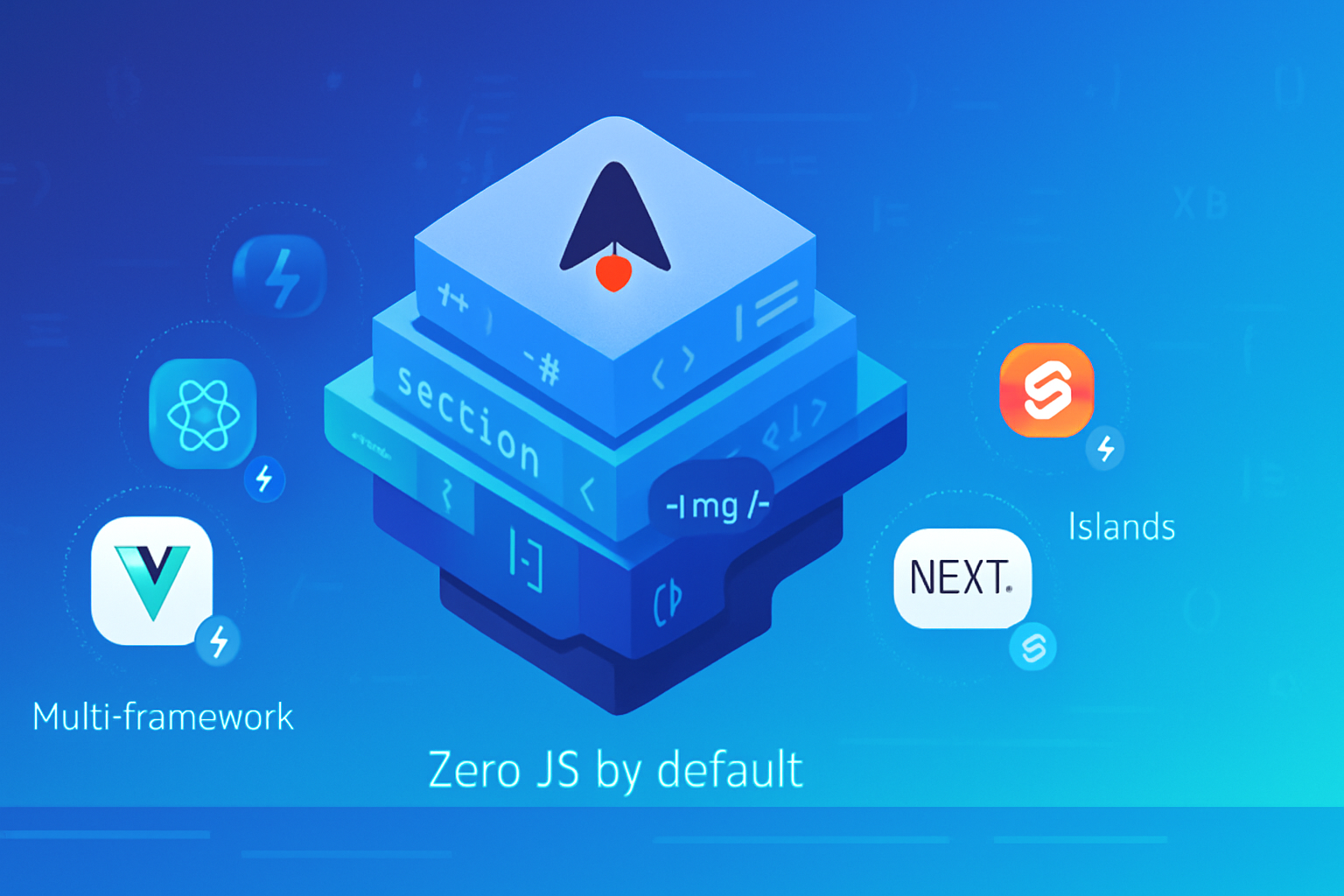
- Zero JavaScript shipped by default
Astro renders HTML on the server and sends it to the browser with no framework runtime unless you explicitly opt-in. That default dramatically reduces client bundle sizes and speeds up First Contentful Paint (FCP) for content-centric sites.
- Islands architecture and partial hydration
Astro popularized delivering static HTML for most of the page while hydrating only interactive parts (“islands”). You can sprinkle interactivity where needed with hydration directives (client:load, client:idle, client:visible, client:only).
- Framework-agnostic components
Astro lets you import components from React, Preact, Svelte, Vue, Solid, and more, side-by-side in the same project. You’re not locked into one UI library.
- Modern dev tooling (Vite) and fast cold starts
Astro’s dev server uses Vite for fast hot module replacement and lightning-fast startup, improving developer experience.
- Content-first features
Built-in support for Markdown, MDX, and content collections makes authoring and structuring content straightforward.
Sources: Astro docs on core concepts and islands: https://docs.astro.build/
How Astro’s architecture compares to Gatsby and Next.js
Below are the most relevant dimensions for picking a generator.
Rendering model
- Astro: Primarily static generation (SSG) and server-rendered (SSR) options via adapters. Default is HTML-first. Minimal client JS unless added.
- Next.js: Hybrid (SSG, SSR, ISR) with strong first-class support for dynamic rendering, server components (app router), and edge functions.
- Gatsby: Static by default (SSG), with incremental builds and deferred rendering options provided through plugins and hosting providers.
When to care: if your app needs frequent server-side personalization or edge logic, Next.js has stronger built-in features. If your site is mostly static content with occasional interactivity, Astro shines.
References: Next.js docs: https://nextjs.org/ and Gatsby docs: https://www.gatsbyjs.com/docs/
Hydration and client JS
- Astro: Partial hydration (islands). You explicitly opt components into hydration, keeping default payload tiny.
- Next.js: Historically hydrated whole pages; with server components and selective hydration in the app router, bundles can shrink, but the model is React-first.
- Gatsby: React-first; client bundle optimization depends on producers and plugins, and historically shipped a larger runtime.
Example: an Astro component that stays static unless you opt-in
---
import Counter from '../components/Counter.jsx';
---
<h1>Hi - this page is server-rendered</h1>
<!-- The Counter component will only hydrate on the client when visible -->
<Counter client:visible />
Compare that to Next.js where most interactivity typically requires React on the client, unless you explicitly use server components and carefully segment your UI.
Astro’s pattern is powerful for pages with a few interactive widgets embedded in otherwise static content.
Components and multi-framework support
- Astro: You can use React, Vue, Svelte, Solid, etc., in one project. Great for incremental migration or mixing micro-frontends.
- Next.js & Gatsby: React only (though you can embed other frameworks via iframes or custom integrations, it’s not idiomatic).
This flexibility matters if you’re integrating UI components from different teams or gradually migrating.
Data layer and querying
- Gatsby: Strong GraphQL data layer that pulls data from disparate sources at build time; great for complex content pipelines.
- Next.js: Data fetching through getStaticProps/getServerSideProps (pages router) or through server components; flexible and directly in React.
- Astro: Uses file-based routing, endpoint routes and can consume data via server-side code-less opinionated than Gatsby’s GraphQL approach.
If you need a unified GraphQL build-time data layer, Gatsby still offers a unique experience.
Plugins, ecosystem, and integrations
- Gatsby: Mature plugin ecosystem, lots of starters, and a history of strong integrations with CMSs and image optimization tooling.
- Next.js: Huge ecosystem, first-class Vercel integration, many middleware and edge features.
- Astro: Growing ecosystem with community integrations, adapters for hosts (Netlify, Vercel, Cloudflare, etc.), and first-class Markdown/MDX support via official guides.
Ecosystem maturity can affect developer productivity-Gatsby and Next have years of battle-tested solutions; Astro is newer but rapidly catching up.
Images, performance, and build behavior
- Gatsby: Excellent image optimization tooling (gatsby-plugin-image) built for build-time transformation.
- Next.js: Next Image optimization and edge image service (especially on Vercel) are strong for dynamic images.
- Astro: Uses community or official integrations for images; image optimization often done at build time or via adapters/host services.
Build times: Astro’s default architecture tends to produce smaller client artifacts, which helps runtime performance. Gatsby’s build times can be large for huge content sites (though incremental builds/hosting can mitigate this).
Hosting and adapters
- Astro: Adapters let you target static hosts or server environments (Netlify, Vercel, Cloudflare, Deno, Node). See https://docs.astro.build/en/guides/deploy/
- Next.js: Deep integration with Vercel and edge runtimes; wide hosting support.
- Gatsby: Often deployed to static hosts and builders that support incremental builds.
Developer experience
Astro emphasizes minimalism: clean syntax, Markdown-first workflows, and Vite-powered fast reloads. If you like composing pages from content files and small interactive widgets, development feels fluid. But if you need advanced server logic and API routing baked into the framework, Next.js offers a more full-stack DX.
Where Astro excels (concrete scenarios)
- Content-heavy sites (blogs, docs, marketing pages) where content is the primary asset and interactivity is limited.
- Projects wanting tiny client JS footprints and better Core Web Vitals out of the box.
- Teams that want to mix UI frameworks during migration (e.g., a Svelte widget next to React header) or want to reuse components authored in different frameworks.
- Static sites that prioritize fast builds and straightforward Markdown/MDX workflows.
Where you might prefer Next.js or Gatsby
- Next.js: complex web apps with heavy server-side needs, API routes, edge functions, or when your team is deeply invested in the React ecosystem and needs features like ISR or server components.
- Gatsby: projects relying on Gatsby’s plugin ecosystem, GraphQL data layer, or particular image and CMS integrations where Gatsby has battle-tested plugins.
Trade-offs and potential pitfalls
- Astro is newer: the ecosystem and plugin maturity lag behind Next.js/Gatsby, though it’s growing quickly.
- For highly interactive single-page applications (SPA) with heavy client-side state, Astro’s advantage shrinks because you will ship more client JS to achieve that interactivity.
- If your team is exclusively React-fluent and needs server routing, APIs, and edge logic, Next.js might reduce friction.
Decision checklist (quick)
Choose Astro if:
- You want minimal client JS by default.
- Your site is content-first and performance matters.
- You want to mix component frameworks or migrate gradually.
Choose Next.js if:
- You need hybrid rendering (SSG + SSR + ISR), edge functions, or deep full-stack capabilities.
- Your app is a highly dynamic React application requiring server-side logic.
Choose Gatsby if:
- You depend on Gatsby’s plugins or GraphQL data layer for a complex content pipeline.
- You want a mature ecosystem of community starters and plugins for static-first sites.
Examples (short comparison snippets)
Astro: partial hydration of a React Counter
---
import Counter from '../components/Counter.jsx';
---
<article>
  <h1>Article</h1>
  <p>Mostly static content...</p>
  <Counter client:idle />
</article>
Next.js (pages) static props example
export async function getStaticProps() {
  const posts = await fetchPosts();
  return { props: { posts } };
}

export default function Page({ posts }) {
  return <PostsList posts={posts} />;
}
Gatsby (GraphQL) data example
query BlogQuery {
  allMarkdownRemark {
    nodes {
      frontmatter {
        title
      }
      excerpt
    }
  }
}
Final verdict (short and provocative)
Astro is not a silver bullet-but it is a radical rethink of how to ship the web. By defaulting to HTML-first pages and enabling tiny, explicit islands of interactivity, it solves a very real performance problem for content-heavy sites. If your project is about content, speed, and low client-side complexity, Astro is arguably the best choice today.
But if your requirements include complex, dynamic user interactions, server-side logic, or you rely on an extensive React-only ecosystem, frameworks like Next.js or Gatsby still provide compelling, sometimes superior, tradeoffs.
Pick the tool that matches the problem. And expect the debate to continue-because the web keeps changing, and so do the best ways to build it.
References
- Astro docs: https://docs.astro.build/
- Astro Islands concept: https://docs.astro.build/en/core-concepts/islands/
- Vite: https://vitejs.dev/
- Next.js: https://nextjs.org/
- Gatsby: https://www.gatsbyjs.com/docs/