· career · 7 min read
The Untapped Power of Networking: Building Relationships Beyond FAANG
Leaving FAANG? Your brand opens doors - but relationships keep them open. This guide shows engineers how to convert FAANG credibility into a durable, opportunity-rich network through niche conferences, open-source contribution, and mentoring.

Outcome first: by the end of this piece you’ll have a practical roadmap to turn FAANG-era credibility into a durable, opportunity-rich network - one that surfaces startup roles, advisory gigs, speaking invites, and meaningful collaborations. Read on for concrete strategies you can start using this week.
Why networking matters more after FAANG
Working at a FAANG company gives you instant credibility. Recruiters notice. Resumes clear initial filters. Title and brand open doors. But credibility is not the same as relationships. If you rely only on brand, you’ll miss the low-friction routes to interesting work: warm intros, co-founder matches, and mentoring that turns into partnerships.
Relationships are the multiplier. They bring context, trust, and timing. They also surface opportunities that never appear on job boards. Research on social networks has long shown that weak ties - acquaintances rather than close friends - are often the most valuable source of fresh information and opportunities The Strength of Weak Ties.
Short takeaway: FAANG is a great credential. But to shape the kind of work you want next, you need the people who can bring it to you.
The three high-leverage channels: conferences, open source, mentoring
These three channels are complementary. Each serves different kinds of relationships and together they build a resilient network.
- Niche conferences: breadth and serendipity.
- Open-source projects: credibility, deep working relationships, and visible work.
- Mentoring: durable, trust-based ties and reciprocal growth.
Below are practical strategies for each.
1) Niche conferences: quality over headline size
Don’t think bigger is always better. Large vendor events have scale, but niche and regional conferences are where deep connections form.
How to choose the right conferences
- Match problem domain, not company size. If you’re into low-latency systems, choose SRE/observability meetups or specialized workshops rather than a general web-dev mega-conference.
- Look for active Slack/Discord channels, pre-conference hackathons, or community-run sessions. Those signal ongoing engagement.
- Check past attendee lists, speakers, and sponsors for alignment with your goals (hiring, learning, speaking).
Prep like an investor scouts founders
- Set 2–3 specific micro-goals: e.g., “meet two maintainers in X project,” “get one intro to a startup CTO,” or “practice a 7-minute talk.” Small, measurable goals force focus.
- Prepare a one-sentence value line: who you are, what you care about, and how you typically help others. Short. Memorable.
- Schedule before and after: reach out to 10 people on the attendee list and set one-on-one coffee chats.
On-site tactics
- Arrive early to workshops. That’s where deep conversations happen.
- Give more than you ask: share a link, a quick intro to someone, or a useful code snippet. Reciprocity sticks.
- Collect contact data deliberately: ask for a calendar invite or add each other on a community channel.
Follow-up that converts
- Send a short, specific follow-up within 48 hours. Remind them of where you met, mention one detail, and propose a next step.
- Add new contacts to a lightweight CRM or spreadsheet with tags (e.g., “potential cofounder,” “open-source maintainer”).
For tips on getting the most from conferences see this practical guide: How to network at a conference (Forbes).
2) Open source: the slow-build, high-trust stage
Open-source work is a public portfolio. It shows not just what you can do, but how you collaborate. Contributions create durable social proof and ongoing associations with maintainers and contributors.
Where to start
- Pick projects aligned to your domain and skills. Fixing docs is fine; it’s a low-friction way to make a positive first impression.
- Look for projects with active maintainers, clear contribution guidelines, and a healthy issue tracker. The Open Source Guides are a good starting point.
A practical contribution playbook
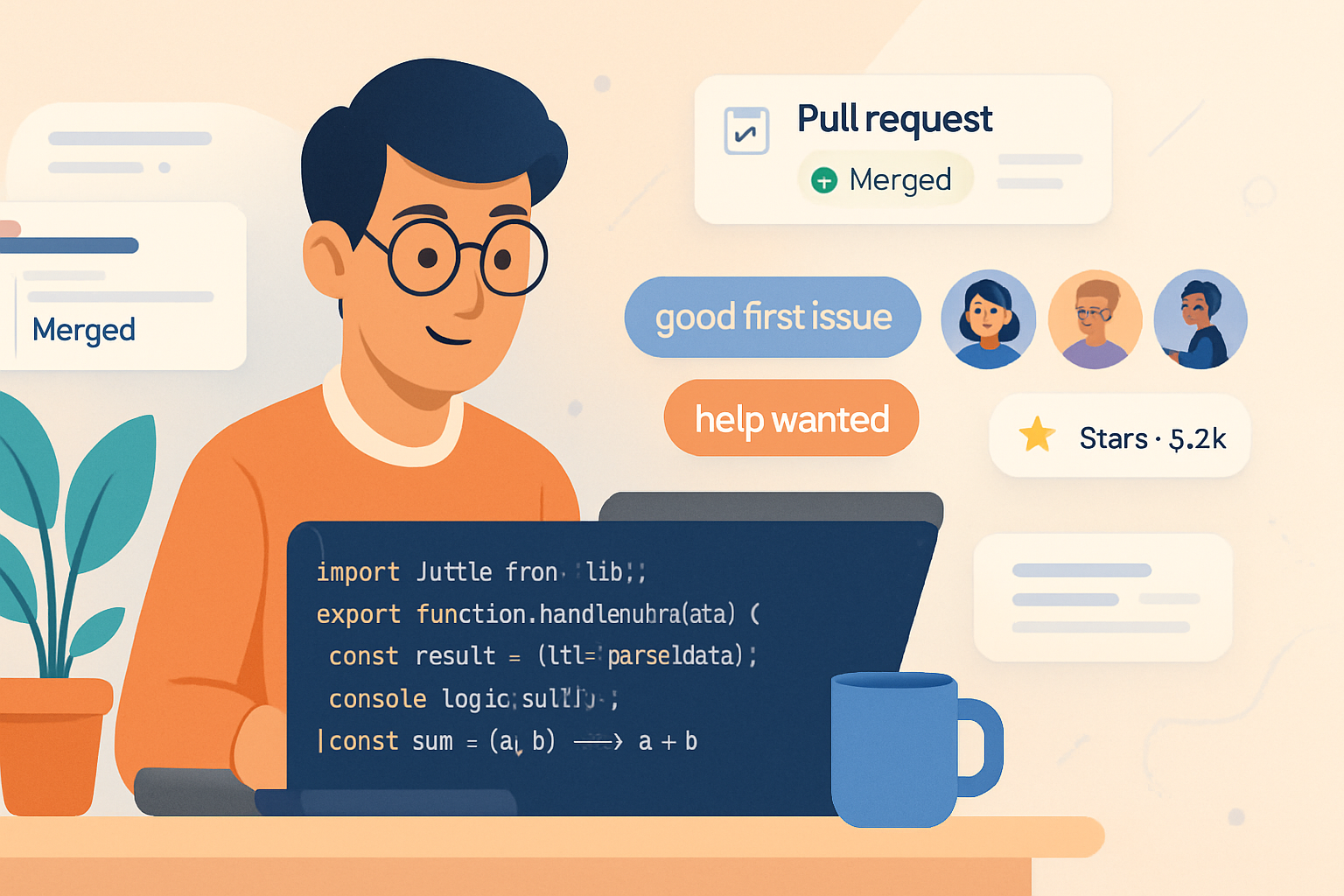
- Scan issues labeled “good first issue” or “help wanted.”
- Reproduce the bug or run the tests locally. Attach clear reproduction steps to your comment.
- Submit a small, well-documented PR. Small changes merge faster and create proof of reliability.
- When your PR is merged, thank maintainers and offer to help with related issues.
How to get noticed without being pushy
- Keep PRs focused and well-tested. Quality beats quantity.
- Be responsive to review comments. Treat reviews as conversations, not roadblocks.
- After contributing, join the community channels. Being present multiplies goodwill.
Long-term payoff
Maintainers and frequent contributors become your closest “working” network: they can recommend you for roles, invite you to speak, or partner with you on startups. The public nature of contributions means those recommendations carry weight.
See the Open Source Guides for more: opensource.guide.
3) Mentoring: depth, reciprocity, and reputation
Mentoring builds relationships at a different tempo - slower and deeper. It develops reputational capital and often creates lifelong allies.
Why mentor (even if you’re busy)
- Teaching clarifies your own thinking and exposes gaps in your knowledge.
- Mentees can become collaborators, hires, and future referrers.
- Mentoring signals leadership without a title and is a high-leverage way to give back.
How to start a mentoring relationship
- Volunteer via formal programs (company-alumni groups, local universities, community groups) or ad-hoc through Twitter/X, LinkedIn, or community channels.
- Set expectations in the first meeting: frequency, goals, communication channel, and what success looks like in three months.
- Use a lightweight agenda for early meetings: current context → immediate blockers → a 30–60 day plan → resources.
Structured agendas that win
- Session 0 (30 min): Introductions, goals, and cadence.
- Session 1 (45–60 min): Deep dive into current challenges; pick one quick win.
- Ongoing: 20–30 minutes focused on progress + a single action.
Mentorship is reciprocal
Remember that mentoring is two-way. Your mentee will have fresh perspectives, new tools, and energy. Treat it like a relationship, not a transaction. For what great mentors actually do, see HBR: What Great Mentors Do.
Diversify intentionally: the portfolio approach to relationships
Think of your network like a financial portfolio. You want a mix of strong ties (trusted collaborators), weak ties (serendipity engines), and bridging ties (people who connect you to other networks). A healthy mix hedges against market shifts - especially when the tech landscape changes quickly.
Practical balance
- 20% deep ties: former teammates, trusted cofounders, regular collaborators.
- 50% weak ties: acquaintances from events, maintainers, alumni networks.
- 30% bridging ties: people from adjacent industries or communities (design, product, data-science, finance).
This blend gives you both immediate safety (trusted calls) and long-term upside (new markets, ideas, and roles).
A 90‑day playbook to convert FAANG credibility into network currency
Week 1–2: Audit and prioritize
- Export contacts from email, LinkedIn, and alumni groups.
- Tag people by relationship type and opportunity potential.
- Pick one niche conference and one open-source project to engage with this quarter.
Week 3–6: Outreach and contribution
- Reach out to 10 people with personalized messages (reference where you met, a shared interest, and a clear ask).
- Submit your first small PR to the chosen project.
- RSVP and volunteer for a session or lightning talk at the chosen conference.
Week 7–12: Deepen and systematize
- Schedule follow-ups with the most promising 6–8 contacts.
- Start a mentoring relationship (or two) with clear agendas.
- Publish a short post or talk about what you learned from your open-source work or conference.
Beyond 90 days: maintain and compound
- Keep a monthly touch cadence (share an article, congrats on a new role, or a short update).
- Rotate into different communities every 6–12 months to avoid insularity.
Scripts and templates (copy‑ready)
Conference follow-up (48 hours after meeting):
“Great meeting you at [session name]! I loved your point about [specific detail]. I’d enjoy continuing the conversation - would you be open to a 20‑minute call next week to swap notes on [topic]?”
Open-source PR comment when opening an issue:
“Hi - thanks for maintaining this project! I ran into [issue] using version [x]. Steps to reproduce: [short list]. Happy to open a PR if you’d like; blocking point for me is [question].”
First mentoring session agenda (30 min):
- Quick intro and background (5 min)
- Current top challenge (10 min)
- One 30–60 day goal and next steps (10 min)
- Resources / closing (5 min)
Metrics that matter (how you know this is working)
- Number of warm introductions per quarter (goal: 3–6).
- Meaningful follow-ups (conversations that lead to a next step) per month (goal: 2–4).
- Visible outcomes: interviews, advisory invites, co-founder conversations, talk invitations, or accepted PRs.
Track these like a product metric, and iterate.
Common mistakes and how to avoid them
- Mistake: Only collecting contacts. Fix: schedule follow-ups immediately.
- Mistake: Asking for favors on first contact. Fix: offer value first (introductions, notes, context).
- Mistake: Overindexing on big-name events. Fix: prioritize interaction quality.
Final note: network as craft, not luck
Networking is often framed as schmoozing. It isn’t. It’s deliberate relationship craft. It’s the combination of showing up where people build things, contributing meaningfully, and investing time in others’ progress. Your FAANG background is a powerful credential - but relationships convert credibility into opportunities. Do the work. Plant seeds. Water them. The returns compound.
Remember: the best job offers rarely show up on a job board. They arrive through a person who already knows you, trusts you, and wants to work with you. Make those people part of your plan.