· career · 6 min read
The Controversial Importance of Data Structures in JavaScript Interviews: Are They Overrated?
A balanced, practical look at whether traditional data structure and algorithm questions deserve their central role in JavaScript interviews - and which role-specific skills might matter more for real-world success.

Outcome first: by the end of this article you’ll be able to judge when classical data-structure questions are useful in a JavaScript interview, what better alternatives look like for many JS roles, and how candidates and interviewers can design more predictive, fair processes.
Why this question matters - fast
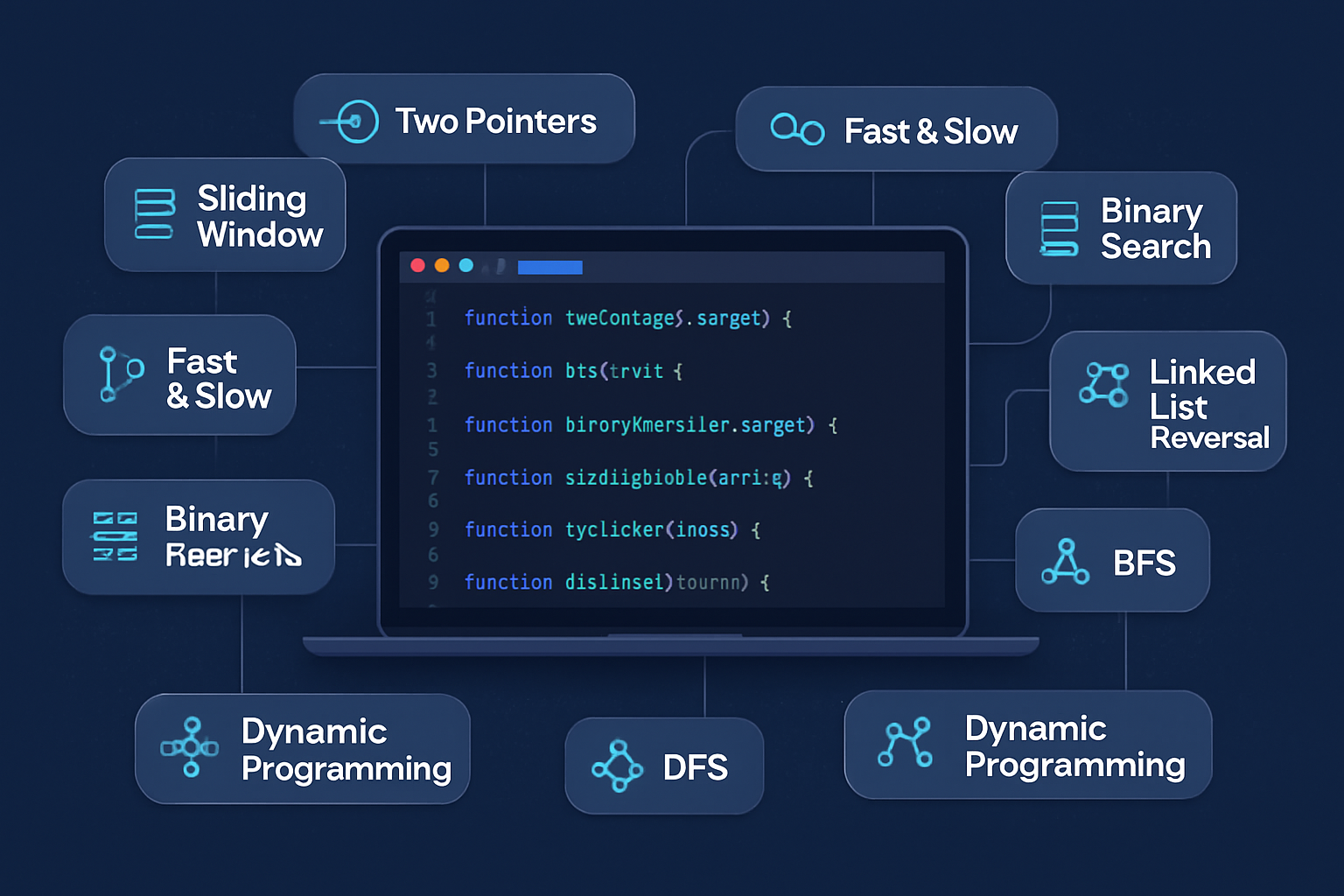
Companies still ask linked-list and binary-tree puzzles. You still see LeetCode-styled rounds on JavaScript job screens. But most day-to-day JS work is not about reversing a linked list on a whiteboard. So the real question is not “Are data structures useful?” but rather “When do they predict on-the-job performance for JavaScript roles - and when do they merely filter candidates?”
Short answer: sometimes useful. Often overrated.
How data-structure questions became the default
History compressed: early large-tech interviews used algorithm puzzles to test problem solving and CS fundamentals. Over time, two things happened:
- Interview problem banks (Cracking the Coding Interview, LeetCode, HackerRank) standardized a pattern of short, deterministic algorithmic tasks.
- Many organizations adopted those patterns for efficiency and perceived fairness: the same problem, same test, repeatable scoring.
That consistency created a positive feedback loop: candidates practiced those puzzles, recruiters asked for them, and they became the de-facto gate.
Useful aspects of DS&A questions:
- They test algorithmic thinking and complexity awareness.
- They are language-agnostic in principle, so companies argue they measure fundamentals rather than framework trivia.
But those strengths are also the roots of the problem.
The mismatch: JavaScript roles vs puzzle tests
Many JavaScript roles - especially frontend and full-stack positions - require different everyday skills:
- Mastery of the runtime (event loop, async/await, microtasks/macrotasks).
- Browser APIs, DOM performance, reflows, and rendering costs.
- Tooling: bundlers, source maps, testing frameworks, and CI/CD flows.
- API design, HTTP semantics, and graceful degradation.
- Debugging complex state in real apps and understanding UX constraints.
A vanilla BFS/DFS question rarely predicts how someone debugs a memory leak in a React app, optimizes paint times, or designs resilient client-server interactions.
When data structures do matter for JS interviews
There are clear cases where DS&A questions are legitimately predictive:
- Low-level JS roles (e.g., JS engines, performance-critical libraries, or systems programming in Node where algorithmic efficiency matters).
- Backend-heavy full-stack roles with heavy data processing where algorithms affect latency and cost.
- Roles requiring a demonstrated ability to reason about time and space complexity.
In those contexts, you should test algorithms - but tailor them to the domain and the problems the role will face.
Why they’re overrated for many JavaScript jobs
False positives and false negatives
- A candidate can memorize patterns and pass interviews without being able to ship production code.
- Great practitioners who learned on-the-job and lack formal algorithm training can fail algorithm rounds despite being high performers.
Poor alignment with daily work
- Frontend developers spend far more time on debugging, UX, and incremental design than on algorithm design.
Equity and access problems
- Candidates with time or educational constraints may have less opportunity to grind LeetCode; this biases hiring toward those with leisure to practice.
Interview performance anxiety
- Timed whiteboard puzzles favor fast recall under pressure, not necessarily deliberate design or collaborative problem-solving.
Alternatives that often predict on-the-job success better
If the goal is to identify effective JavaScript engineers, consider these interview components - and tailor them to the specific role.
Pair programming with real code
- Give candidates a small, realistic task in a repo: fix a bug, add a feature, or refactor a component. Observe thought process, testing habits, and collaboration.
Debugging exercises
- Present a failing browser app or Node service with logs and reproduce steps. Let candidates use devtools and explain their approach.
System design for frontend & scale
- Ask how they’d design a client-side caching strategy, or handle pagination and data consistency in offline-first apps.
Read-and-review (code review)
- Give a pull request to review. Good candidates explain trade-offs, spot bugs, and suggest incremental improvements.
Take-home projects
- Real-world scope at a reasonable time budget (4–8 hours). Allows better demos of ownership and craft.
Behavioral and cross-functional scenarios
- How they interact with product, UX, QA, and operations. Communication is a multiplier.
Focused algorithmic questions for relevant domains
- If your role must process large data sets in Node, ask algorithm questions tied to that domain rather than generic puzzles.
How to design better JavaScript interview loops (for hiring teams)
- Start with a role-profile: list the core responsibilities and the failure modes you’re trying to avoid. Match each interview step to those responsibilities.
- Prefer practical, time-boxed tasks that mirror daily work. Replace or minimize abstract whiteboard puzzles unless the role genuinely needs them.
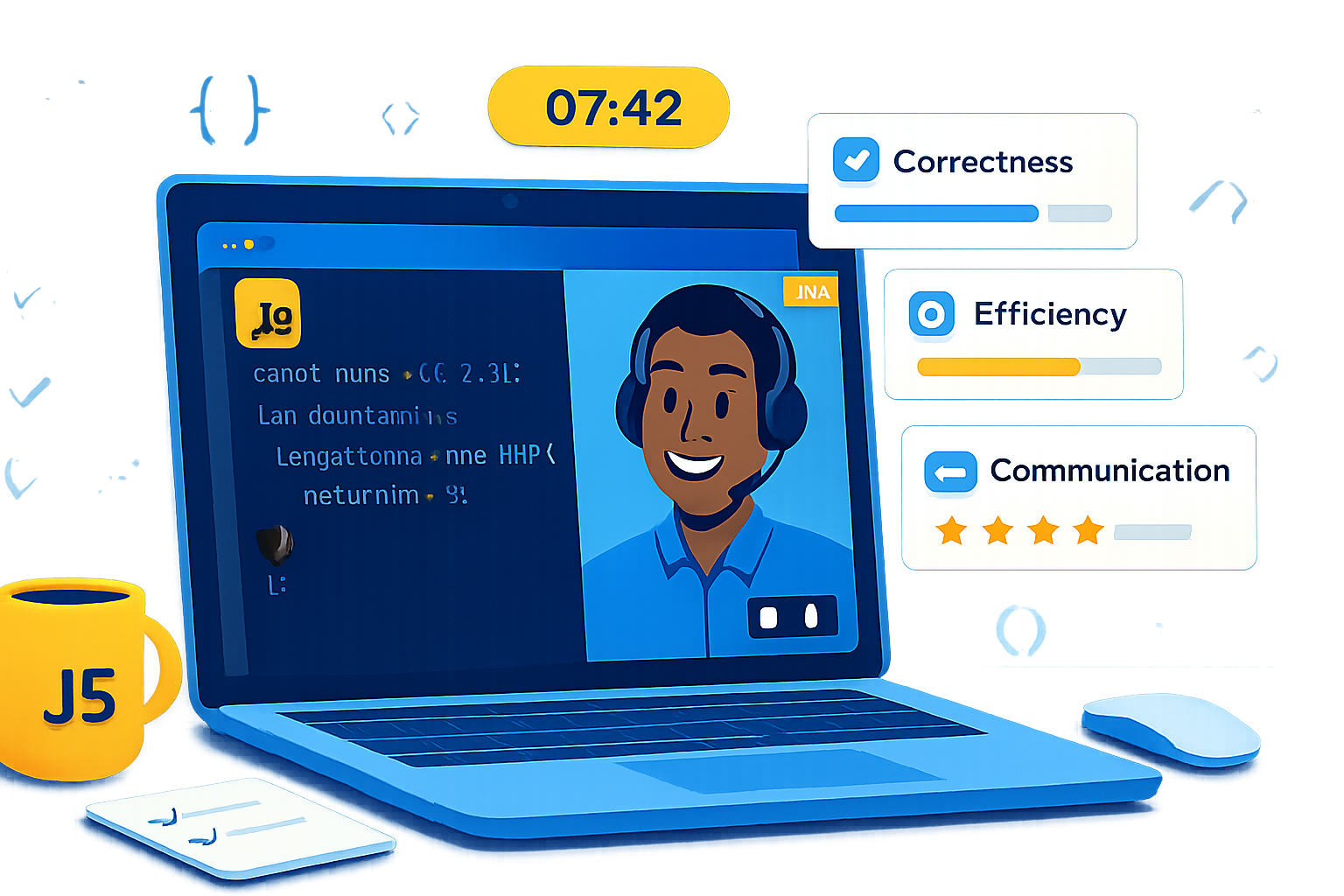
- Use rubrics and multiple interviewers to reduce single-interviewer bias. Score based on observable behaviors, not impression.
- Allow language- or resource-flexible formats (open-book, use of documentation). Real work is open-book.
- Track hiring outcomes. Measure which interview components correlate with on-the-job success and iterate.
Practical advice for candidates preparing for JS interviews
Ask questions up front
- Before you accept an interview, ask what skills the loop will evaluate. If it’s mostly algorithm puzzles but the job is frontend, ask why.
Practice role-specific scenarios
- For frontend roles: debugging in Chrome DevTools, profiling paints, and building accessible components.
- For Node roles: working with streams, memory profiling, and scaling concerns.
Don’t ignore fundamentals
- You should know complexity basics, common data structures, and recursion. But prioritize the skills you’ll use daily.
Prepare one or two take-home projects to showcase craftsmanship
- A focused, well-documented sample repo beats solving a whiteboard puzzle for many roles.
Sample alternative interview prompts (ready to use)
- “Fix the memory leak: here’s a small React app that slowly increases memory usage after several navigations. Use Chrome DevTools and explain what you changed.”
- “API resilience: design a client-side retry/backoff approach for an app that must stay responsive with intermittent connectivity. Show how you’d test it.”
- “Code review: here’s a pull request that adds a complex component. What concerns do you raise and why?”
- “Node throughput: here’s a small worker that processes tasks from a queue. How would you find the bottleneck and improve throughput?”
Counterarguments and balance
To be clear: algorithmic thinking is valuable. It teaches precision, complexity awareness, and abstract reasoning. For some teams and roles it is essential.
But many companies have turned these puzzles into ritualized filters - a band-pass that selects for interview-savvy candidates rather than real-world effectiveness. The right approach is not to ban data-structure questions entirely, but to use them with purpose.
Final recommendations
- For hiring teams: define the role before defining the interview. Use realistic, domain-aligned exercises. Measure outcomes and be willing to change.
- For candidates: know your role’s core problems. Practice realistic tasks that show how you ship, debug, and collaborate.
Data structures and algorithms are not worthless. They are a tool - one among many. Use them where they give signal. Replace them where they only add noise.
Context is the ultimate test. Hire for the work the developer will actually do every day.