· career · 6 min read
Neglecting Personal Projects: A Career-Limiting Mistake
Failing to start or finish personal projects can quietly stall a JavaScript engineer’s growth and marketability. This article explains why side projects matter, the common traps that lead to neglect, and a practical playbook to design, ship, and showcase a project that actually boosts your career.
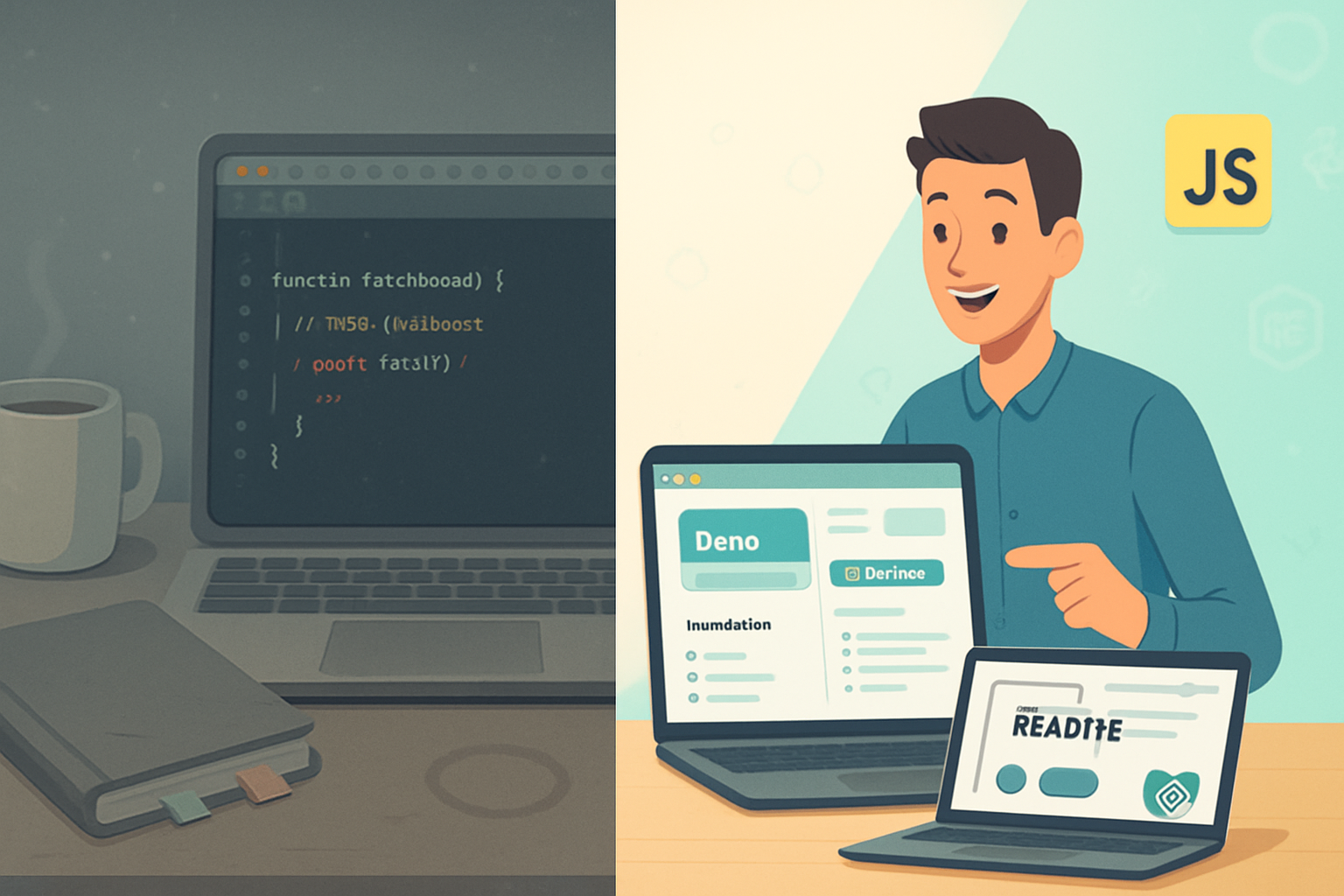
Outcome first: start - and finish - a personal project that gets you interviews.
You can build an example that proves your technical taste, communication skills, and product thinking in one tidy demo. Do that and hiring managers stop guessing and start calling.
Why neglecting personal projects is career-limiting
If you rely solely on job experience and algorithm practice, you’re leaving three major signals on the table:
- Proof of initiative and curiosity - side projects show you go beyond assigned work.
- Public evidence of craft - code, tests, architecture and documentation are visible to recruiters.
- A conversation starter - a concrete project anchors technical interview stories and design discussions.
Empirical hiring signals support this. Recruiters and engineering managers often look at GitHub, personal sites, and product demos when screening candidates; public work frequently leads to faster trust and richer interview questions than an abstract resume alone. For broader context on developer behavior and employer expectations, see the Stack Overflow Developer Survey and GitHub resources:
- Stack Overflow Developer Survey: https://insights.stackoverflow.com/survey
- GitHub Octoverse and docs: https://octoverse.github.com/ and https://docs.github.com/en/get-started/quickstart
Neglecting side projects means losing a durable, visible portfolio. You make it harder for a hiring manager to differentiate you from other applicants with similar work histories.
Common reasons engineers abandon personal projects (and why they matter)
- Scope creep: the idea grows until it’s a full-time product. Result: never shipped. Shipping matters more than polish.
- Perfectionism: code must be “perfect.” Result: procrastination. Recruiters prefer working demos over flawless architecture diagrams.
- No clear goal: projects without measurable outcomes fade. Result: no way to show impact.
- Private repos or poor documentation: even completed projects are invisible if they’re not public or lack a README.
Each failure mode reduces the career value of a project from “evidence” to “regret.” Avoid that.
What a career-boosting side project looks like (the specific signals hiring teams love)
A project that improves your employability usually has the following attributes:
- End-to-end: public repo + deployed demo.
- Clear README with problem, solution, setup, usage, and architecture notes.
- A trade-off or constraint you explicitly state (e.g., real-time updates with WebSockets vs. eventual consistency) - shows design thinking.
- Tests and CI - shows engineering rigor.
- Meaningful commits and a readable commit history - shows craftsmanship and process.
- A small, focused scope that you finished in a few weekends or a couple of months.
- A blog post, PR, or README section explaining lessons learned - shows reflection.
Playbook: from fragment to finished project (step-by-step)
Choose a problem, not a tech: pick something that solves a specific pain for you or others. Examples: a tiny expense tracker, a developer productivity CLI, a component playground for accessible UI patterns.
Define the smallest valuable outcome (MVP): what is the minimum that proves the idea? If it’s a demo, the MVP is a working demo; if it’s a library, the MVP is a published package with examples.
Timebox: commit to a realistic cadence (e.g., 4–8 hours/week for 6–8 weeks, or two weekend sprints). Short sprints keep focus and momentum.
Pick a stack that showcases desired skills: use React/Next.js for frontend roles, Node/Express or Deno for backend, TypeScript to show type discipline. Don’t invent a complex stack just to impress.
Use public version control and CI: GitHub + GitHub Actions (or similar). Deploy a demo to Vercel, Netlify, or a small VPS. A clickable link is worth more than a long README.
Write a README that sells the project quickly. Include: problem statement, demo link, setup, architecture brief, and a short section “What I learned.” (See template below.)
Add tests and simple CI checks: linting, unit tests for core logic, and a smoke test for the deployed demo.
Share: publish a short blog post or README demo GIF, tweet a thread, and add a one-line link on your resume/LinkedIn.
Iterate from feedback: fix the first three pain points users report. Ship those fixes and mention them in the changelog.
README template (copy-paste friendly)
# Project Name

One-liner: what it does and who it helps.

Demo: https://your-demo-url

Problem
- Short paragraph describing the problem and why it matters.

Solution
- What this project does to solve the problem.

Quick Start
1. git clone ...
2. npm install
3. npm start

Architecture
- Tech stack: React + Vite + Node (or whatever)
- Key decisions: e.g., "Serverless functions to minimize infra"

Tests and CI
- How to run tests

What I learned
- Three bullet points describing technical and product lessons.

License and contact
- MIT - your email or Twitter handle
Project ideas tailored to JavaScript engineers
- Component library with accessible primitives (React + Storybook + TypeScript).
- Small SaaS demo: authentication, billing mock, and user dashboard (Next.js, Stripe sandbox, Prisma).
- CLI tool published to NPM that solves a niche workflow problem.
- Browser extension that augments developer tooling or productivity.
- Data visualization dashboard using D3 or Observable for a public dataset.
- Tiny open-source utility package with clear tests and docs - publish to NPM.
Pick something that aligns with roles you want. If you want frontend positions, a polished UI demo matters. If you want backend roles, an API with tests and documentation matters more.
How to feature a side project in interviews and your resume
Resume: include one-line project title, a short description, tech stack, and one measurable outcome (deployed URL, # of users, performance metric, or GitHub stars).
Interview: treat the project like a case study. Explain the trade-offs, show a code snippet that demonstrates a decision, and describe what you’d do next.
Portfolio/GitHub: pin the repo(s) you want people to see and keep your profile clean and intentional.
Example resume bullet:
- Built “TinyBudget” (Next.js, Prisma, Vercel): a personal finance tracker with OAuth and CSV import; >300 demo signups; deployed with CI/CD and E2E tests.
Metrics that matter (and how to measure them)
- Stars/Forks: social proof; helps, but not required.
- Demo visits & signups: concrete engagement.
- Recruiter/PM/engineering outreach referencing the project: direct hiring signal.
- Pull requests / external contributions: shows community interest.
You should track these and mention one or two in interviews or on your LinkedIn headline.
Avoid these traps
- Keeping the repo private - public wins.
- Shipping nothing - an MVP beats an unfinished masterpiece.
- Overengineering for the sake of tech novelty.
- Hiding learning: include a “What I learned” section.
Small habits that ensure you finish projects
- Start with an issue checklist: MVP, README, CI, deploy, blog post.
- Use the “two-week rule”: if you won’t touch it in two weeks, archive or delete it. Fewer half-finished projects looks better than many.
- Work in public: small commits and short notes can attract feedback that motivates you.
Quick checklist before you call a project “done”
- Public repo with a clear README ✓
- Live demo deployed and linked ✓
- At least basic tests and CI passing ✓
- Short write-up of trade-offs and learnings ✓
- One short social or blog post announcing it ✓
Ship this and your profile will start to tell a better story.
Final note - the career payoff
A side project is the simplest, most reliable way to close the gap between what you say you can do and the proof you provide. It turns vague resume claims into concrete artifacts you can walk a hiring manager through. Small, finished projects compound: each one demonstrates skill, curiosity, and the muscle to take ideas to production.
Start small. Finish fast. Make the work public. The single best investment in your engineering career is the one you build for yourself.