· career · 6 min read
The Future of JavaScript Development: Skills You Need to Stay Ahead
A practical guide to the skills and patterns - including micro-frontends, serverless/edge functions, and TypeScript - that will keep JavaScript developers valuable in the jobs of tomorrow.
Outcome first: by the end of this article you’ll have a clear list of concrete skills to learn, a prioritized roadmap for the next 3–12 months, and sensible project ideas that prove your expertise to employers.
You’ll also understand why micro-frontends, serverless/edge functions, and TypeScript matter - and how they combine to shape the future job market for JS developers.
Why this matters now
JavaScript no longer means “just the browser.” It’s everywhere: server runtimes, edge networks, static sites, and compiled modules that interoperate with other languages. Demand is shifting from single-page monoliths to distributed UI systems and compute-on-demand. Learn the right skills and you will not just survive - you’ll be indispensable.
Short and direct: employers want developers who can ship features fast, keep systems maintainable, and reason about distributed architectures.
Core technical foundation (don’t skip this)
- Deep JavaScript fundamentals: closures, prototypal inheritance, event loop, async/await, and ES modules. These are the lenses you’ll use to evaluate new frameworks and runtimes.
- Modern tool fluency: bundlers/build tools (Vite, esbuild), source control, CI/CD pipelines, and browser devtools.
- Testing: unit tests, integration tests, and end-to-end testing (Jest, Playwright, Testing Library).
References: see MDN’s JavaScript docs for core language concepts: https://developer.mozilla.org/en-US/docs/Web/JavaScript
TypeScript: the baseline for professional JS work
TypeScript has moved from “nice to have” to “must have” on many teams. It catches class of bugs at compile time, documents intent, and scales maintenance.
Why invest time in TypeScript now:
- Productivity: better autocompletion and refactor safety. Teams go faster with fewer regressions.
- Hiring signal: most modern codebases expect at least comfortable TypeScript usage.
- Interop: you’ll still use plain JS, but most libraries expose type definitions.
What to learn first:
- Basic types, generics, union/intersection types.
- Utility types (Partial, Pick, Record) and type inference patterns.
- Advanced patterns: conditional types, mapped types, declaration merging, module augmentation.
- Practical typing strategies for React, Node, and serverless handlers.
Reference: TypeScript official docs: https://www.typescriptlang.org/
Micro-frontends: scaling frontend teams and codebases
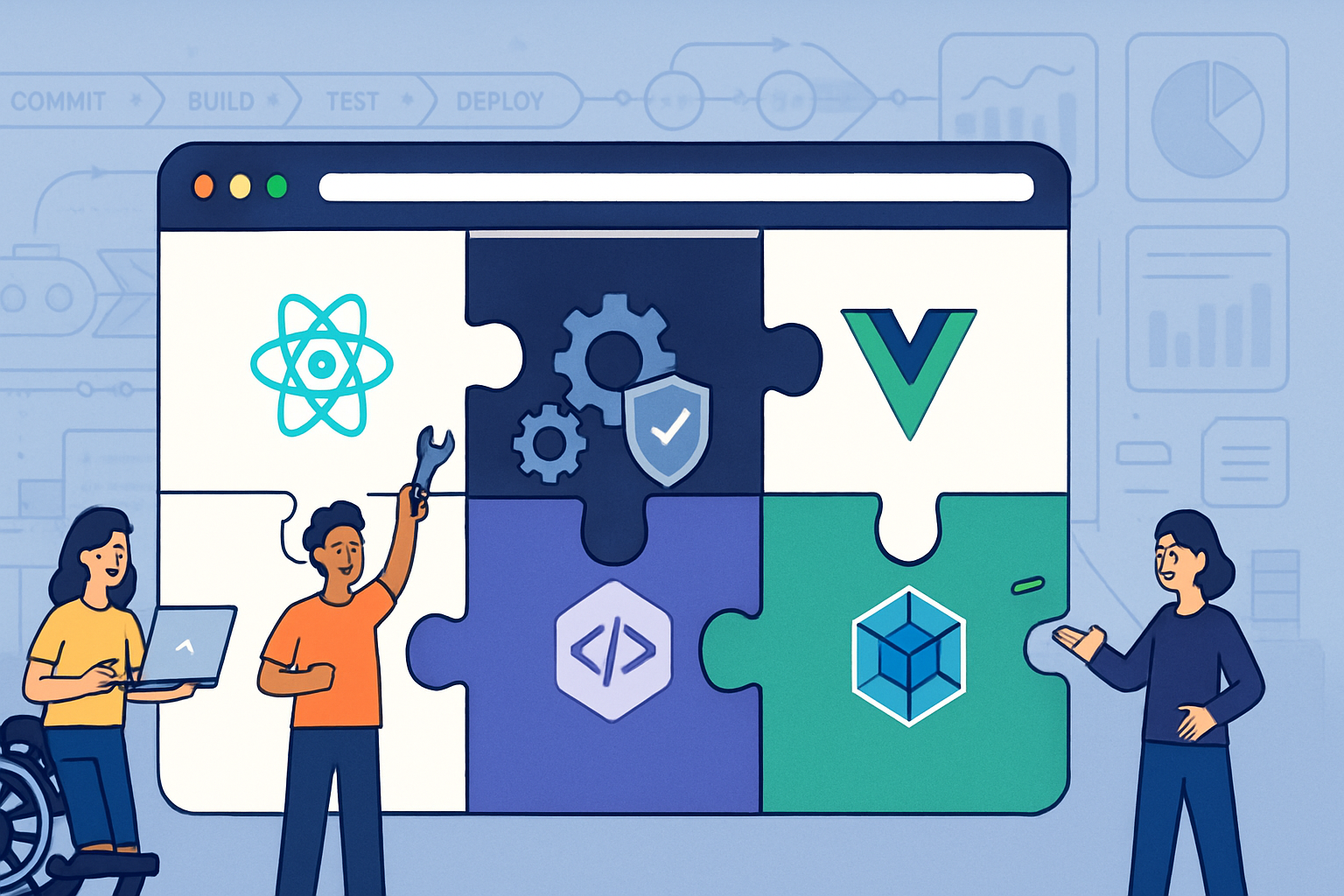
Micro-frontends split a large UI into independently developed, tested, and deployed pieces - like microservices for the browser. They’re an answer to team velocity and ownership problems in large projects.
Patterns and technologies to know:
- Integration strategies: client-side composition, server-side composition, and edge composition.
- Module Federation (Webpack) and runtime module loading for sharing modules across builds: https://webpack.js.org/concepts/module-federation/
- Framework-agnostic orchestrators like single-spa: https://single-spa.js.org/
- When to prefer micro-frontends: large teams, independent release cycles, mixed technology stacks. Don’t apply them prematurely; they add complexity.
Practical skills to show employers:
- Implement a simple micro-frontend using Module Federation or single-spa.
- Solve cross-app concerns: routing, shared authentication, telemetry, and styling isolation.
- Measure and optimize bundle and runtime costs.
Further reading: Martin Fowler’s micro-frontends article: https://martinfowler.com/articles/micro-frontends.html
Serverless functions and edge computing: compute where it matters
Serverless and edge functions change how you build fullstack features. They reduce operational overhead and let you run logic close to users.
Key platforms and concepts:
- Cloud providers and runtimes: AWS Lambda (https://aws.amazon.com/lambda/), Cloudflare Workers (https://workers.cloudflare.com/), Vercel Functions (https://vercel.com/docs/serverless-functions/introduction/). Each has different cold-start characteristics, language support, and limits.
- Edge vs. region: run ephemeral logic at the edge for low-latency personalization; use regional functions for heavier compute or stateful work.
- Cost and observability: measure invocation counts, duration, and memory use. Learn to instrument with tracing and logs.
Skills to practice:
- Build and deploy a serverless API with local emulation and CI/CD.
- Understand cold starts, concurrency limits, and optimizing cold-start time (e.g., small bundles, warmers only when needed).
- Use edge KV/datastores and learn eventual consistency trade-offs.
Example starter projects:
- A serverless thumbnailing API that accepts image uploads and serves optimized images from an edge cache.
- Personalization at the edge: show localized content with minimal latency.
Runtimes, frameworks, and the emerging landscape
New runtimes and frameworks pop up fast. Here are the ones worth watching and why:
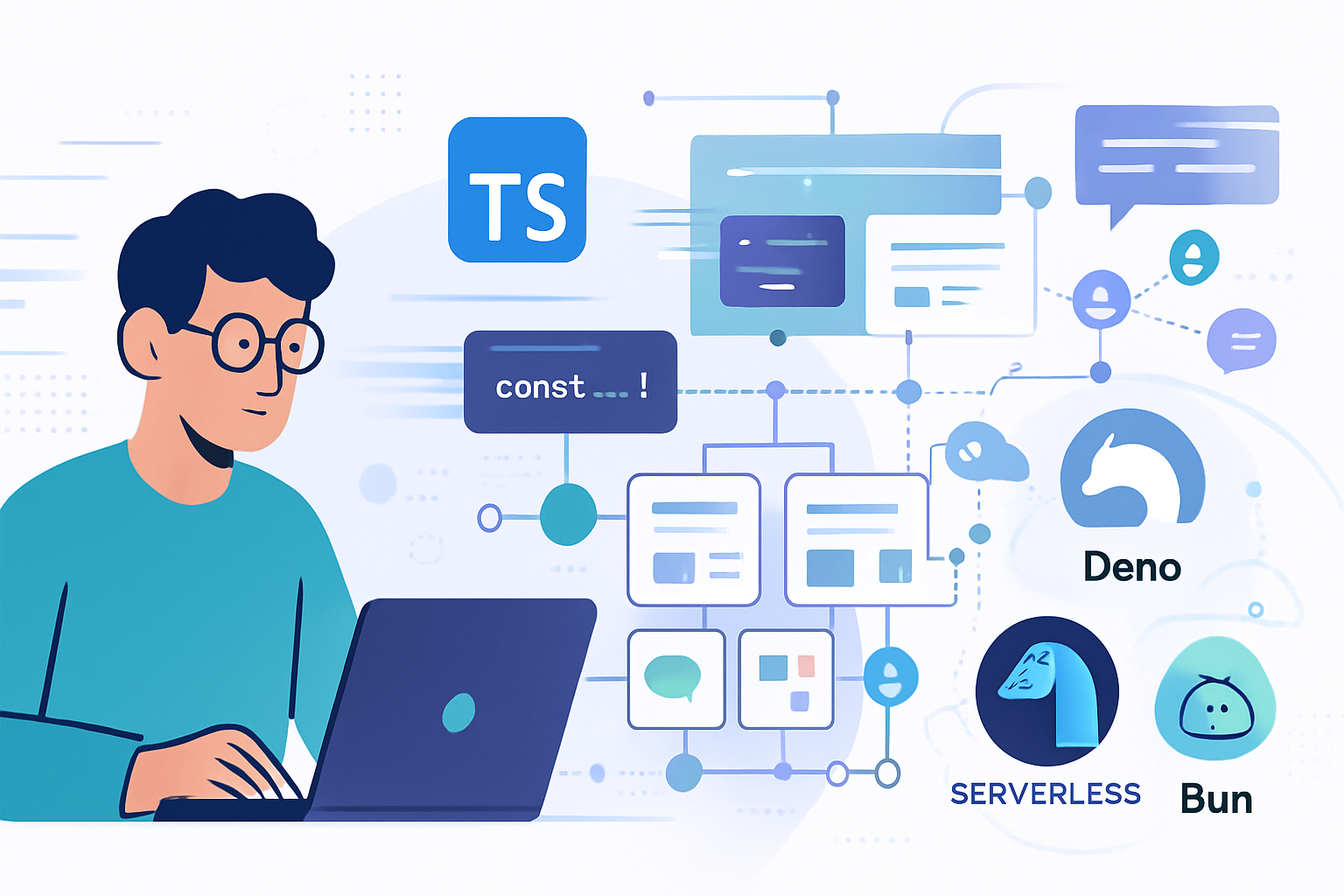
- Deno (https://deno.land/) and Bun (https://bun.sh/): faster, modern tooling and different security models. Useful for experimentation and tooling projects.
- Next.js and Remix: opinionated full-stack frameworks that integrate serverless and edge primitives. Vercel and Remix are pushing edge-first patterns.
- Astro, Qwik: optimize for minimal JS on the client - important for performance-sensitive apps (https://astro.build/, https://qwik.builder.io/).
- WebAssembly: use when you need CPU-heavy logic or to reuse libraries in other languages: https://webassembly.org/.
How to choose what to learn:
- If you’re building large, interactive SPAs: focus on modern React (or Solid/Svelte) and TypeScript.
- If performance and low JS footprint matter: invest time in Astro/Qwik and server-side rendering patterns.
- If platform tooling is your interest: learn Deno/Bun and building CLI tools.
Architecture and systems thinking (the multiplier skill)
Knowing frameworks is necessary. Understanding architecture is the multiplier.
- Learn how to design systems that are resilient, observable, and maintainable.
- Read about distributed systems trade-offs: latency, consistency, and coupling.
- Learn how to design APIs for slow and lossy networks; how to version frontends and roll out features across micro-frontends.
These are the conversations you’ll have with senior engineers, product managers, and platform teams.
Soft skills and collaboration
- Communicate trade-offs clearly. Be decisive and empirical.
- Define APIs and contracts. Work with product and backend teams to specify edge/ serverless contracts.
- Mentorship. Teams that scale need people who can onboard others to TypeScript and tooling.
Concrete roadmap: 3, 6, 12 months
3 months (foundations)
- Master TypeScript basics and write tests for your code.
- Build a small fullstack app using serverless functions (Vercel/AWS Lambda) and deploy it.
- Read about micro-frontends and implement a simple two-team demo with Module Federation.
6 months (applied skills)
- Build a production-quality micro-frontend demo: independent deployments, shared auth, and an orchestrator.
- Learn instrumentation and performance profiling; optimize cold starts and bundle sizes.
- Explore one new runtime (Deno or Bun) and one edge platform (Cloudflare Workers).
12 months (expertise and impact)
- Lead a migration or design a micro-frontend architecture for a mid-sized app.
- Publish a technical write-up or give a talk about your experience.
- Contribute to open-source tooling or create a starter template that automates setup for micro-frontends or edge functions.
Projects that make your resume pop
- Micro-frontends demo with Node-based host and two apps (React + Svelte) using Module Federation.
- Edge personalization service with Cloudflare Workers that serves localized content and caches it.
- A TypeScript monorepo that includes shared types, utilities, and an automated CI pipeline for publishing packages.
Interview topics and how to prepare
- Explain how Module Federation works and trade-offs compared to full SPA rebuilds.
- Describe cold starts and how you’d measure and mitigate them.
- Type-level challenge: design a generic type for a strongly-typed API client.
- System design: how to build a resilient multi-team frontend with shared auth and telemetry.
Practice: build small, timed projects and write postmortems explaining your decisions.
Tools and resources (quick links)
- TypeScript - https://www.typescriptlang.org/
- MDN Web Docs (JavaScript) - https://developer.mozilla.org/en-US/docs/Web/JavaScript
- Module Federation (Webpack) - https://webpack.js.org/concepts/module-federation/
- single-spa - https://single-spa.js.org/
- AWS Lambda - https://aws.amazon.com/lambda/
- Cloudflare Workers - https://workers.cloudflare.com/
- Vercel Serverless - https://vercel.com/docs/serverless-functions/introduction/
- Deno - https://deno.land/
- Bun - https://bun.sh/
- Astro - https://astro.build/
- Qwik - https://qwik.builder.io/
- WebAssembly - https://webassembly.org/
Final notes: prioritize learning that pays back
Invest in TypeScript first. Learn serverless fundamentals next. Then, add micro-frontends and edge skills as you encounter larger codebases and teams.
Short-term wins matter. Build tangible projects and measure real improvements in speed, latency, or team productivity.
But here’s the final point to hold on to: companies will pay a premium for developers who can design and deliver distributed UI systems that are fast, maintainable, and safe to change. Master those skills, and you will stay ahead.