· career · 6 min read
From Novice to Ninja: Transforming Your JavaScript Skills for Google Interviews
A practical, unconventional playbook to level up your JavaScript for Google-style interviews - gamify practice, pair up, get disciplined feedback, and follow a 60-day plan that turns effort into results.
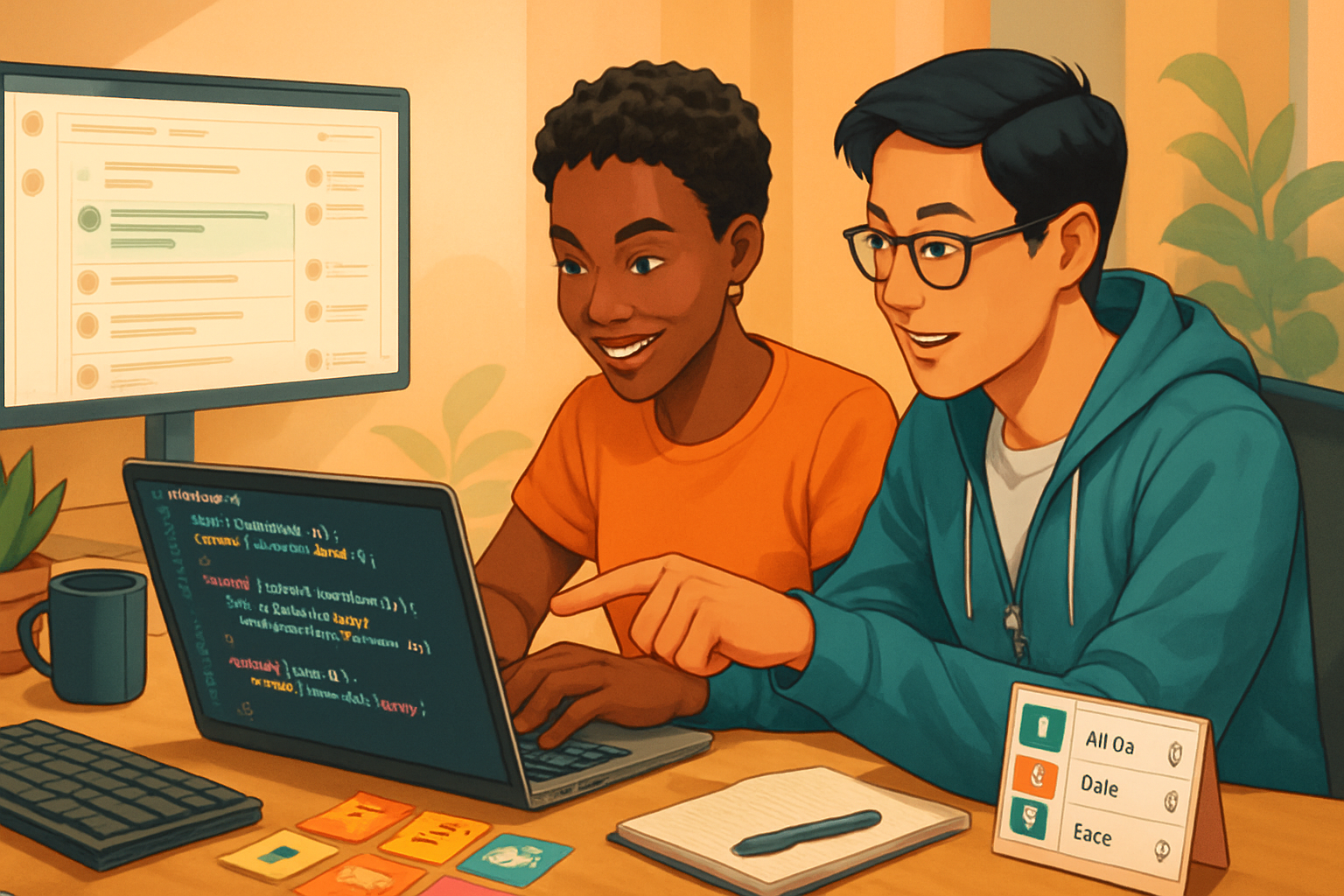
Outcome first: in 60 days you can move from shaky solutions and panicked whiteboard sessions to calm, elegant JavaScript code that you can explain under pressure - and that interviewers actually enjoy reviewing.
Why this is possible. Two things beat raw hours: deliberate structure and high-quality feedback. Do the right drills, consistently. Get feedback early and often. Iterate fast.
The goal - what “ninja” looks like
- Solve medium-hard algorithm problems reliably in 30–45 minutes using idiomatic JavaScript.
- Explain trade-offs, time/space complexity and edge cases clearly.
- Write readable, testable code and iterate quickly when prompted.
- Demonstrate systems thinking on design questions.
Hit those and you aren’t just passing a screen. You’re doing interview-grade work.
Unconventional levers that accelerate progress
Below are tactics many candidates overlook. Use several at once.
1) Gamify practice problems
Gamification turns grind into momentum. Make it measurable. Make it fun.
Ideas you can apply today:
- Points and levels: 1 point for easy, 3 for medium, 5 for hard. Set weekly point goals.
- Streaks and timers: earn streak bonuses for daily practice. Use a Pomodoro timer for focused 25-minute problem sprints.
- Achievements: “Explained solution to a peer”, “Wrote tests”, “Optimized from O(n^2) to O(n log n)“.
- Leaderboards: small cohorts, public Slack/Discord channel, friendly competition.
Tools to help: challenge platforms like LeetCode and Codewars already gamify progress; build a simple spreadsheet or use Habit trackers to log metrics.
Why it works: game mechanics create feedback loops. Small rewards compound into consistent practice - and consistency beats intensity.
2) Pair program with purpose
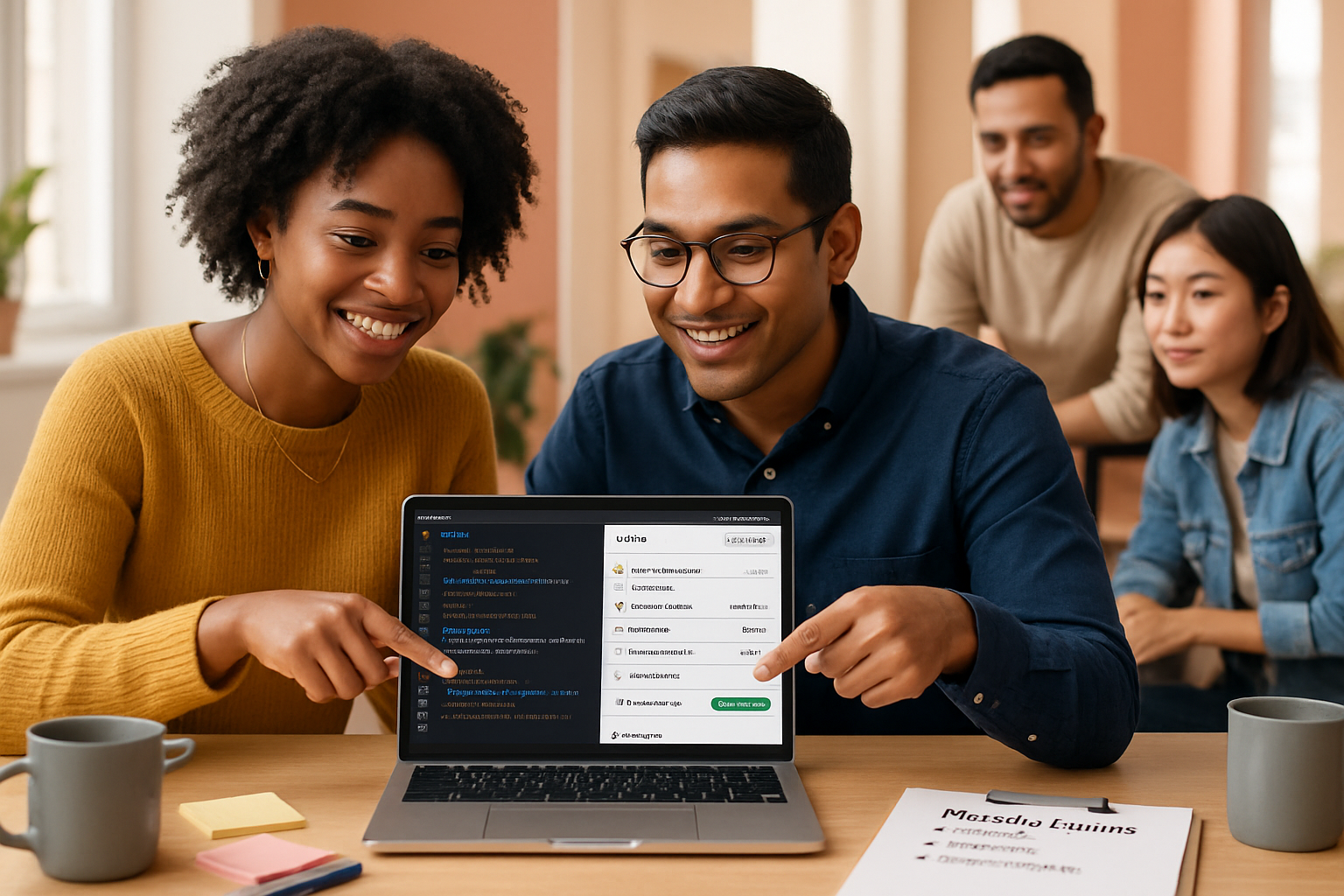
Pairing is not just for writing code faster. It’s for learning how to communicate, how to respond to hints, and how to think aloud - all critical in interviews.
Best-practice pairing formats:
- Driver / Navigator rotation every 10–15 minutes. Swap often.
- Teaching rounds: one explains a concept (e.g., two-pointer technique) while the other listens and asks clarifying questions.
- Role-play interviews: one interviewer, one candidate, with feedback afterward.
Where to pair: VS Code Live Share, Replit multiplayer, or a quick Zoom + shared repl environment.
Pairing accelerates discovery of blind spots. It forces explicitness. It forces you to justify design choices.
3) Use code review platforms to get targeted feedback
Treat interview practice like open-source development.
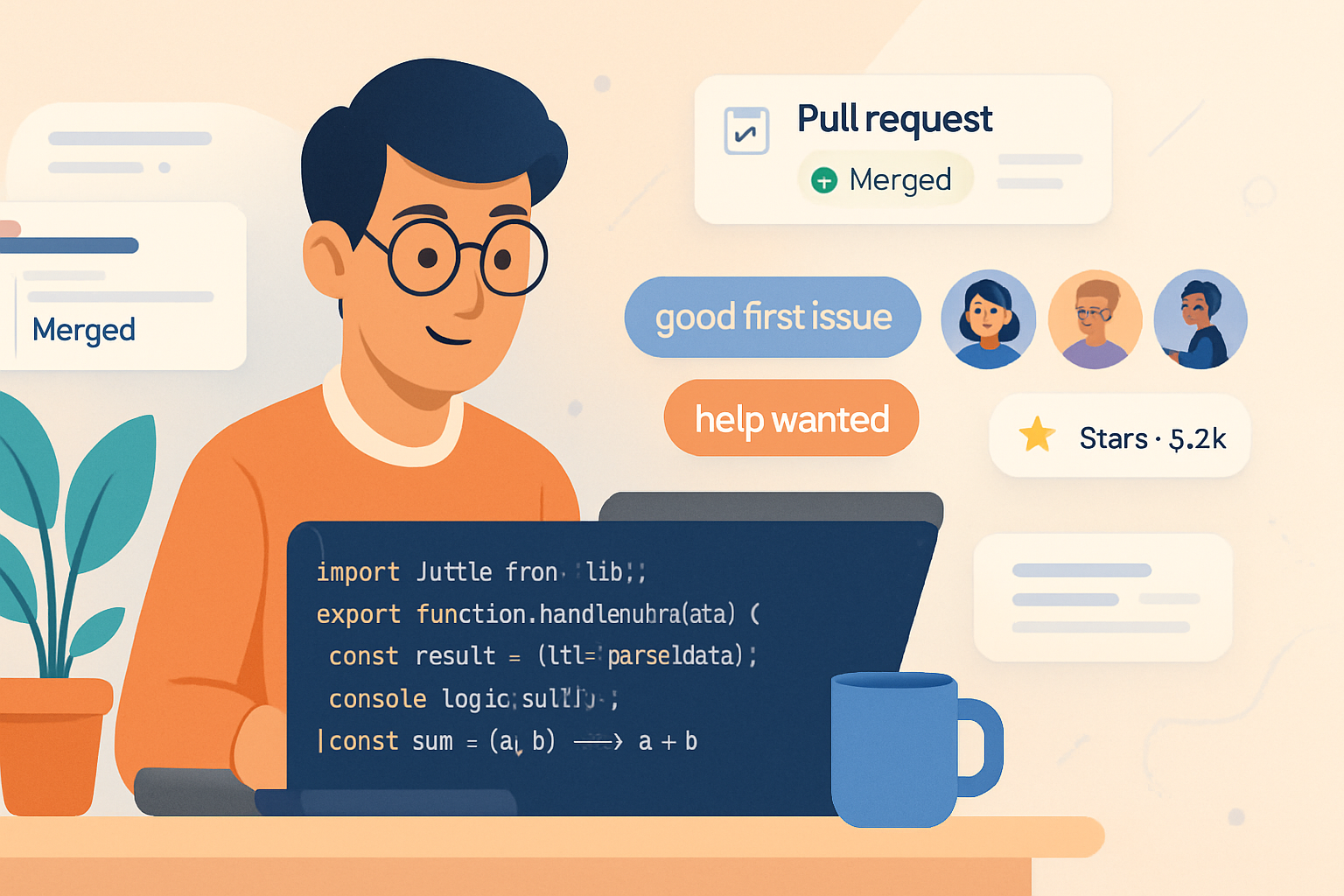
- Make small, focused PRs (pull requests) that implement a problem and include tests.
- Request specific feedback: ask reviewers to focus on complexity, variable naming, and test coverage.
- Iterate on reviews quickly - one change per PR if possible.
Platforms to use: GitHub Pull Requests, GitLab, or review tools like Reviewable. For more interview-like feedback, try mock interview platforms such as Interviewing.io or Pramp which simulate live feedback.
Why it’s powerful: structured reviews scale. You capture feedback in-line, create diffs you can analyze later, and learn to respond to critique - which mirrors real engineering culture.
4) Build tiny projects focused on interview concepts
Practical builds force you to use language features and trade-offs instead of just memorizing patterns.
Ideas:
- Implement a small LRU cache with test coverage.
- Build a lightweight scheduler using a priority queue.
- Make a CLI tool (Node.js) that ingests logs and produces metrics using efficient streaming.
These projects let you practice data structures, edge cases, and complexity analysis in a real environment.
5) Instrument your practice with metrics
Track: solved problems, average time, number of revisions, comprehension errors (misread constraints), and type of mistakes (off-by-one, edge-case, complexity).
Visualize progress weekly. If something stalls - change tactics.
6) Use visualizers and debuggers to deepen intuition
Live visualizations make algorithms tangible. Try stepping through code with the Chrome DevTools, or use online visualizers for algorithm animation.
Examples: run recursion/stack traces in DevTools, or paste code into small REPLs and annotate intermediate states. Visual debugging turns abstract complexity into concrete state transitions.
7) Adopt TypeScript selectively
TypeScript catches many errors early and forces you to think about shapes and contracts. Use it for practice to minimize silly runtime bugs, then switch to plain JS in timed mock interviews if you expect to be assessed in vanilla JS.
8) Train communication and explanation separately
Solving problems is half the battle. The other half is making your thinking intelligible.
- Practice the “30-second pitch”: summarize approach and complexity before coding.
- Use the Feynman technique: explain the problem and solution to a non-technical friend.
- Record mock interviews and transcribe - then identify filler words and weak explanations.
Tactical 60-day plan (novice → strong candidate)
This is a compact, repeatable schedule. Adopt it, and adjust intensity to your calendar.
Week 1–2: Foundations
- Daily: 45 minutes - easy problems to rebuild confidence.
- Start one tiny project (LRU cache or similar).
- Begin a PR log on GitHub for each solved problem.
Week 3–4: Structured practice + pairing
- Daily: 60–90 minutes - 1 medium problem + review previous PR feedback.
- Twice a week: pair program (driver/navigator swaps).
- Begin mock interview once per week on Pramp or Interviewing.io.
Week 5–8: Deepening and feedback loops
- Daily: alternate hard problem days (longer, 90–120 minutes) with code review days.
- Increase pairing to 3x weekly. Add timed whiteboard-style sessions.
- Weekly: submit PRs and invite at least two reviewers.
- Start tracking metrics (time per problem, mistake taxonomy).
Week 9–12: Polish and simulate
- Daily: 1 timed medium/hard problem with explicit explanation out loud.
- 2–3 mock interviews per week (vary interviewer types).
- Finalize small project and present it in a mock design interview.
By day 60 your baseline should be reliable medium problem solving, clear explanations, and a steady feedback pipeline.
Practical recipes - what to do when you hit plateaus
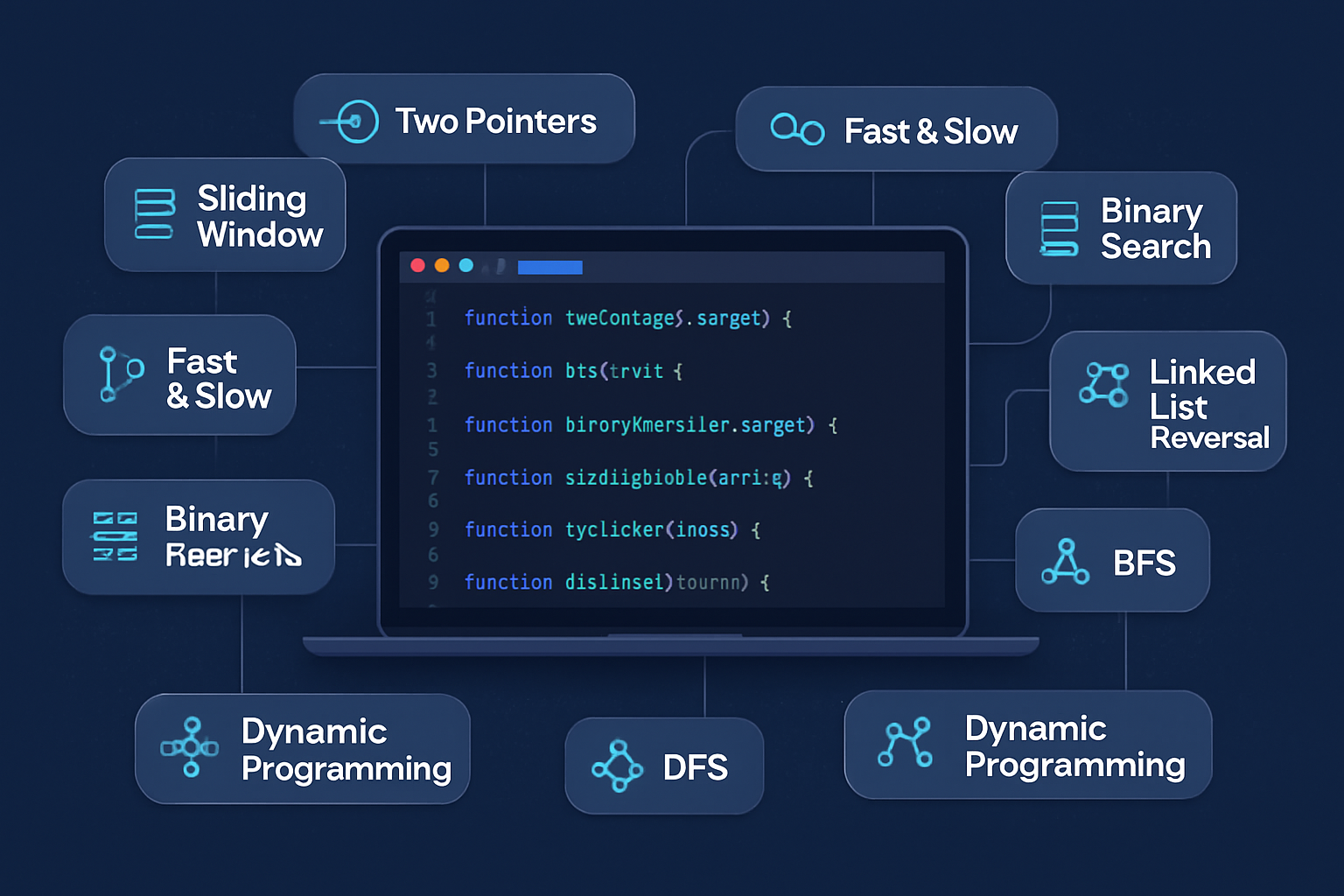
- If you’re slow: lift benchmark problems and practice micro-optimizations (e.g., sliding window patterns, hashing techniques).
- If you’re making the same mistakes: isolate the mistake taxonomy, then deliberately practice that category for a week.
- If you’re anxious in the interview: practice 10-minute breathing + reciting your 30-second pitch.
Sample checklist for every practice session
- Read problem, restate it aloud, and ask clarifying questions (30–60 seconds).
- Sketch approach and complexity (2–5 minutes).
- Write working code (25–45 minutes for medium).
- Run tests and handle edge cases (5–10 minutes).
- Create a short PR or paste solution into a personal repo and add a one-paragraph retrospective.
This ritual builds habits that transfer directly to interviews.
Tools and resources
- Practice platforms: LeetCode, Codewars, HackerRank
- Mock interviews and pairing: Interviewing.io, Pramp
- Pair programming: VS Code Live Share, Replit
- Books: Cracking the Coding Interview (Gayle Laakmann McDowell), Eloquent JavaScript (online)
- Review workflow: GitHub Pull Requests or GitLab Merge Requests
Final note - mindset and signals to watch for
Engineers at Google are evaluated not just on the final code, but on problem decomposition, clarity of communication, and the ability to iterate under feedback. You can train all three. Do it deliberately. Track progress. Seek feedback that is specific and actionable.
The path from novice to ninja is a sequence of small experiments that you measure and refine. Start with one unconventional lever - gamification, pairing, or code reviews - and build the system around it. Repeat. Improve. Then do the same again, faster.