
· career · 7 min read
Why JavaScript Engineers Might Outearn Developers in Other Languages by 2025
Full-stack JavaScript is becoming the market's Swiss Army knife: ubiquitous in web and mobile, central to modern serverless and JAMstack architectures, and increasingly the language of choice for startups and product teams. This article analyzes why those forces could push JavaScript engineers to the top of pay scales by 2025 - and what engineers should do to capture that upside.
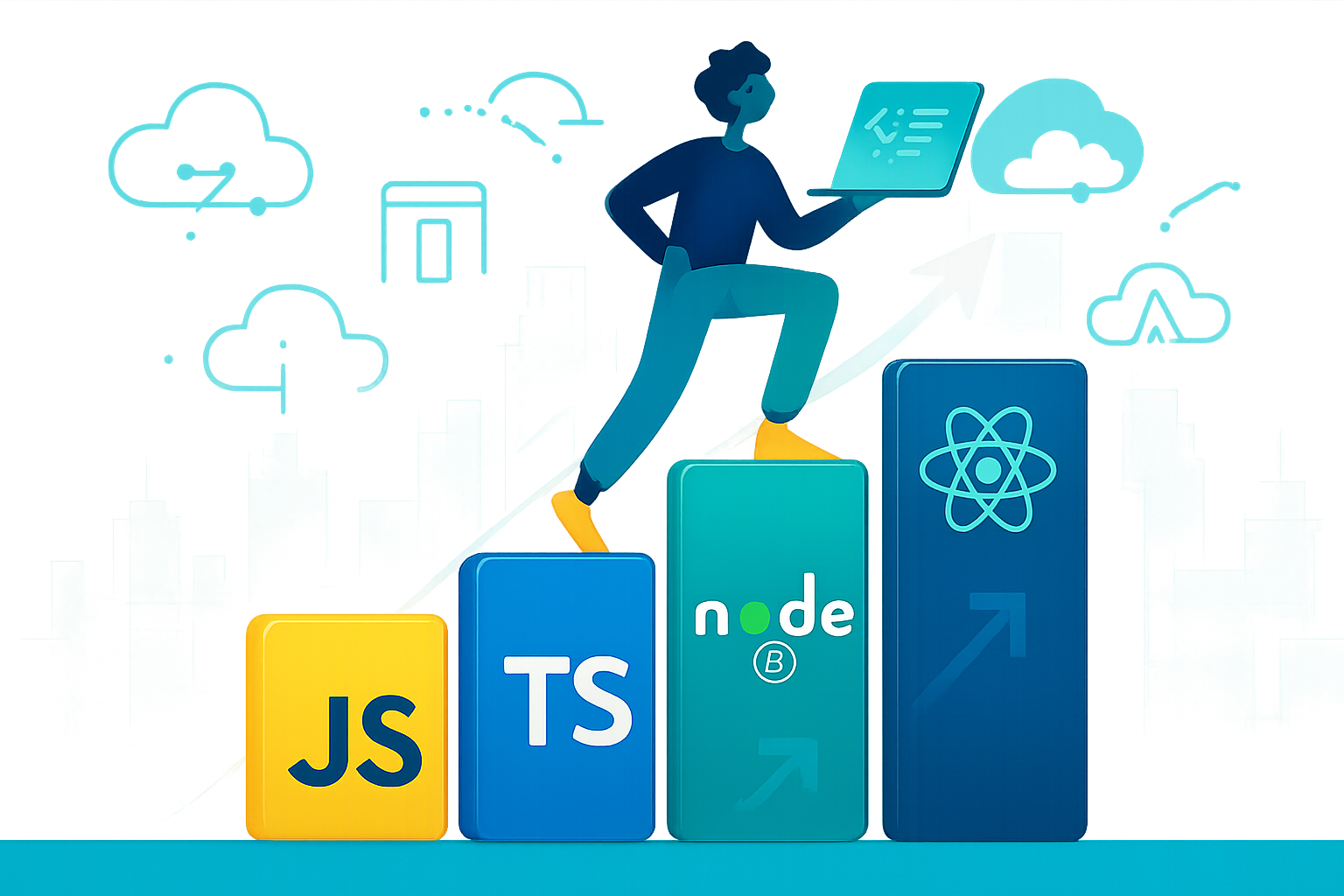
Outcome first: read this and you’ll understand why the market is primed to pay full‑stack JavaScript engineers at or above other language specialists by 2025 - and what concrete skills will let you capture that premium.
Why this matters. If you write JavaScript (or plan to), this analysis will help you set career priorities: the stacks to learn, the roles to seek, and how to argue for top-of-market compensation.
The short version (hook)
JavaScript is everywhere: front-end, mobile, server, edge, and even databases. That ubiquity - combined with a maturing full‑stack ecosystem (React/Next.js, Node/Edge runtimes, TypeScript), high product-market velocity needs, and strong remote/freelance demand - creates a scenario where employers pay more for engineers who can own product features end-to-end. In plain terms: being able to ship a web product from UI to production with JavaScript is increasingly worth more than being an expert in a single backend language alone.
Evidence: language popularity + compensation signals
- Popularity and usage: JavaScript remains the single most widely used language on GitHub and in surveys. GitHub’s state reports consistently show JavaScript at the top by repo activity and contributions.[^1]
- Survey demand: Stack Overflow’s developer surveys show JavaScript, along with TypeScript and related frameworks, as the most commonly used technologies across roles and seniorities.[^2]
- Compensation studies: Salary data (from platforms like Hired, Stack Overflow insights, and marketplace reports) show two correlated facts: niche systems languages (e.g., Rust, Go) often command high per-role pay for specialized jobs; but full‑stack JavaScript roles appear with higher frequency in high-salary product teams, startups, and remote hiring pools. The result: aggregate compensation for JS engineers - especially senior/full‑stack - is climbing and the spread is narrowing versus traditionally higher‑paid specialties.[^3]
(Links and studies cited below will let you explore specific numbers by region and year.)
Why market forces favor JavaScript pay growth
- Ubiquity and product ownership
JavaScript is the lingua franca of the client. When a company values speed - getting new features in front of users quickly - they prefer engineers who can implement UI, wire it to APIs, and deploy changes without handoffs. That reduces coordination costs and time-to-market. Employers pay for that time saved.
- The rise of full‑stack JS stacks
Frameworks like React/Next.js, Remix, and server-side JavaScript (Node.js, Deno, edge runtimes) let one engineer move from page markup to server rendering to edge logic. Add TypeScript and you get stronger typing for large codebases. One stack, one team, less context-switching - higher perceived productivity and therefore higher willingness to pay.
- Platform consolidation: fewer technologies per product
Where historically a product may have used HTML/CSS + frontend framework + Java backend + mobile native apps, modern teams often standardize around a small set of JS technologies: React for web, React Native or cross-platform for mobile, Node/Edge and serverless for backend, and headless CMS + databases. Consolidation simplifies hiring and increases the value of polyvalent JS engineers.
- Remote and gig economies favor JavaScript
Remote-first startups and freelancing platforms list far more JavaScript roles than many other languages. That increases competition between employers for experienced JS talent and pushes up rates, especially for contractors and senior ICs who can ship full features.
- Startups and product velocity
Startups - where compensation often includes market-rate cash for core product engineers - favor engineers who can do everything needed to validate an idea quickly. Full‑stack JS fits that bill. Higher demand from venture-backed companies flows into higher average compensation for these roles.
- Tooling and serverless lower operational barriers
Serverless, managed databases, and platform services reduce the need for deep ops knowledge. A JS engineer who knows how to glue managed services and ship features can be as productive as a specialist backend engineer, but cheaper to scale. That productivity premium leads to better pay for those who can also shoulder occasional architecture and reliability responsibilities.
Countervailing forces (why JS might not win everywhere)
- Domain specialization still pays. Fields like high-frequency trading, embedded systems, and some infrastructure roles will continue to reward C/C++, Rust, Java, or domain-specific stacks more highly for deep expertise.
- AI and low-code could compress some implementation roles. If tools substantially automate front-end implementation or routine backend code, price pressure on mid-level roles could increase. The engineers who keep gaining will be those who combine JS fluency with product design, architecture, or domain knowledge.
- Supply response. If too many engineers pivot to full-stack JS, supply could increase and the premium could shrink. But the counter here is that employer demand grows, too - especially for senior engineers who can architect and lead.
What to watch in 2025 (leading indicators)
- Job posting proportions: how many full‑stack vs backend-only roles are posted in major job boards (LinkedIn, Indeed, Hired). Rapid growth in full‑stack JS listings is a strong signal.
- Compensation reports: median offer/accepted salaries for JavaScript/TypeScript roles vs other languages in Hired, Stack Overflow, and regional salary guides.
- VC hiring patterns: startups often publicize engineering hires - look at which stacks seed and Series A companies are recruiting for.
- Adoption of edge runtimes and serverless JS in production. Wider adoption means more roles demanding JS runtime expertise.
Practical advice: how to capture the upside (skills that command the premium)
If you want to be paid like a top full‑stack JavaScript engineer, focus on these areas in this order:
- TypeScript mastery. It’s the modern default for reliable JS codebases. Know advanced typing, generics, and patterns.
- Modern frontend frameworks - React + Next.js, or equivalent. Understand SSR/ISR, routing, hydration, and performance optimization.
- Backend JS/Edge: Node.js, Deno, or edge runtimes (Cloudflare Workers, Vercel Edge). Know serverless patterns, cold-starts, and observability.
- Databases and APIs: SQL/NoSQL, GraphQL (Apollo/Relay), REST best practices, and ORMs/query builders.
- DevOps basics: CI/CD, infra-as-code, deployment pipelines, monitoring and alerting. You don’t need to be a full SRE - but you must be able to own production issues.
- Systems and performance: know caching, CDN strategy, and front-end performance metrics.
- Leadership & product sense: be able to translate product goals into engineering trade-offs and estimates.
Build projects that demonstrate ownership: deploy a full product (UI, backend, database, auth, monitoring). That evidence helps you command senior and principal-level pay.
Negotiation tips specific to JS roles
- Frame impact: show how your end-to-end ownership reduced cycle time, decreased bugs, or increased feature throughput.
- Show breadth + depth: list concrete architecture decisions, tech debt paid down, and cost savings from serverless or edge deployments.
- Benchmark explicitly: use Hired/Stack Overflow salary reports and regional Glassdoor medians to justify your ask.
- Consider equity vs cash: early startups may compensate with equity. Ask for milestones tied to salary reviews.
Risks and a balanced outlook
This isn’t a guaranteed prediction. Market outcomes depend on macro hiring trends, broader economic cycles, and technologies we can’t foresee. But the structural forces - ubiquity of JS, consolidation of the product stack around JS, and the premium on end-to-end product delivery - strongly favor continued growth in JS compensation. In many markets, if you can both ship and architect with JavaScript, you’re positioned to capture top-of-market pay.
Quick checklist: are you market-ready for a 2025 JS premium?
- Can you build and ship a web product alone from UI to production? If yes, you likely command senior pay.
- Can you reason about cost, latency, and reliability at the architecture level? That moves you from senior toward staff/principal pay.
- Do you write TypeScript comfortably and use modern React patterns? Essential.
- Do you own deployments and incident response? Strongly preferred.
Bottom line
By 2025, the most-compensated developer profiles will be those who deliver business outcomes quickly and reliably. JavaScript - supported by TypeScript and a mature full-stack ecosystem - is uniquely positioned to satisfy that requirement across the entire product surface: browser, mobile, server, and edge. That convergence of ubiquity, tooling, and market demand means that full‑stack JavaScript engineers who can own product end-to-end are likely to be among the highest-paid developers in many markets. If your aim is to maximize compensation, specialize across the stack, own production, and articulate business impact. Do that, and you won’t just be a JavaScript coder. You’ll be a business multiplier - and the market pays generously for that.
References
- GitHub Octoverse / State of the Octoverse: https://github.blog/2023-12-05-state-of-the-octoverse-2023/
- Stack Overflow Developer Survey (2024): https://insights.stackoverflow.com/survey/2024
- Hired: State of Software Engineers reports (annual): https://hired.com/state-of-software-engineers
- LinkedIn Jobs and hiring trend reports: https://economicgraph.linkedin.com/